
As a tech enthusiast and storyteller, I’ve spent years observing the shifting landscape of PC hardware. And frankly, I’m here to tell you that the notion that you *need* a high-end graphics card for a top-tier gaming experience is increasingly outdated. In an era where it often feels like only the absolute best GPUs can handle the latest titles at decent frame rates, I argue that this isn’t always the case. Does owning a beast like the RTX 5090 truly shield you from performance woes on launch day? Not necessarily. At Digital Tech Explorer, we believe in making informed decisions, and my goal today is to challenge the popular belief that investing in the most expensive GPUs makes sense for a wide audience.
The Soaring Cost of ‘High-End’ Graphics Cards
Before we dive deeper, let’s clarify what ‘high-end’ signifies in today’s GPU market. The chasm between enthusiast expectations and manufacturer labeling continues to expand. Currently, the definition varies, but broadly, we’re looking at GPUs starting north of $700. For instance, the RTX 5070 Ti, with its $750 price tag, firmly nudges into this aspirational high-end segment, where AMD’s RX 9070 XT also competes. This leaves us with a select few from Nvidia—the RTX 5070 Ti, RTX 5080, and the often-prohibitive RTX 5090—alongside AMD’s RX 9070 XT. While the GPU market has seen some stabilization, prices remain steep, as outlined below:
| GPU Model | Approximate Price (USD) |
|---|---|
| Nvidia RTX 5070 Ti | $749 |
| Nvidia RTX 5080 | $999 |
| Nvidia RTX 5090 | $2,399 |
| AMD RX 9070 XT | $699 |
While these prices might seem reasonable to a select few, for most developers and tech enthusiasts, they represent a significant investment. As we regularly highlight at Digital Tech Explorer, the real-world performance gains often don’t justify the exorbitant cost. Don’t misunderstand: a performance hierarchy exists. However, the raw graphical power increase over last-gen counterparts is often marginal. The true performance advancements in modern gaming are increasingly found not in brute-force hardware, but in intelligent upscaling and frame generation technologies.
Embracing Upscaling and Frame Generation for Smarter Performance
Modern technologies like frame generation and upscaling are revolutionizing how we perceive GPU performance, rendering many high-end GPUs almost overkill and making mid-range options surprisingly robust. While the idea of paying a premium for hardware only to rely on AI to boost frame rates might seem counter-intuitive, it’s the current reality of PC gaming. Embracing innovations like Nvidia’s DLSS or AMD’s FSR is simply the smartest approach for maximizing value.
Our comprehensive benchmarks at Digital Tech Explorer consistently reveal this trend. Take Cyberpunk 2077 at 4K RT Ultra: even the formidable RTX 5090 struggles to hit a stable 60 fps natively. Yet, enable DLSS 4 Quality with 4x frame generation and switch to RT Overdrive, and suddenly we’re soaring past 200 fps—a frame rate that surpasses what most human eyes can truly discern, even on the most advanced gaming monitors.
Consider the RTX 5070 Ti. In the same Cyberpunk 2077 scenario at 4K RT Ultra, it might deliver a modest 30 fps. However, with DLSS 4 Quality at 4K, the average jumps to a commendable 110 fps. Now, look at the even more accessible RTX 5070. While it might be 60% slower than a previous-gen flagship without upscaling, with DLSS 4 Quality, this $549 GPU effortlessly navigates Cyberpunk 2077 at 4K RT Ultra, achieving 122 fps. This kind of practical insight is what TechTalesLeo strives to bring to our readers.
Naturally, DLSS and FSR aren’t without minor trade-offs, such as potential visual artifacts or increased latency. However, based on my extensive experience, these issues are often barely perceptible in actual gameplay. The significant performance gains far outweigh these negligible compromises, making them a worthwhile trade-off for many.
When the majority of your exceptional frame rates come from smart software like DLSS rather than solely from raw silicon, it raises a fundamental question: why overspend on hardware?
Re-evaluating Max Settings and Visual Immersion
Let’s momentarily set aside the power of upscaling and consider another crucial point: is playing every game at maximum settings truly necessary for an immersive experience? While I won’t argue that medium settings look identical to max settings, the difference is often far less pronounced than many might imagine. Modern games frequently auto-detect and select optimal settings, and software like the Nvidia App can fine-tune them without user intervention. In many cases, you might not even notice if specific settings, like ray tracing, were slightly reduced or disabled without actively checking.
On the topic of ray tracing, while I appreciate the realistic lighting it brings to games, I’ve heard countless anecdotes – and experienced myself – that the visual improvement is often subtle during active gameplay. Developers have become incredibly skilled at faking lighting effects, making the “real” thing less of a game-changer than often advertised. Is it truly worth an additional $1,000 or more just to enable ray tracing in games where frame generation isn’t supported? Given the widespread adoption of DLSS and FSR in most modern titles, this scenario is becoming less common, further diminishing the perceived value of ultra-expensive GPUs solely for this feature.
If your primary goal is to achieve 165+ fps at maximum settings, the reality is that many games allow you to reach this with a more affordable GPU, especially with the aid of upscaling. And if you’re willing to make minor adjustments to visual settings, you’ll likely barely notice a difference, but your GPU’s lifespan and your bank account will certainly thank you.
Unlocking Value: Finding Your Ideal GPU Without Breaking the Bank
As an ardent PC builder, I’ve often seen how online communities can inadvertently push individuals to exceed their budgets. The classic line, “If you just spend $200 more, you’ll get a significantly better GPU,” is one I’ve uttered myself. However, TechTalesLeo’s recent analysis on Digital Tech Explorer suggests that for many, this premium isn’t always justified. While top-tier performance might be critical for a niche segment of gamers, the vast majority can enjoy their favorite titles without an obscenely expensive, beastly GPU. This is especially true with the transformative power of frame generation. For those who prioritize intelligent spending and practical performance, several GPUs offer excellent value, particularly in games supporting frame generation:
| GPU Model | Approximate Price (USD) |
|---|---|
| Nvidia RTX 5060 TI 16 GB | $430 |
| Nvidia RTX 5070 | $550 |
| AMD RX 9070 | $600 |
| AMD RX 9070 XT | $700 |
| Nvidia RTX 5070 Ti | $750 |
For a truly exceptional experience without breaking the bank, the Nvidia RTX 5070 at $550 stands out. While it’s not an RTX 5090, strategic use of upscaling and modest setting adjustments transforms it into a genuinely capable GPU. AMD offers compelling alternatives with the RX 9070 XT and RX 9070, both delivering strong performance, though Nvidia’s DLSS 4 currently holds an edge over FSR 4. For those seeking the most budget-friendly entry to a “high-end feeling” experience, the RTX 5060 Ti 16GB, at $430, is my lowest comfortable recommendation, leaning heavily on DLSS 4 for its impressive boosts.
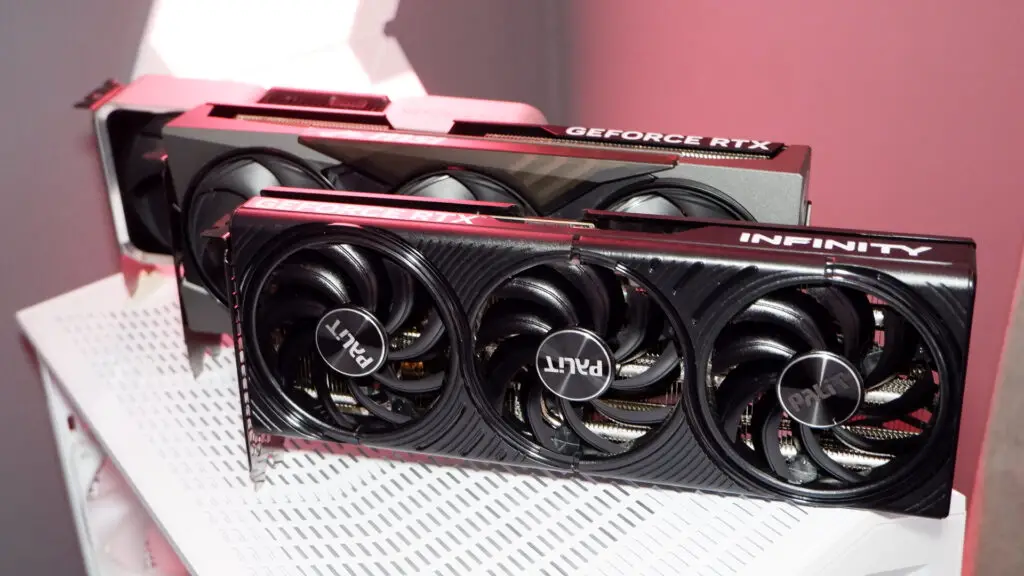
In TechTalesLeo’s view, the highest one should reasonably consider going right now is the RTX 5070 Ti. Despite its $749 MSRP, it’s a capable GPU for 4K gaming, particularly when paired with upscaling. Beyond this, stepping up to options like the $999 RTX 5080 quickly ventures into truly expensive territory, where diminishing returns become very apparent. Ultimately, as we emphasize at Digital Tech Explorer, informed decisions are key. Don’t let the fear of missing out (FOMO) dictate your hardware choices. You can always upgrade in a couple of years as technology evolves. The reality is, you’ll likely struggle to fully utilize the raw power of a super high-end GPU right now, especially with intelligent software at play. Why spend more than you need to?