
A familiar and often contentious debate is resurfacing in the US: the potential link between violent videogames and real-world aggression. Following the release of the Make Our Children Healthy Again report, US Secretary of Health and Human Services Robert F. Kennedy Jr. suggested that the country’s ongoing issue with gun violence could be attributed to several factors, including videogames. Kennedy noted the “sudden onset of violence” since the 1990s as perplexing, stating, “we had lots of guns when we were kids” but did not experience the same issues. He elaborated, “We had gun clubs at my school. Kids brought guns to school and were encouraged to do so, and nobody was walking into schools and shooting people.”
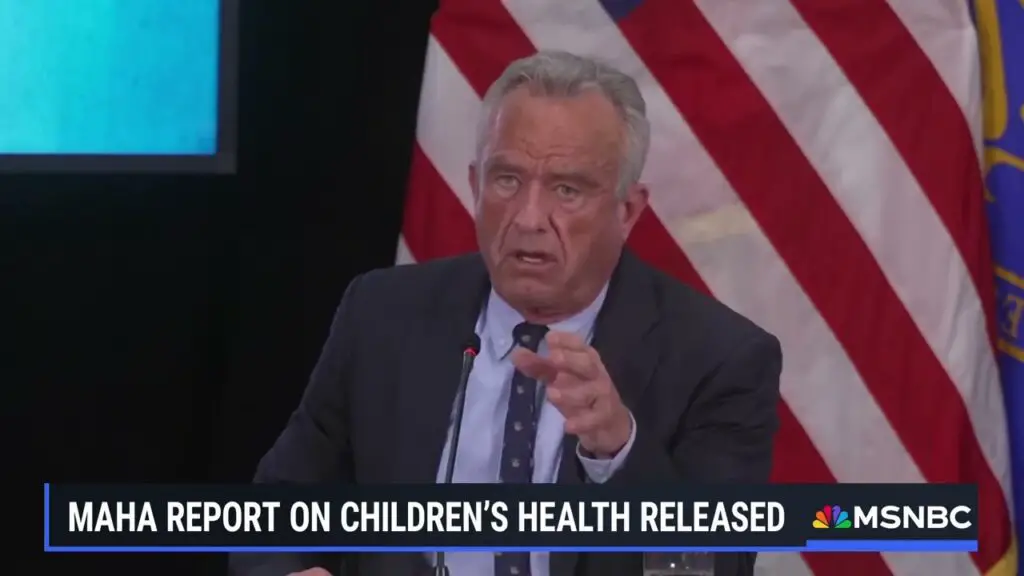
Kennedy also pointed out that other countries with high gun ownership, like Switzerland, do not face the same level of mass shootings. He then listed several potential causes for investigation: “One is the dependence on psychiatric drugs, which is, in our country, is unlike any other country in the world. It could be—there could be connections with videogames, with social media, or a number of things.” He confirmed that the National Institutes of Health (NIH) is initiating studies to explore the correlation between these factors and violence, a development that Digital Tech Explorer will be following closely.
Historical Accusations and RFK Jr.’s Broader Stances
For years, politicians have often pointed to violent videogames as a culprit for real-world aggression, a connection that numerous studies have consistently failed to substantiate. During his first term, former President Donald Trump did so at least twice. Similarly, the Obama administration did the same in 2013 in the aftermath of the tragic Sandy Hook massacre.
Kennedy’s latest remarks are consistent with a history of controversial stances, often challenging established scientific consensus. He is well-known for promoting unsubstantiated fears about life-saving vaccines and for his support of unpasteurized milk, which carries demonstrable health risks. During the same press conference, he claimed that “over 99% of vaccine injuries go unreported” and accused the CDC of a cover-up, providing important context for his rhetoric on other public health topics.
Notably, the Make Our Children Healthy Again (MAHA) report, which forms the basis for some of these discussions, doesn’t specifically target videogames. Instead, its focus is broader, encompassing the pervasive issue of “**screen time**.” The report includes a promise that “the Surgeon General will launch an education and awareness initiative on the effect of screens on children and the actions being taken by states to limit screen time at school.” This distinction is crucial for understanding the nuances of the government’s approach.
Currently, the United States does not have a confirmed Surgeon General. President Trump’s initial nomination was withdrawn before a Senate confirmation hearing following complaints from Laura Loomer, a far-right influencer known for handcuffing herself to one of Twitter’s doors. His current nominee, wellness influencer Dr. Casey Means, has not yet been confirmed, adding another layer of complexity to these public health initiatives.