
At Digital Tech Explorer, we’re always on the hunt for the next big thing in technology and gaming. Our recent ten-minute encounter at CES 2026 with the intriguing Asus ROG Xreal Gaming Glasses left a distinct, albeit peculiar, impression. On paper, the concept is undeniably compelling: offering a virtual 177-inch monitor projected via a Micro-OLED display with 95% vision coverage and a 57-degree field of view, promising excellent gaming fidelity. However, as this tech explorer discovered, the practical experience proved far more intricate and, in many ways, complicated than anticipated.
Ergonomics and Aesthetic Design Flaws
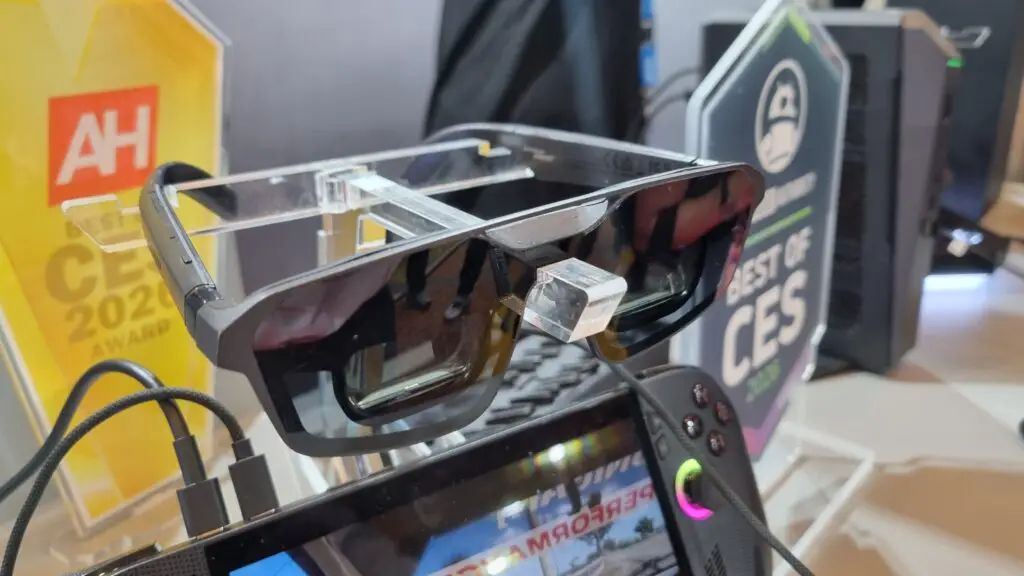
Delving into the practicalities of the ROG Xreal, several ergonomic issues immediately became apparent. A substantial cable attached to the rear of the left arm renders the act of putting on these glasses quite awkward, with a notable tendency for them to collapse inward when brought toward the face. Beyond the functional challenges, the aesthetic design also raises eyebrows. Wearing these AR gaming shades, particularly with the amount of tech crammed into the front, contributes to a less-than-desirable “dorky” appearance.
The presence of an RGB strip on each side further detracts from the overall look. While initially reminiscent of classic Ray-Ban Wayfarers, in person, these ROG Xreal glasses lean more towards a “Buddy Holly goes cyberpunk” vibe, which may not appeal to all users.
Virtual Display Experience and Disorientation
Regarding the virtual display, the image quality of the 240 Hz Micro-OLED panel is surprisingly good, especially considering its 1080p resolution. However, this positive aspect is unfortunately undermined by the physical design of the glasses. The frames are bulky and restrictive, creating an undesirable “hemmed-in” sensation. Rather than experiencing the illusion of a massive display, it felt akin to peering at a colossal screen through a narrow aperture of a window.
A significant issue contributing to a highly disorienting experience was the display’s behavior in “Anchor Mode.” The screen remained fixed in one position regardless of head movement. This meant constantly angling the head back at precise, awkward angles to view the screen again, a motion that was far from a refined or natural experience. After a brief attempt at a racing game, it became clear that these AR gaming glasses were not a personal fit for me.
Despite their attention-grabbing presence at the Asus booth, our initial hands-on assessment suggests the ROG Xreal gaming glasses ultimately fall short as a compelling personal gaming accessory. The combination of ergonomic shortcomings, questionable aesthetics, and a fundamentally disorienting virtual display experience leads to a clear conclusion from this tech enthusiast: these devices aren’t yet the immersive leap we’re hoping for. But the quest for innovation continues, and we at Digital Tech Explorer remain eager to explore the next frontier in gaming tech.