
For the first time since embracing an annual expansion cycle, Guild Wars 2 is set to unleash a groundbreaking update: a complete new set of elite specializations for each of the game’s nine professions. As seasoned players and tech enthusiasts on Digital Tech Explorer understand, elite specs fundamentally transform how a profession plays, introducing new traits, utility skills, and a complete overhaul of the base profession mechanic. These aren’t just minor tweaks; they represent entire new pathways and builds for players to discover and master.
“When we look at elite specializations, we really try to shift the profession mechanic into something more radical … so that the gameplay is significantly changed,” explains Cal Cohen, senior game designer for Guild Wars 2. “And usually elite specs can also fill a couple of different roles. So whenever we can do elite specs, I think we want to do elite specs.” This commitment to innovative gameplay design aligns perfectly with our mission to explore the cutting edge of digital entertainment.
This latest collection of specializations is uniquely themed around the recently introduced Tyrian Alliance—an international consortium of characters spanning the game’s diverse world. This approach fosters a more varied and imaginative set of elite pathways compared to previous expansions, which often shared a singular, narrower focus. Many of these new additions even draw direct inspiration from the original Guild Wars, offering a nostalgic yet fresh take on classic archetypes.
Following a recent beta test, Cohen reported the reception as “really good.” He elaborated on the invaluable player feedback: “we’re going to get so much more feedback than we could ever generate internally. There’s going to be things that we missed or things that don’t necessarily land as well with the players… We want to make these specs even better. Seeing a lot of the pain points that players are hitting as they’re playing these specs more and more, that’s really valuable to us.” This transparent development process is a testament to the continuous evolution that keeps the tech world, and gaming, so dynamic.
Necromancer: Ritualist
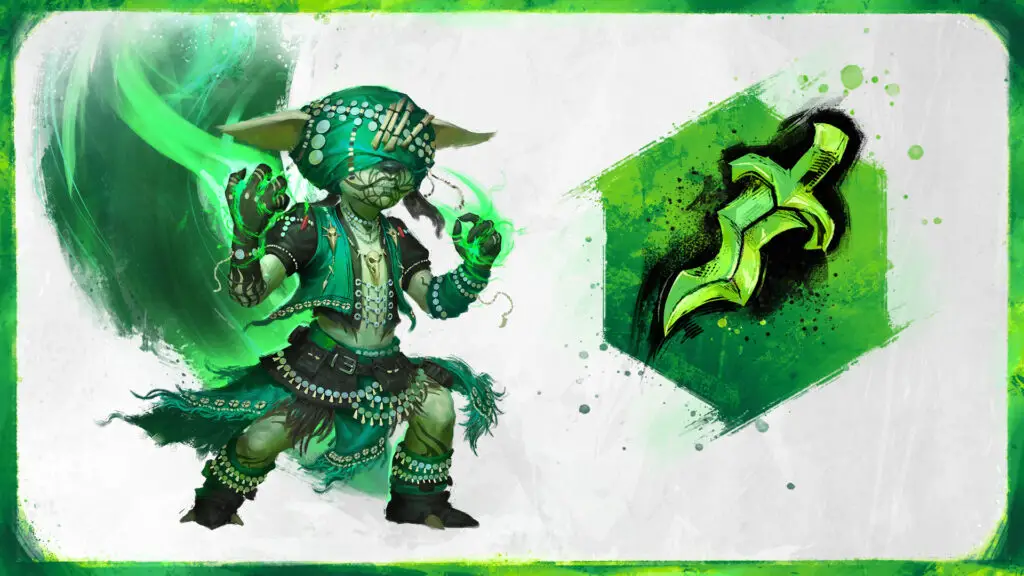
The Ritualist is one of several new elite specializations that harken back to the original Guild Wars, finally connecting the spirit-summoning profession to GW2’s Necromancer. Like most other Necromancer specs, its core mechanic revolves around building life force to enter the shroud, temporarily unlocking powerful new skills. It’s within this shroud that the Ritualist gains the ability to conjure three distinct spirits: Anguish, Wanderlust, and Preservation.
Each spirit brings a unique flavor to combat: Anguish focuses on raw damage, Wanderlust excels at crowd control and conditions, while Preservation offers crucial healing and boons. Once deployed, these spirits can be ‘ruptured’ for additional, potent effects. This flexible design allows for diverse builds, from high-impact power DPS to robust support roles centered on quickness boons and healing.
Based on beta feedback, ArenaNet is now exploring ways to enhance the impact of the shroud itself. A primary point of critique was that, after summoning spirits, players felt there was little else to actively do while in shroud. Potential adjustments include making both summons and shroud skills more potent, alongside a rework of the shroud’s fifth skill, which currently allows for a shadowstep of the Necromancer and their spirits to a target location.
Elementalist: Evoker
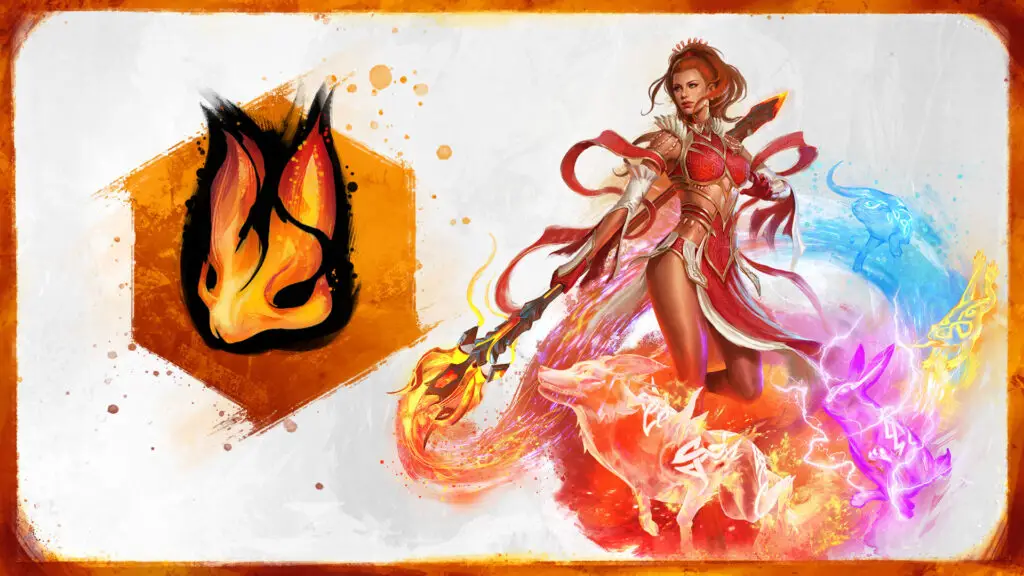
While many Elementalist builds thrive on fluidly swapping between the profession’s four elemental attunements, the Evoker encourages a more focused approach. Players choose a specific element as their primary focus and gain a matching familiar that provides combat assistance and benefits tailored to their elemental specialty. This creates four distinct build paths: Fire for condition DPS with a fox familiar; Air for power DPS with a nimble hare; Water for healing with an otter; and Earth for robust crowd control and protection with a resilient toad.
During the beta, some attunements didn’t quite achieve their full potential. Cohen anticipates that reworking the traitlines will unlock greater variety, particularly for support builds. “That’s going to open up a lot more space in the traitline to add a lot more support boons, because that’s the big flaw in the beta of all the support builds for Evokers—they just didn’t have access to enough boons for their allies.” ArenaNet is also considering allowing the familiar’s skills to autocast, a significant piece of player feedback aimed at improving quality of life.
Mesmer: Troubadour
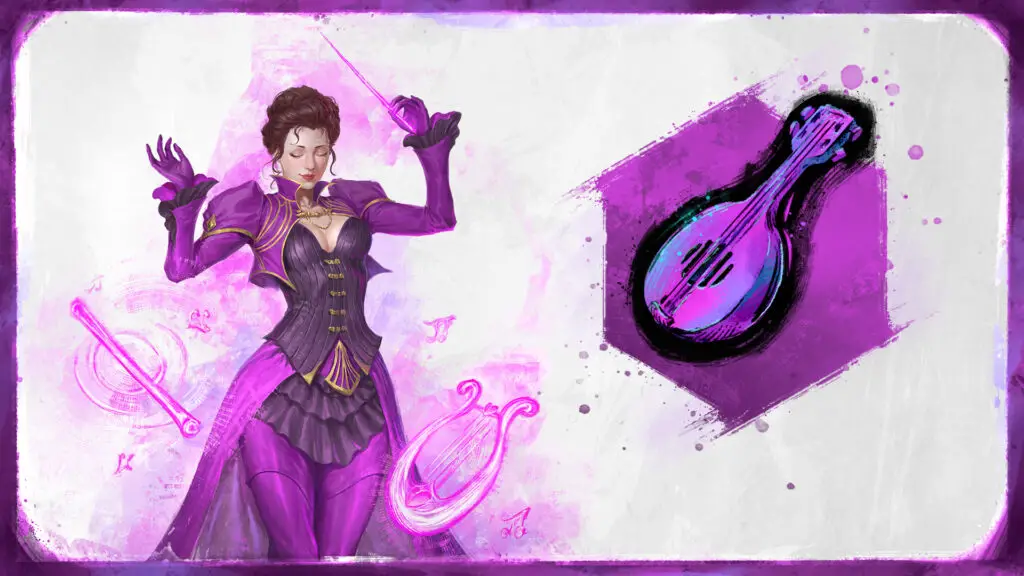
Illusions take a backseat as instruments come to the fore with the Mesmer’s new Troubadour specialization. Adopting a bardic theme, Troubadours weave melodies and recite poems to both damage foes and bolster allies. Instead of generating and shattering clones, this spec builds ‘notes,’ which are then used to summon spectral instruments: a lute for potent power damage, a flute for applying conditions, a drum for crowd-controlling stuns, and a harp for restorative healing.
Each summoned instrument corresponds to a unique ‘Tale’—a utility skill that gains additional effects when activated while its paired instrument is actively playing. For example, reciting the Tale of the Honorable Rogue cleanses movement-impairing conditions; if performed while the drums are active, it also grants superspeed to nearby allies, showcasing the synergistic depth of this new playstyle.
Similar to the Evoker, the Troubadour’s balance adjustments will primarily target its traitlines. Beta feedback revealed that many traits were too directly tied to specific instruments, leading to overly linear build choices. Cohen remarked, “That’s taking up a lot of space in this traitline that could have otherwise been spent fleshing out different ways for the support build to do things, or really hammering into the iconic moments of the Troubadour.” ArenaNet aims to introduce more flexibility and meaningful choices within the trait system.
Ranger: Galeshot
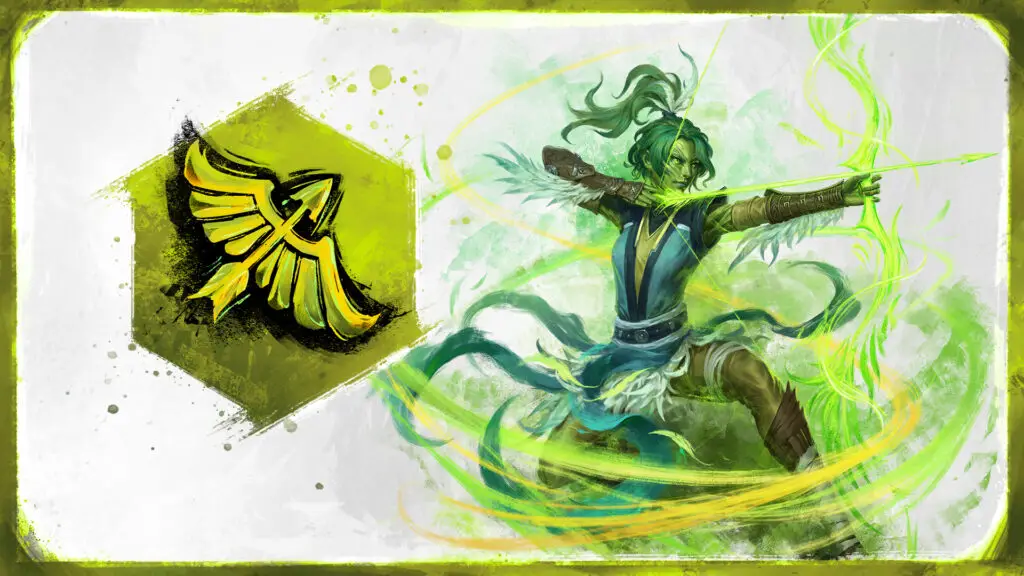
It’s finally here: an elite specialization for the Ranger that fully embraces its ‘range’ potential. The Galeshot equips Rangers with a Cyclone Bow, which, upon activation, replaces their currently equipped weapon with a distinct set of weapon skills. These skills consume ‘arrows’ that regenerate over time. By strategically expending arrows, players build towards ‘Hawkeye,’ a powerful special attack that unleashes a barrage of arrows upon multiple targets.
The utility skills are all wind-themed, offering a versatile toolkit that includes damage, knockbacks, swiftness, and launches. This specialization leans heavily into DPS, with some quickness generation available for those seeking a less purely selfish build. The Galeshot was among the most positively received elite specializations during the beta, meaning post-beta changes will focus on refining its existing strengths. “We have a handful of polish items … just small notes here and there,” Cohen stated, “This skill needs a little bit more range, or some traits that could be a little bit more interesting.”
Thief: Antiquary
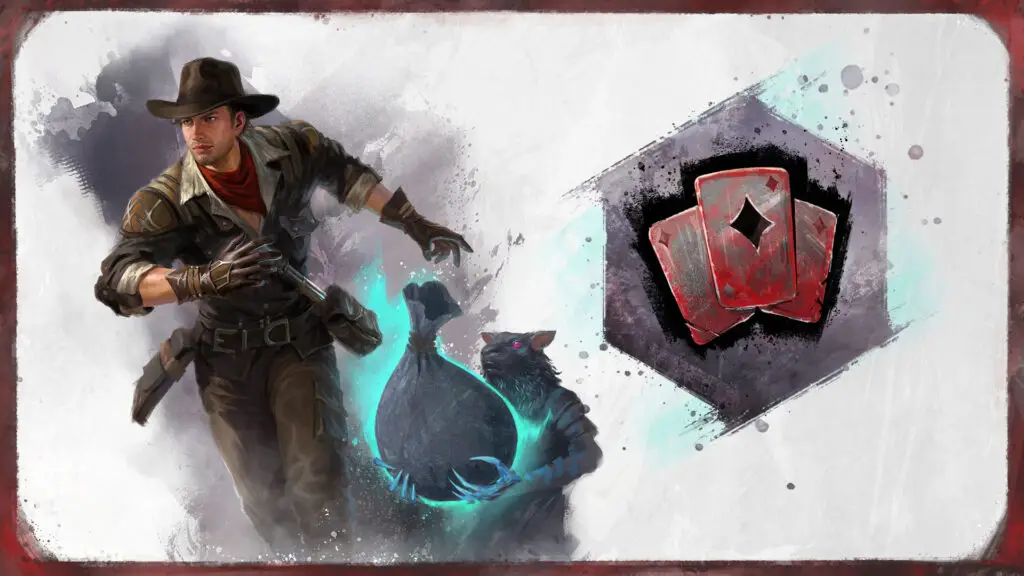
What if the Thief could harness the power of rats? That’s the wonderfully unconventional premise of the Antiquary, an elite specialization that introduces a Skritt companion to aid in treasure-hunting endeavors. This furry friend helps the Thief steal and deploy powerful artifacts on the battlefield. Thematically, the Antiquary evoked an extremely polarized reaction from players, a true ‘love-it-or-hate-it’ scenario.
Beyond its unique aesthetic, the Antiquary is also one of the more experimental specializations. The traditional Steal mechanic is replaced by ‘Skritt Swipe,’ which randomly awards two artifacts from a pool of eight, allowing players to choose between them. Furthermore, utility skills can be activated while still on cooldown, but with a chance to backfire, introducing an element of risk and reward. Beta feedback highlighted that this randomness often forced players to “play the UI” rather than the actual game. To mitigate this, a trait that guarantees one offensive and one defensive relic will be made baseline for the specialization, improving tactical consistency.
Engineer: Amalgam
Perhaps the most comic book-coded of the new elite specializations, Amalgams forge a symbiotic bond with a metallic ooze. This ooze serves as a dynamic defensive slime suit, capable of morphing into a giant, imposing sword for offensive maneuvers. Instead of the standard tool belt, Engineers choose three out of seven ‘protocols,’ each offering various defensive and offensive enhancements, along with additional bonuses when the Engineer enters an evolved state.
As a damage-per-second (DPS) specialization, the Amalgam significantly overperformed in the beta, so players can anticipate adjustments to its damage output upon release. Despite this, ArenaNet seems pleased with the overall design and feel of the spec. “Obviously it’s over-tuned in terms of power level, but we saw a lot of really strong reception,” Cohen noted. However, ArenaNet is closely examining the trait that allows for sharing evolved bonuses. It’s possible that the Amalgam may not retain the ability to grant both quickness and alacrity boons simultaneously, balancing its support capabilities.
Revenant: Conduit
Consistent with other Revenant elite specializations, the Conduit focuses on channeling a specific character from the expansive Guild Wars lore. This time, it’s Razah, a captivating Guild Wars 1 character. As an entity formed from the mists, Razah embodies mimicry, utilizing skills from multiple professions. For the Conduit, this manifests as a new F2 skill called ‘Cosmic Wisdom,’ which allows players to invoke the power of a different profession depending on the legend they are currently channeling. The duration and potency of this invocation are tied to the player’s affinity with their chosen legend, which is built by using utility skills.
During the beta, players felt that the execution of this specialization was somewhat lacking. “I think Conduit is a pretty good example of one where we felt that the profession mechanic didn’t have quite enough going on,” Cohen admitted. The core issue was that the bonuses derived from Cosmic Wisdom were generally too basic. ArenaNet is now exploring ways to make these effects more engaging and to better integrate the affinity mechanic with the overall gameplay flow of the Conduit, ensuring a more impactful and satisfying experience.
Warrior: Paragon
Another beloved Guild Wars 1 profession makes its return as an elite specialization, as the Paragon brings a more support-focused kit to the Warrior. Three new skills join the traditional F1 burst: Chant of Action, Chant of Recuperation, and Chant of Freedom. These chants pulse valuable boons to allies as long as the Warrior maintains ‘Motivation’—a new resource that gains stacks when burst skills are activated. On the utility side, Paragons gain specialized versions of shouts that feature an ‘echo’—an extra effect that triggers either after a set duration or when a burst skill is used, adding a layer of strategic timing.
One of the main pieces of feedback from the beta centered on the visual identity of the specialization. “Players want to see the wings more,” Cohen noted, referencing the iconic aesthetic of the GW1 Paragon. In terms of balance, the Paragon is another specialization where ArenaNet is closely scrutinizing the traitlines, potentially relocating the alacrity Grandmaster trait or enhancing its effects. Another significant consideration is enabling a viable DPS build, envisioning a “spear-chucking Paragon that does a bunch of damage” for players who prefer an offensive playstyle.
Guardian: Luminary
The Luminary was designed to align more closely with the core Guardian fantasy of protective light and righteous fury. The beta version introduced a new mechanic—the Radiant Shroud—which, when active, replaces the Guardian’s weapon skills. While in Radiant Shroud, players access skills corresponding to four radiant weapons. Using a skill not only performs an action but also ‘equips’ that weapon, granting specific bonuses and a follow-up attack. The cooldown for re-entering the shroud increases based on the number of radiant weapons utilized, adding a tactical element to resource management.
Several significant changes are planned for the Luminary’s official launch. First, the Radiant Shroud will likely be renamed to Radiant Forge, better reflecting its thematic purpose. More crucially, ArenaNet is addressing the flow of combat by speeding up slower skills and removing the cooldown penalty for using all available skills while in the shroud, promoting more fluid rotations. They are also looking to retool the shroud’s auto-attack and create Luminary-specific virtues that more effectively integrate with the specialization’s themes, moving beyond the core profession’s virtues for a truly unique experience.
Guild Wars 2: Visions of Eternity releases on October 28. Stay tuned to Digital Tech Explorer for more in-depth reviews and tech insights on the latest in PC gaming!