In the relentless pursuit of ultimate handheld gaming power, GPD is pushing boundaries by integrating AMD’s formidable **Strix Halo APU** into its upcoming GPD Win 5 device. This groundbreaking chip promises desktop-class performance, yet it brings considerable power and thermal demands. GPD’s audacious answer? A truly unique — and potentially divisive — solution: a large, detachable external battery. As revealed in a recent YouTube video, this pack is designed to be carried separately, perhaps in a backpack or even a pocket. While innovative, this approach immediately sparks debate among tech enthusiasts and raises critical questions about real-world practicality. The visual of the battery pack ungracefully protruding from a pocket, tethered by wires, suggests a potentially cumbersome setup that challenges the very essence of grab-and-go mobile gaming. This unconventional design choice presents a significant practical drawback to what is otherwise shaping up to be a remarkably powerful device, something Digital Tech Explorer is keen to delve into.
Detachable Battery: Specifications and User Experience Implications
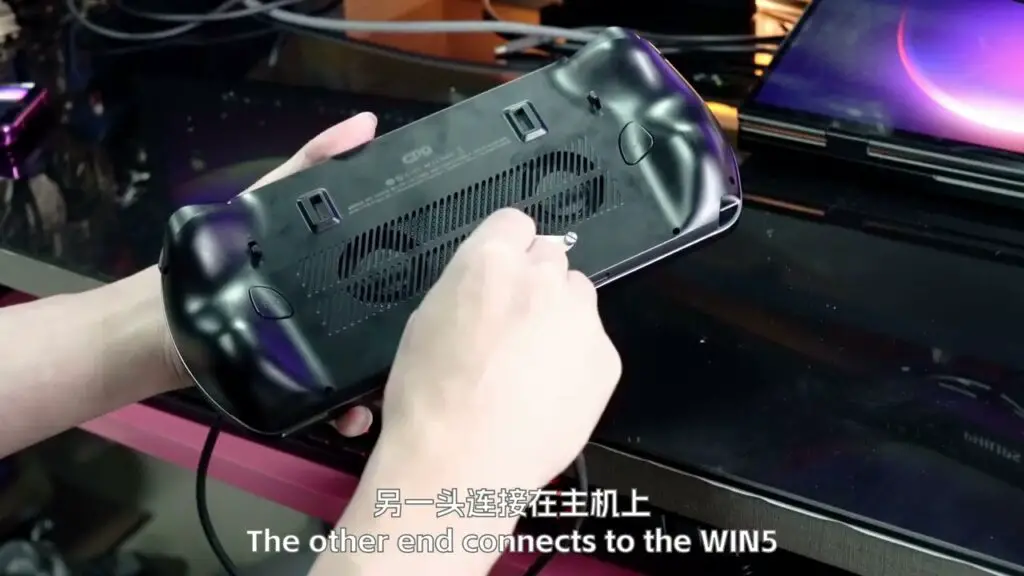
Delving into the specifics, this substantial external battery boasts an **80.4Wh** capacity, a figure that rivals—and often surpasses—the internal batteries of many modern laptops. It connects to the GPD Win 5 through a robust, screw-in extension cable, engineered to prevent accidental disconnections during intense gaming sessions. However, GPD’s confirmation that the battery is **not hot-swappable** reveals a crucial design limitation: the device must be powered down entirely to swap packs. This strongly implies the absence of any internal battery, essentially tethering the user to the external unit and fundamentally challenging the core ‘unplugged’ freedom that defines the handheld gaming experience. On a more positive note, isolating the power source results in an exceptionally lightweight main unit, tipping the scales at just **500 grams**. This is significantly lighter than competitors like the
Lenovo Legion Go (over 700 grams) and the original
Steam Deck (just under 700 grams). While the battery can also physically snap onto the back of the device, the primary ergonomic benefit of its reduced weight is only truly realized when utilizing the extension cable for external carry.
Core Features and Performance of the GPD Win 5
Shifting focus from its unconventional power solution, the GPD Win 5 genuinely shines with a suite of impressive core specifications. For gamers, it introduces **capacitive joysticks**, a thoughtful innovation specifically engineered to mitigate the dreaded stick drift—a persistent frustration in many handhelds. Internally, the device is an absolute powerhouse, offering configurations with a staggering **128 GB of RAM** and up to **4 TB of storage**, capabilities that rival high-end gaming laptops. To manage its massive external power source, it supports rapid **180W fast charging**. However, the undisputed star of the show for Digital Tech Explorer’s hardware enthusiasts is the **Strix Halo APU**. This chip is rumored to deliver graphical prowess comparable to a mobile **RTX 4060**, representing a monumental leap for handheld performance. While its considerable VRAM might pique the interest of those looking to run local AI models—a growing trend in personal computing—it’s also important to note that dedicated systems such as the
Framework Desktop PC might still offer a more optimized experience for intensive AI workloads.
Undoubtedly, realizing this extraordinary level of performance within a handheld form factor necessitates considerable design compromises. For many, the perpetual requirement to manage an external battery and its accompanying cable will likely prove to be an insurmountable hassle. When factoring in these practical limitations alongside the high-end components, the anticipated price point—expected to be **upward of $2,000+**—solidifies its position as a highly niche product. For tech enthusiasts and gamers considering such a significant investment, a device that inherently demands the carrying of a separate power pack and cannot function truly wirelessly presents a challenging value proposition. As Digital Tech Explorer continues to monitor this innovative space, we await further details from GPD regarding pre-orders and final pricing, expected by the end of the month, to fully assess its place in the evolving landscape of portable gaming.