
At Digital Tech Explorer, we’re constantly tracking the pulse of digital innovation, and few technologies capture the imagination quite like quantum computing. For years, this intricate field has promised to revolutionize processing power, hinting at future supercomputers capable of tackling currently insurmountable problems. Yet, a truly verifiable, practical breakthrough has often felt just beyond our grasp.
That narrative is shifting, as TechTalesLeo, our resident storyteller and tech enthusiast, explores a recent, significant announcement from Google. The tech giant claims a “major algorithmic breakthrough” with its esoteric Quantum Echoes algorithm. Google asserts this marks a verifiable quantum advantage, demonstrating a result that is an astonishing 13,000 times faster than a traditional supercomputer. This isn’t just a step; it’s a leap worth diving into, aligning with our mission to keep tech enthusiasts ahead of the curve.
The Persistent Challenge of Qubit Errors and Google’s Innovative Solution
A primary hurdle that has historically slowed quantum progress is the inherent error rate associated with quantum bits, or qubits. Unlike traditional binary bits, which exist in a definitive state of either zero or one, qubits harness the strange laws of quantum mechanics to exist in a superposition of one, zero, or both simultaneously. This fascinating, yet fragile, property makes qubits incredibly susceptible to even the slightest environmental disturbances, from minuscule temperature fluctuations to subtle vibrations.
As TechTalesLeo frequently highlights, understanding these fundamental challenges is key to appreciating breakthroughs. This extreme fragility explains why quantum computers are housed in meticulously controlled, futuristic clean rooms, often adorned with distinctive “copper chandelier” structures. These elaborate systems are crucial for maintaining ultra-stable environments, essential to prevent qubit decoherence — the loss of quantum properties — and the subsequent errors that undermine computation.
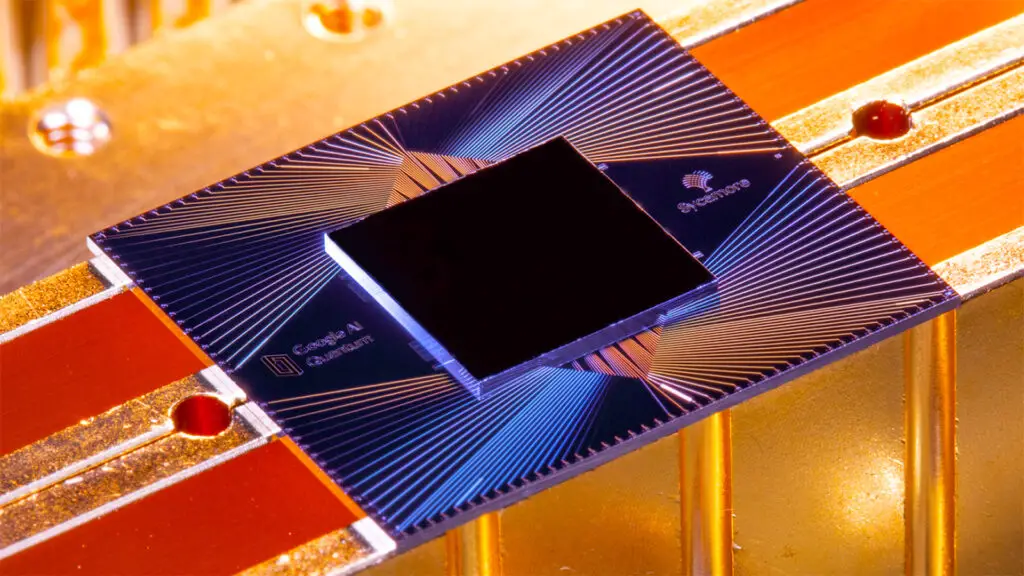
Google’s latest innovation, the Willow quantum chip, directly confronts this vulnerability. The team at Google claims to have addressed this core challenge by reducing errors as more qubits are incorporated into the system. This significant advancement is achieved through grouping qubits together in lattice structures, conceptualized as a “surface code.” Each surface code effectively functions as a single, more robust “logical qubit.” The ingenious design dictates that the larger the surface code lattice, the greater its inherent tolerance for errors, ultimately leading to a substantially lower error rate and more reliable computational results.

Unpacking the Quantum Echoes Algorithm: A Detailed Look
The core of Google’s recent announcement lies in the Quantum Echoes algorithm, meticulously implemented on their Willow quantum chip. This algorithm is touted as the first verifiable instance to truly surpass the capabilities of even the most powerful traditional supercomputers, a feat made possible, in part, by Google’s advanced error reduction strategies. As TechTalesLeo enjoys, let’s break down how this fascinating algorithm works.
The process is ingenious: a signal is transmitted into the quantum system, deliberately perturbing a single qubit. Subsequently, the exact sequence of operations is executed in reverse. By carefully observing the resultant “echo,” researchers can precisely trace the qubit’s intricate interactions within the complex, dynamic quantum environment. This method elegantly mirrors the “butterfly effect,” where a minor initial perturbation leads to a detectable disturbance much further along and later in time.
What makes the Quantum Echoes signal so potent is its amplification through constructive interference — a quantum phenomenon where waves combine to significantly increase their strength. This makes the signal remarkably sensitive and, crucially, verifiable amidst the inherent chaos of quantum systems. In a proof-of-principle experiment, the algorithm successfully simulated the spins of atomic nuclei in two distinct molecules. Google confidently asserts that these results precisely aligned with data obtained from traditional Nuclear Magnetic Resonance (NMR) techniques, effectively validating the real-world phenomena observed.
However, as Digital Tech Explorer always emphasizes, thorough research and transparency are paramount. Google’s claims have naturally sparked considerable debate, especially recalling prior assertions of quantum supremacy. Critics, including quantum physicist Dries Sels, voice skepticism regarding the true magnitude of the claimed quantum advantage, advocating for more robust proof and questioning if more efficient classical algorithms might still exist for the specific problem solved. It’s also important to note that this groundbreaking experiment currently operates on a relatively small scale of just 15 qubits. Google’s ambitious roadmap outlines a progressive scaling towards a full-scale, error-corrected quantum computer, with the immediate next objective being the development of a long-lived logical qubit — a critical step towards practical applications.
The Road Ahead for Quantum Computing
The intricate realm of quantum mechanics continues to present both profound challenges and unparalleled opportunities, consistently pushing the very boundaries of computational possibility. While the path to practical, large-scale quantum applications remains undeniably complex and requires rigorous ongoing validation, Google’s Quantum Echoes algorithm represents a significant marker in this journey. It reminds us at Digital Tech Explorer why we’re so passionate about tracing digital innovation. This breakthrough offers a glimpse into a future where problems currently deemed unsolvable might one day yield to the unique power of quantum processing, empowering developers and tech enthusiasts alike to make informed decisions about emerging technologies.
As TechTalesLeo continues to navigate and illuminate the evolving landscape of tech, we encourage you to stay tuned to Digital Tech Explorer for more in-depth analyses and captivating stories from the forefront of technology.