

In a remarkable display of technological ingenuity and environmental consciousness, seemingly disposable vapes are being given an astonishing second life. Instead of adding to the growing tide of e-waste, these everyday devices are being ingeniously transformed into fully functional web servers. Imagine a website like ewaste.fka.wtf, hosted not on a traditional server farm, but on the very microcontroller salvaged from a discarded vape – a true testament to the power of repurposing.
Disposable Vapes as Web Hosts
Delving into the often-overlooked hardware of these devices, we uncover a surprising truth: many disposable vapes are packed with sophisticated technology, from small screens to powerful microcontrollers. This inherent complexity significantly challenges their classification as mere ‘single-use’ items. As BogdanTheGeek, the visionary creator behind the vape-powered website, aptly puts it, “I wouldn’t want to be the lawyer who one day will have to argue how a device with USB-C and a rechargeable battery can be classified as ‘disposable’.” While the processing power of these miniature marvels is indeed minimal, it proves remarkably sufficient to host a legitimate website. The proof-of-concept site, while occasionally encountering 503 errors, attributes these to the overwhelming surge of curious traffic, rather than any fundamental flaw in the repurposed hardware itself.
The Technical Setup Explained
For those eager to dive deeper into the nuts and bolts, BogdanTheGeek provides a comprehensive breakdown on his blog. At its core, this fascinating project harnesses the vape’s embedded Arm microcontroller as its brain. The magic happens through an ingenious blend of legacy and modern tech: an old IP encapsulation protocol transmitted over USB delivers the necessary code, while a virtual terminal creates the bridge to an external computer, which then runs the actual web server. This innovative setup cleverly leverages the Serial Line Internet Protocol (SLIP) on Linux. SLIP acts as a conduit, enabling the system to efficiently send and receive IP packets – a neat trick possible because many USB serial devices inherently mimic the behavior of older dial-up modems. Furthermore, the implementation utilizes semihosting, a specialized mechanism crucial for embedded ARM microcontrollers. Semihosting facilitates seamless bi-directional communication, which was key to getting the SLIP code up and running effectively on such constrained hardware.
Initial Performance Challenges and Hardware Analysis
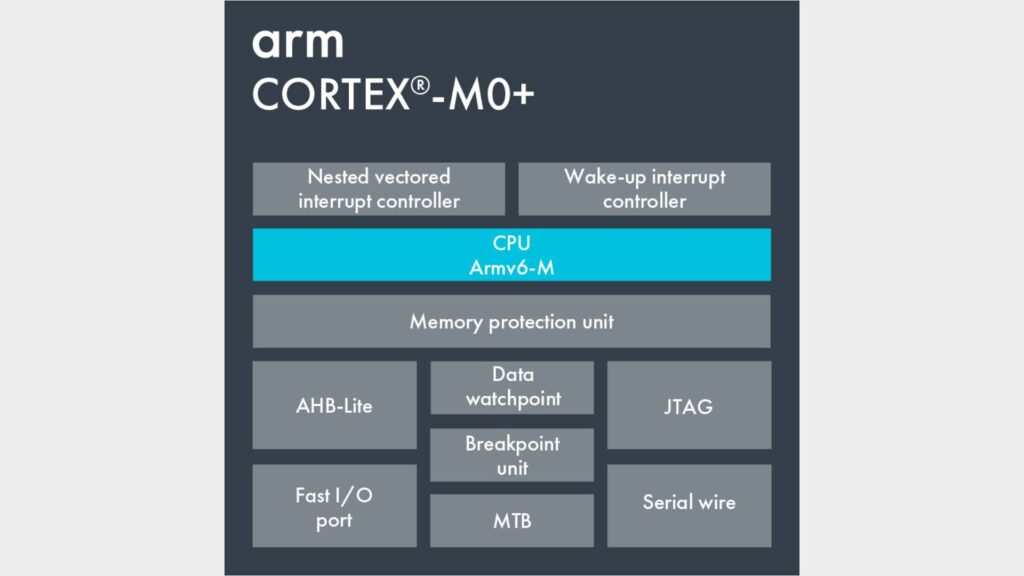
Unsurprisingly, initial tests revealed significant performance hurdles; a basic webpage would languish, taking over 20 seconds to load. To truly understand these limitations, a rigorous hardware analysis was undertaken – a hallmark of thorough tech exploration at Digital Tech Explorer. The investigation unveiled a PUYA ASIC, equipped with a mere 24 KiB of flash memory and a tiny 3 KiB of RAM. This specific configuration strongly pointed to the PY32F002B, a microcontroller boasting an Arm Cortex M0+ core ticking along at a modest 24 MHz. Intriguingly, this compact hardware, while certainly lean, was not the primary culprit behind the agonizingly slow speeds.
Optimizing for Speed
The true bottleneck, a classic challenge in embedded development, was ultimately traced to the software’s inefficient implementation: data was being read and written character by character, serialized byte by excruciating byte. The solution lay in ingeniously optimizing the precious 3 KiB of available RAM. Developers implemented a ring buffer, effectively caching reads from the host computer and feeding them into the SLIP poll function with far greater efficiency. Furthermore, write operations were intelligently batched, streamlining data transfer and enabling proper escaping. These critical optimizations didn’t just improve performance; they revolutionized it. Pings plummeted to a brisk 20 ms with zero packet loss, and a full webpage now renders in a mere 160 ms – a testament to brilliant problem-solving. While this refined setup judiciously utilized most of the available RAM, buffer sizes remain configurable, offering flexibility and headroom for future enhancements.
This remarkable endeavor serves as a powerful demonstration of innovation, resourcefulness, and a creative solution to the pressing issue of e-waste. It not only proves that even a seemingly insignificant disposable vape harbors the potential for a surprising second act beyond the landfill but also inspires developers and tech enthusiasts alike to rethink the capabilities of discarded hardware. For us at Digital Tech Explorer, and for anyone passionate about coding and sustainability, this project is a shining example of what can be achieved when ingenuity meets technical prowess, pushing the boundaries of what’s possible in embedded systems. As we champion informed decisions and skill enhancement, this story of repurposing tech stands out. And on a lighter note, perhaps the greatest takeaway from this exploration of vape-powered web hosting is a simple, health-conscious reminder: Oh, and don’t vape!