
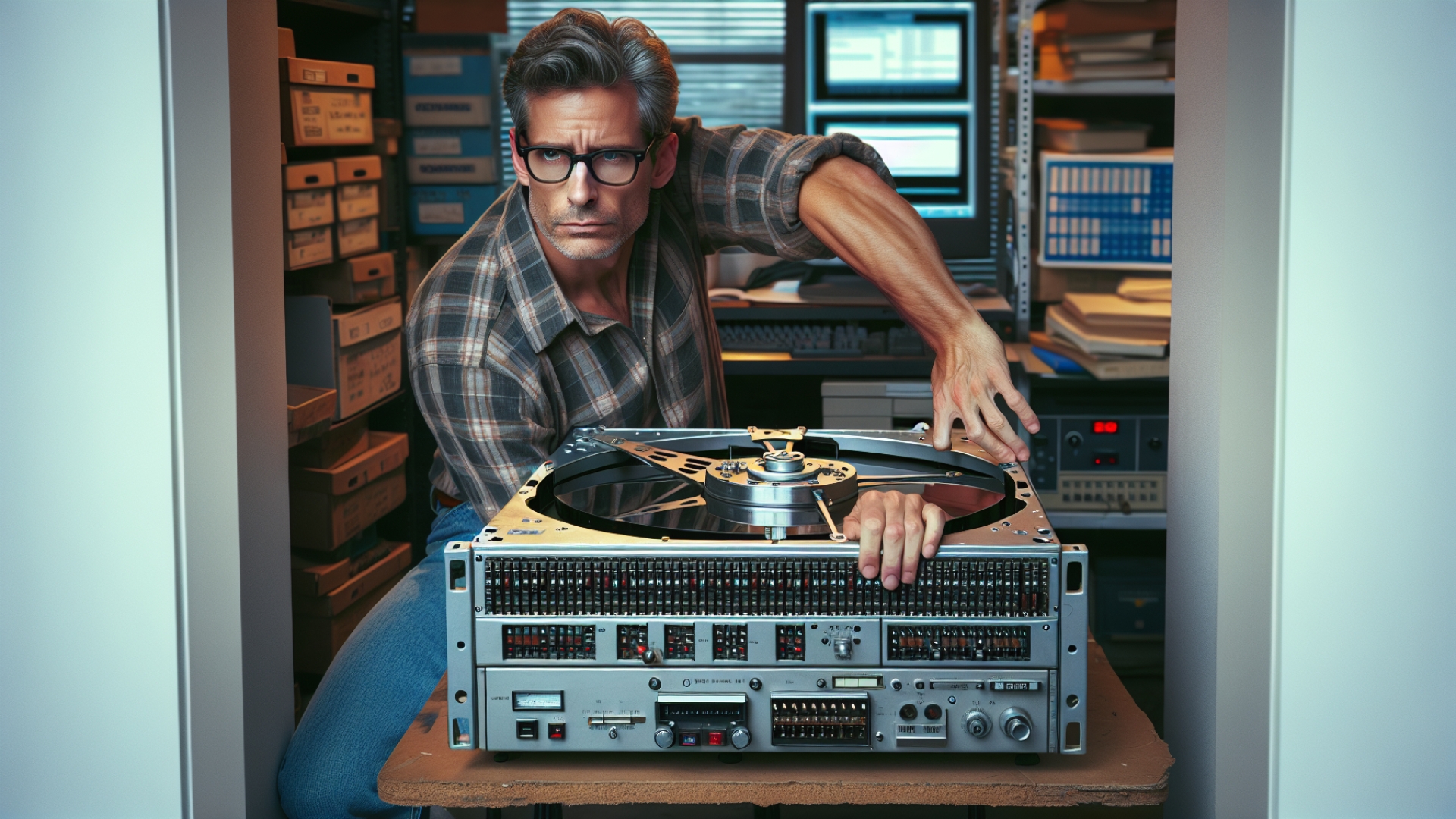
Even if you don’t instantly recognize the name Dave Plummer, his monumental contributions to computing are undoubtedly familiar. This esteemed former Microsoft engineer is credited with foundational work like coding Pinball for Windows NT and the indispensable Task Manager. Today, Plummer, a celebrated YouTuber and tech enthusiast, has embarked on a truly remarkable project: installing a colossal 200-pound, 14-inch DEC RA82 disc drive in his home.
This relic, first launched in Japan in 1982 and arriving in America in 1983, offers a fascinating glimpse into computing history. While it might not store much by today’s standards, its operational presence is certainly hard to ignore.
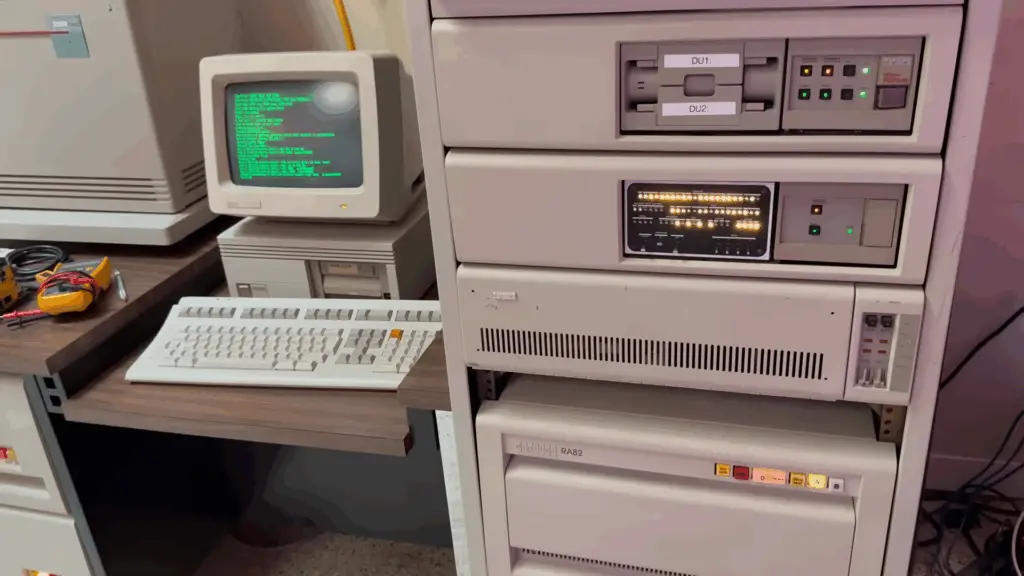
In a captivating video titled “SD Cards are LAME!“, Plummer proudly showcases his DEC RA82 disc drive. He vividly describes the immersive, tactile experience of running such hardware, noting, “You can feel it through the floor when it seeks hard” – a testament to the raw, physical presence of this vintage technology.
The Herculean Task of Installation
The sheer scale of this endeavor is evident from the outset. To simply hoist the massive drive into his home rack, Plummer had to acquire a hydraulic scissor lift. As he aptly puts it, “You don’t so much install one of these as you do birth it like an ocean liner,” emphasizing the monumental effort involved in integrating such an industrial piece into a home environment.
Once physically positioned, bringing the drive online required a meticulous process. To make the drive operational with his chosen operating system, Unix, Plummer performed a low-level format to prepare it for future data, then partitioned the disk into different regions, and finally created the necessary file systems on these partitions. This intricate setup process itself is a testament to the complex rituals of vintage hardware management.
A Glimpse into the Past: Performance vs. Experience
After all this weight, size, and effort, what does this magnificent machine offer in terms of modern utility? A modest 622 MB of storage. To put that into perspective for our tech enthusiasts, that’s enough to store a game like Balatro roughly nine times, or perhaps a tiny fraction of a modern AAA title. Clearly, the objective here isn’t efficiency. Plummer isn’t seeking to replace the best external SSDs of today or to quickly boot up a game of Arc Raiders. His motivation, as he articulates, stems from a profound passion for technology’s heritage and the unique experience it offers, embodying the very spirit of digital innovation and exploration.
Plummer’s Ode to Vintage Hardware
“What I really wanted was period-correct storage with its own beautiful set of limitations, rituals, and noises,” Plummer explains, directly addressing common critiques of inefficiency. He argues that running vintage hardware is more than just ‘neat but impractical’; it’s about preserving a functional ecosystem. He emphasizes that vintage components are designed to operate harmoniously, providing a comprehensive and authentic experience that is both educational and, in his words, “beautiful.”
This perspective resonates deeply when observing the RA82 in action. The retro off-white aesthetic and the profound hum emanating from the entire rack as it spins up evoke a sense of nostalgia and mechanical artistry. The video culminates dramatically as Plummer engages the spindle motor, triggering a circuit breaker within the machine before it finally bursts to life – a truly classic moment in the world of vintage tech.
The Soundtrack of Computing History
The operational soundscape of the RA 82 is a symphony of machinery: the distinct hum of internal components, the whirring of the drives, and the general cacophony of retro clicks, taps, and scratches that characterize traditional storage. Any tech enthusiast who has held an external drive to their ear will instantly recognize these familiar sounds, amplified to their fullest with the RA82.
Plummer’s project serves as a powerful reminder for modern developers and tech enthusiasts alike: understanding the origins and evolution of hardware enriches our appreciation for today’s advancements. It truly is, as Plummer asserts, quite educational, making complex technological history both accessible and intriguing, aligning perfectly with Digital Tech Explorer’s mission to make technology both educational and entertaining.
Some of the links on Digital Tech Explorer are affiliate links. This means we may earn a commission if you click through and make a purchase, at no additional cost to you. Our recommendations are based on thorough research and personal experience.