
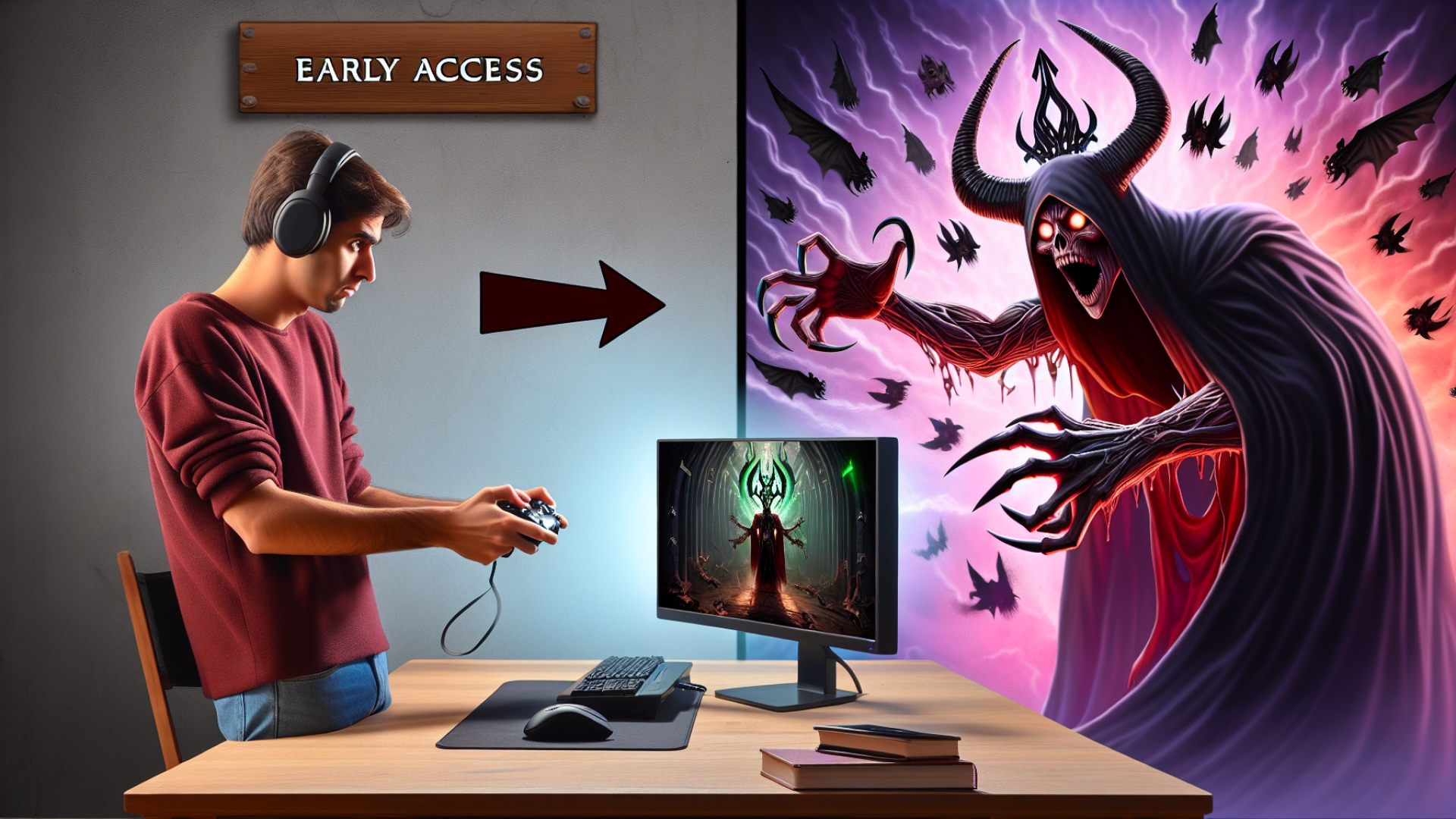

As TechTalesLeo, I specialize in bringing technology to life through captivating narratives and detailed analyses for Digital Tech Explorer. Yet, my recent divine intervention in the god sim Fata Deum proved less than heavenly. I didn’t set out to be a terrible god. Feeding the hungry, inspiring speeches, fashionable sandals—it was going to be the benevolent playbook all the way. But it turns out that I am not a merciful deity in this game. Instead, I’m a petty, vindictive god prone to extreme temper tantrums, perfectly fitting a role in an ancient Greek pantheon.
This experience led me to resign from my simulated divine duties in the god sim Fata Deum. Join me as we explore why this Early Access title left me feeling more frustrated than omnipotent.
Best Intentions, Disappointing Reality

Like I said—my intentions were good. Fata Deum largely models itself off classics like Populous and, more overtly, Black & White (sans creature), where you must compete with other gods by converting mortal villages through warfare and miracles. The foundations are certainly present: you can inspire your followers, curse them with horrible visions, literally pick them up and toss them around, place blueprints for new buildings, and send them off to battle.
The core issue, however, is that as an Early Access title, none of these mechanics coalesce into a remotely enjoyable experience right now. Instead, it feels like a thankless grind where mercurial mortals place endless demands on your time, largely incapable of independent action. It’s a descent into micromanagement hell.
My grand vision for a newly converted village hit an immediate snag: a lack of stone. With no viable quarry locations nearby, I’d need help from my primary settlement. Yet, the game’s resource transfer system is convoluted; trades and gifts can only be activated at the end of the day, allowing a measly 20 units of a single resource from one village to another. This archaic system immediately highlights a lack of automation, a recurring frustration.
Returning to my primary village, I found that my eight assigned miners were mostly idle, despite having two quarries. Only two were actually working. The rest? Just “hanging about,” apparently on an unscheduled holiday, offering no assistance to their struggling god. This absence of intelligent automation or clear feedback mechanisms makes strategic planning feel futile.
The Gaslighting God Experience

You might assume this idleness is tied to a deep, intricate system governing mortal efficiency. Each follower has health, energy, and productivity pools that deplete. They develop skills, have strength, and a comfort level to consider. For a god sim, this level of granular individual management feels excessive, constantly pulling focus from grander, strategic goals. While buildings exist to help maintain these stats, their effectiveness is questionable. Even with two pubs in my small village, they were underutilized, and their staff often absent. The most effective—and tedious—way to energize worshippers proved to be clicking on them one at a time and performing miracles until my mana reserves ran dry.
With every monotonous click, my patience frayed. As a deity capable of summoning storms, conjuring demons, and raising legions of zombies, being beholden to these stubbornly idle mortals was maddening. My divine benevolence began to wane, and I found myself leaning into the Sauron playbook more than the JC one.

The deepest frustration stemmed from the fact that none of my direct interventions resolved the core problem: my mortals consistently refused to automatically go to work. Every villager might be healthy and energized, yet they’d still lounge around “recuperating.” With no in-game concept of weekends or a clear way to track individual downtime, I was left guessing. This inconsistency, especially compared to another village where mortals remained productive despite similar expansion hurdles, truly made me wonder: can a god be gaslit by their own worshippers?
Perhaps a righteous war would offer some catharsis. But even initiating conflict isn’t straightforward. Like trading, raids can only be planned at night, supposedly by manipulating mortal dreams. This arbitrary restriction feels disconnected from the god-like power I wield during the day, where I can directly influence actions and send waking visions. The game’s design choices frequently contradict the fantasy it attempts to build.
Dreams of Undeclared War

Despite my mounting frustrations, I truly wanted this invasion to proceed. So, I waited until nightfall, seeded my followers’ minds with violent dreams, and watched my tiny army march off in the morning. Battles in Fata Deum are largely hands-off affairs. While you can influence outcomes by deploying demons or negative miracles, the engagements are both visually indistinct and incredibly anticlimactic. Soldiers haphazardly clash for a brief moment, a winner is declared, and victorious troops simply stand around as resources are magically siphoned from the defeated village to the invading one.
This “one-and-done” battle system offers no strategic depth; there are no counter-attacks, no pursuit of retreating raiders. Furthermore, raids are restricted to immediate neighbors, forcing a tedious village-by-village conversion march across the map just to reach a resource-rich settlement. It’s a combat system that fails to deliver on the promise of divine power or strategic conquest.

With the raid’s failure to sate my bloodlust, I embraced my descent into evil. I sacrificed villagers to summon demons and murdered others, raising them as zombies. While this initially startled the mortals, normalcy quickly returned, as the summoned entities proved surprisingly unmonstrous. Demons simply await conscription, while zombies perform tasks mortals usually do, but with less micromanagement. Though inefficient, they work consistently. Oddly, positive miracles negatively affect them, while negative ones boost their energy—a quirk that further muddles the game’s internal logic.
Ultimately, neither my zombie plague nor occasional meteor strikes provided much satisfaction. I’d completely disengaged from the race to convert people, as the last thing I desired was more useless worshippers. At that point, I simply began grabbing people and flinging them into lakes or against rocks. Sometimes I’d punch them with my god fist. This, admittedly, achieved nothing beyond a fleeting sense of catharsis, highlighting the game’s inability to provide compelling gameplay loops, even for its destructive paths.
Early Access, Unclear Future

Given that Fata Deum is launching into early access, there’s always potential for improvement. However, 42 Bits Entertainment’s current vision for their god sim seems fundamentally at odds with delivering an engaging and entertaining experience. The pervasive micromanagement, reminiscent of a survival game’s granular needs but without the corresponding tools or functioning automation of a well-designed city builder, saps all enjoyment. True fun in these genres comes from setting priorities and solving complex problems strategically, not from endlessly babysitting individual villagers.
The game truly struggles to find its brilliant hook. While inspired by older god sims, it often feels like a regression. Black & White, launched nearly 25 years ago, offered the captivating allure of nurturing and training massive beasties—a central, compelling mechanic. Fata Deum, in contrast, offers little more than boredom. For now, tech enthusiasts and developers on Digital Tech Explorer looking for an engaging god sim experience might find themselves wishing for a more accessible way to revisit the classics.