
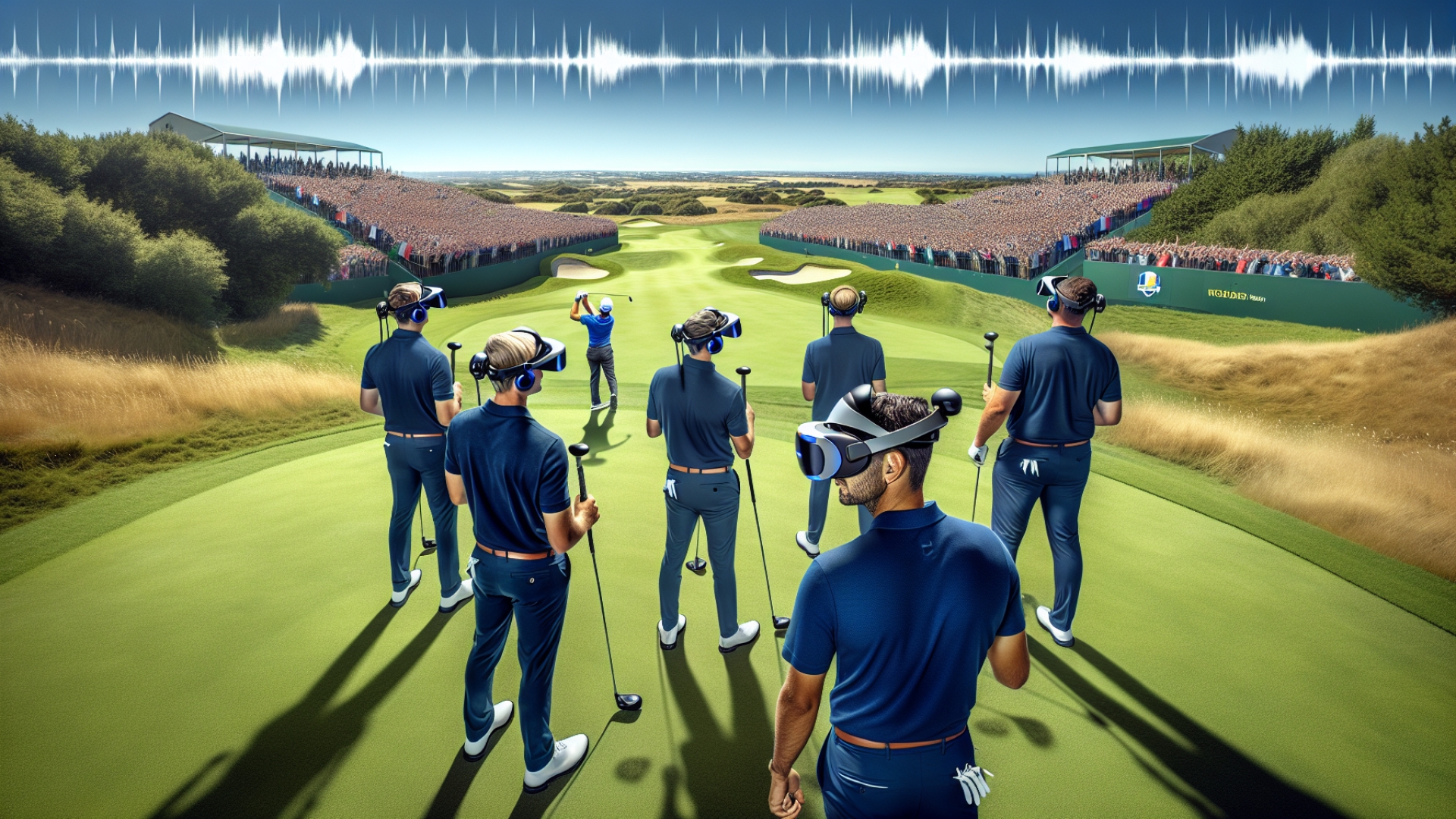
At Digital Tech Explorer, we constantly track how cutting-edge technology is reshaping various fields. This year, European pro golfers are demonstrating a fascinating application of virtual reality (VR) headsets, not for perfecting their swing, but for a far more psychological challenge. They’re embracing this innovative tech to prepare for, and ultimately tune out, the anticipated roar of a fervent home crowd at the upcoming Ryder Cup in the US, a unique digital innovation in sports training.
The Ryder Cup: A High-Stakes European Challenge on US Soil
In the upcoming Ryder Cup, professional golfers from Europe and the United States will compete for the prestigious trophy. While the European team boasts an impressive recent record, having won seven of the last ten tournaments, they face a significant hurdle: they haven’t secured a victory on US soil since 2012. The next event is set to take place at the Bethpage Black Course in Farmingdale, New York, placing immense pressure on the European contenders to break their away-game losing streak. This is where advanced psychological preparation, powered by technology, becomes critical.
Leveraging Tech Against the Home Crowd Advantage

The home crowd advantage is a major, often overwhelming, factor in the Ryder Cup. The sheer intensity created by hundreds, if not thousands, of passionate fans can directly impact a golfer’s focus. For any athlete, maintaining composure amidst constant noise and heckling is immense, and it can be the difference between a winning shot and a critical mistake. This challenge highlights why teams are now exploring digital solutions to build mental resilience, mirroring the “real-world testing” ethos we value at Digital Tech Explorer.
Rory McIlroy’s Embrace of VR Simulation
Top golfer Rory McIlroy fully embraced the immersive nature of this cutting-edge training. When asked how far the virtual reality experience should go, he responded, “Go as far as you want.” He elaborated on the purpose of the technology, stating, “It is just to simulate the sights and sounds and noise. That’s the stuff that we are going to have to deal with.” This commitment from a leading athlete underscores the potential of VR in high-performance psychology, a fascinating case study in hardware application.
The Intriguing Nature of Simulated Crowd Interaction
While golf is often seen as a reserved sport, the Ryder Cup has a reputation for its uniquely rowdy atmosphere. The VR simulation aims to replicate this environment, moving beyond light, family-friendly banter. When pressed about the specific insults programmed into the simulation, McIlroy was coy, saying, “You don’t want to know. Not for publication.” This hints at a genuinely jarring simulated experience, designed to prepare players for the most extreme forms of crowd pressure. TechTalesLeo finds this particular application of digital tech for mental fortitude incredibly compelling.
Acknowledging the Limits of Immersive VR Training
Despite the advanced preparation, McIlroy candidly acknowledges the limits of any simulation. “But nothing can really prepare you until you’re actually in that,” he explained. While VR technology provides a valuable tool for readiness, it cannot fully replicate the authentic, high-stakes pressure of live competition. “You can wear all the VR headsets you want and do all the different things we’ve been trying to do to get ourselves ready but once the first tee comes on Friday it’s real and we just have to deal with whatever’s given.” This balanced perspective aligns with Digital Tech Explorer’s commitment to thorough research and understanding both the capabilities and current boundaries of emerging tech.
As TechTalesLeo often explores on Digital Tech Explorer, the real-world applications of technology continually surprise and inspire. This innovative use of VR headsets transcends traditional gaming and entertainment, illustrating a powerful new frontier in sports psychology. It’s a testament to how digital innovation can empower athletes to build mental fortitude, pushing them to prepare not just their physical game, but their psychological resilience against the immense pressure of elite competition. For tech enthusiasts and professionals alike, this serves as a compelling case study in the versatile and impactful future of virtual reality and its capacity to bridge complex technology with everyday (or in this case, elite competitive) usability.