
In a move that signals a significant shift in game development, Electronic Arts (EA) has officially partnered with Stability AI, the innovative force behind the acclaimed Stable Diffusion generative AI image maker. This collaboration, set to “co-develop transformative AI models, tools, and workflows,” aims to empower EA’s artists, designers, and developers, redefining how interactive content is brought to life for tech enthusiasts and gamers alike.
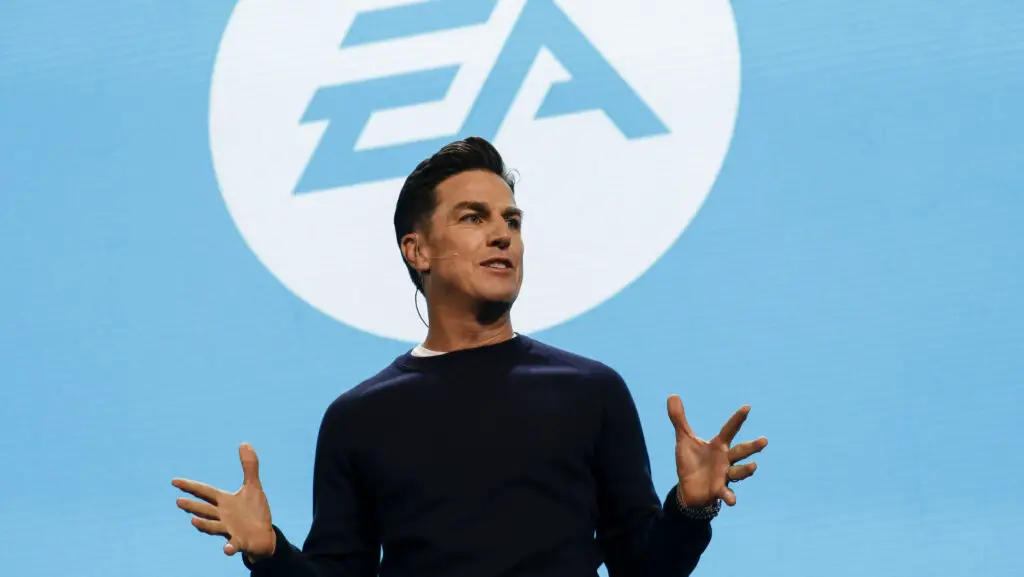
This partnership echoes EA’s long-standing commitment to technological advancement. As a pioneer in interactive entertainment for over four decades, EA has consistently leveraged technology to redefine player experiences. Their official announcement underscores a core belief that “technology powers creativity—amplifying imagination, accelerating expression, and enabling our teams to deliver bold, new experiences that inspire the world to play.”
Here at Digital Tech Explorer, we’ve long observed how Machine Learning and Artificial Intelligence (AI) have been integral to EA’s innovation, driving advancements from intelligent gameplay and real-time animation to complex physics simulations and streamlined development pipelines. While AI has been a foundational element in game design since the earliest NPCs, the emergence of generative AI presents a new paradigm—one often viewed not just as an empowering tool, but potentially as a substitute for human creativity.
Emphasizing Human Creativity in AI-Driven Workflows
Amidst discussions surrounding AI’s role, EA’s statement strongly emphasizes the indispensable human element. The company frames AI as a “trusted ally” in their evolving workflow, designed to “support faster iteration, expanding creative possibilities, accelerating workflows, and allowing more time to focus on what matters most—building world-class games and experiences that entertain massive online communities.” They underline AI’s capabilities for drafting, generating, and analyzing, while firmly asserting that “it can’t imagine, empathize, or dream. That’s the work of EA’s extraordinary artists, designers, developers, storytellers, and innovators.”
Kallol Mitra, EA’s vice president of creative innovation, mentioned the company is “amplifying” the creativity of EA developers by “giving artists, designers, and developers the power to dream bigger and build more.” Steve Kestell, EA Sports technical art head, added that AI “will allow creativity to get directly from people’s minds, and into our experiences.” Rick Stringfellow, head of visual content for EA Entertainment, noted, “Partnerships like this are how we evolve the craft of game-making and give our teams the tools to tell deeper, more meaningful stories.”
As TechTalesLeo often explores emerging digital trends, it’s exciting to see that initial developments from this partnership will focus on “artist-driven workflows” aimed at accelerating the creation of in-game assets. EA also intends to leverage “AI systems that can pre-visualize entire 3D environments from a series of intentional prompts,” giving artists unprecedented control to creatively direct the generation of game content. This could significantly impact development pipelines, a key area for our developer audience.
Leveraged Buyout and AI’s Potential Impact on Staffing
This strong emphasis on the human element, particularly in an increasingly AI-driven landscape, arrives amidst significant external pressures on EA. Digital Tech Explorer has been tracking concerns following EA’s recent leveraged buyout by Saudi Arabia’s PIF and private equity firms, a deal that reportedly loaded EA with $20 billion in debt. The imperative to manage this debt is expected to drive substantial cost-cutting. While AI tools could optimize project management, a more significant increase in generative AI usage raises questions about its potential to considerably impact staffing and streamline payrolls across the company.
Stability AI’s Ongoing Legal Challenges
Transparency and thorough research are pillars of Digital Tech Explorer, and it’s essential to note that Stability AI operates under a cloud of ongoing legal challenges. These include a 2023 lawsuit by Getty Images, alleging that Stability AI “unlawfully copied and processed millions of images protected by copyright” for training its image generation systems. Concurrently, Stability AI is a defendant in a class-action lawsuit alongside other AI image generators, brought by artists claiming their work is used for AI training without consent. Though the Getty lawsuit saw modifications earlier this year, both legal actions remain active, highlighting the complex ethical and legal landscape of generative AI.
This evolving partnership between EA and Stability AI marks a pivotal moment in game development and the broader application of generative AI, an area Digital Tech Explorer will continue to monitor closely. We encourage our readers, whether tech novices or seasoned professionals, to delve deeper into these trends.
Some of the links on Digital Tech Explorer are affiliate links. This means we may earn a commission if you click through and make a purchase, at no additional cost to you. Our recommendations are based on thorough research and personal experience.
For more insights into the convergence of AI and gaming, explore related content and discussions on Digital Tech Explorer: