

The recent $55 billion leveraged buyout of EA, a monumental deal placing the publishing giant under the control of private equity firms and Saudi Arabia’s Public Investment Fund, has ignited considerable discussion across the tech and gaming communities about the company’s future. This seismic shift, which saddles the megapublisher with a staggering $20 billion in debt, leads analysts and corporate finance experts to believe the new owners will likely prioritize EA’s existing live service moneymakers to manage these new financial obligations, rather than pursuing immediate, drastic strategic overhauls. As Digital Tech Explorer observes, understanding such industry movements is crucial for developers and tech enthusiasts tracking the pulse of digital innovation.
Financial Outlook and Debt Servicing
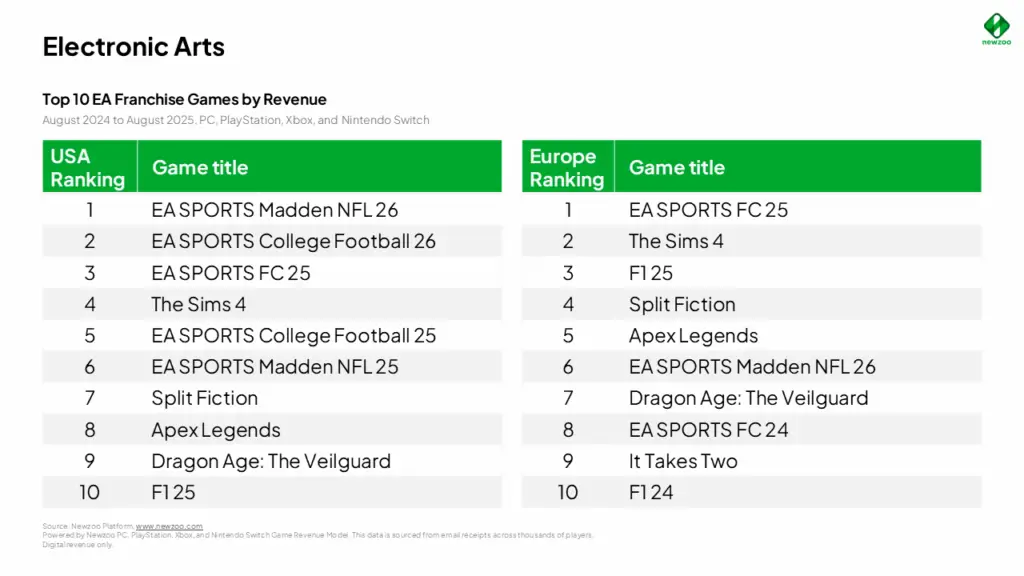
Despite the substantial new debt on EA’s balance sheet, experts are not predicting a catastrophic outcome. Philip Alberstat, managing director at DBD Investment Bank, dismisses comparisons to bankruptcies like Toys ‘R’ Us. “EA generates approximately $7.5 billion annually from franchises like Apex Legends, Battlefield, and EA Sports FC,” Alberstat noted. “That flow of cash gives EA a real capacity to service the $20 billion in debt.” He emphasized that unlike the failing retail model of Toys ‘R’ Us, “EA has sustainable revenue from live services across multiple platforms,” securing a vital financial lifeline.
Impact on Innovation and Portfolio Strategy
The move to private ownership presents conflicting possibilities for EA’s creative direction. On one hand, Phylicia Koh, general partner at investment firm Play Ventures, suggests that being free from the scrutiny of public investors could “in theory give EA breathing space to push innovation in new IP and titles.” This aligns with the potential for deeper, long-term strategic investments often touted in private equity. However, Emmanuel Rosier, former EA strategist and Newzoo director of market intelligence, offers a cautionary tale: “consolidation often brings more cautious portfolio management.” He anticipates publishers may double down on proven franchises rather than taking significant risks on experimental projects, potentially narrowing the creative pipeline that fuels digital innovation. Rosier specifically highlights that “the future of Battlefield, The Sims, Mass Effect, and Dragon Age is less clear” than its reliably profitable sports titles. He suggests these beloved IPs could be streamlined, spun out, or restructured through partnerships, depending on how the new owners assess their profitability and growth potential within this evolving landscape.
Industry Consolidation and Emerging Opportunities
The EA buyout is not an isolated event but rather a significant chapter in the broader trend of industry consolidation that has reshaped the 2020s, with tech giants like Microsoft, Tencent, and Embracer making numerous studio acquisitions. This unfolding narrative, as observed by TechTalesLeo, reveals a dynamic shift. According to Rosier, this trend, paradoxically, may create new openings for smaller developers. “Opportunities may grow for AA studios and indie developers to stand out,” he says, suggesting a widening gap at the top. Alberstat reinforces this perspective, stating that gaming is “moving into a new phase where the biggest players need serious capital to compete” and are consequently becoming more risk-averse. “We’ll see more consolidation at the top, but also more room for focused studios doing what large publishers can’t: taking chances on new ideas,” Alberstat explained. “The industry isn’t dying, it’s splitting into two different models. You have capital-intensive blockbusters on one side and creative independent development on the other, each presenting unique challenges and opportunities for the tech ecosystem.”
Within this newly structured landscape, the fate of some of EA’s storied studios remains uncertain. BioWare, for instance, finds itself in a precarious position, particularly after its ambitious but ultimately unsuccessful foray into live service with Anthem. Staff at the studio, renowned for its narrative-driven titles like the Mass Effect and Dragon Age series, are reportedly concerned about their creative freedom and ability to thrive under the new ownership. Adding another layer of complexity, Phylicia Koh points out potential specific directives from the new owners, stating, “I imagine PIF will want some job creation for the Saudi market.” For now, while the publisher’s highly profitable sports franchises appear secure, the future of its other major intellectual properties hangs in a delicate balance as EA navigates its new financial and corporate reality. This ongoing story is one that Digital Tech Explorer will continue to follow closely, offering insights into its implications for the broader tech and gaming world.