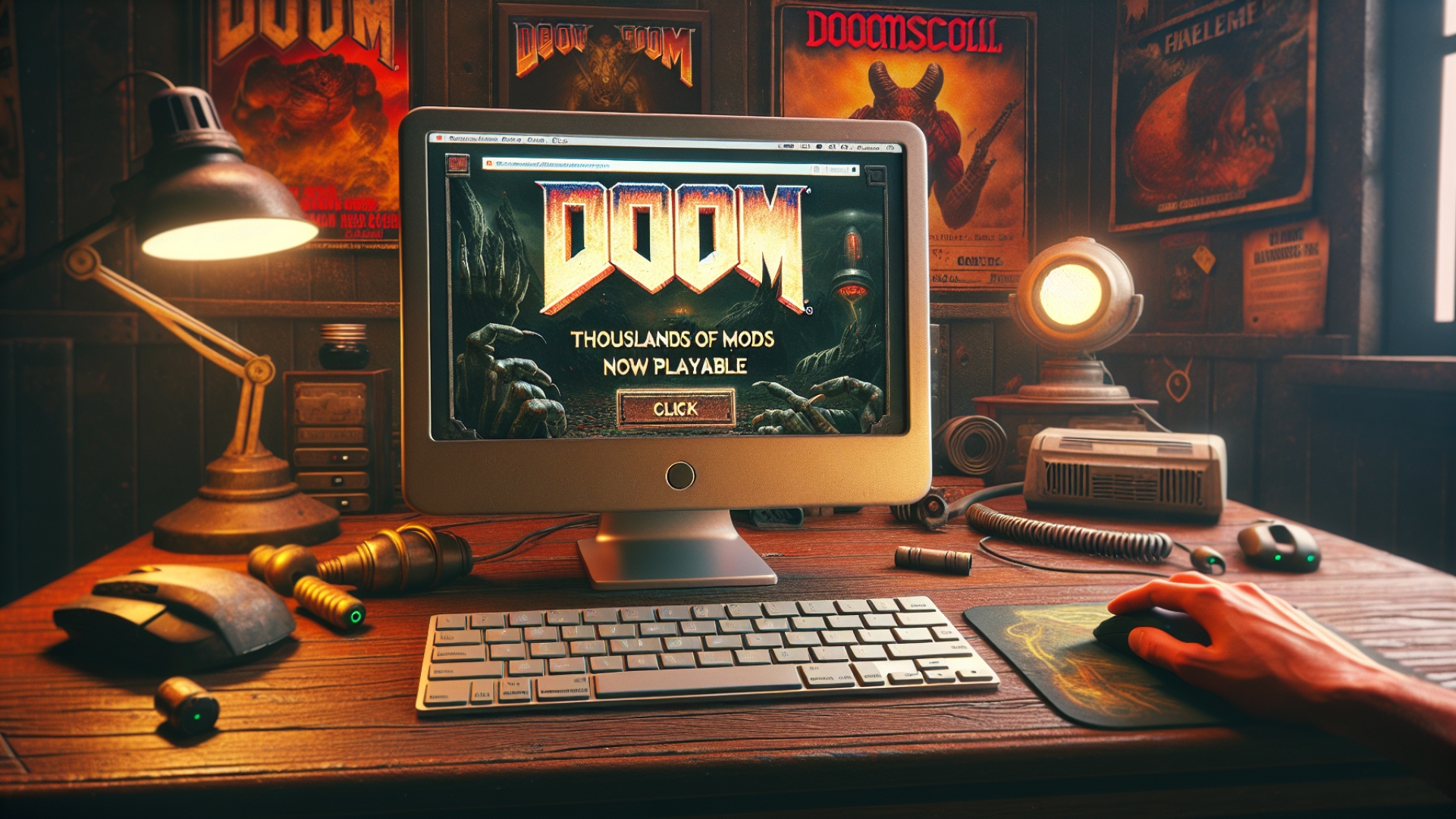
For decades, id Software’s legendary FPS, Doom, has been synonymous with widespread accessibility, gracing nearly every conceivable platform. Now, a groundbreaking development has made an entire universe of its modding community’s creations even more readily available. Introducing DoomScroll, a newly launched website that offers in-browser access to thousands of user-made Doom WADs. This initiative opens up a vast, diverse archive of community-driven content, inviting players, both seasoned and new, to delve into the boundless creativity that defines Doom’s legacy. As Digital Tech Explorer constantly seeks to highlight digital innovation and engaging tech, DoomScroll stands out as a testament to the enduring power of community-led development in gaming.
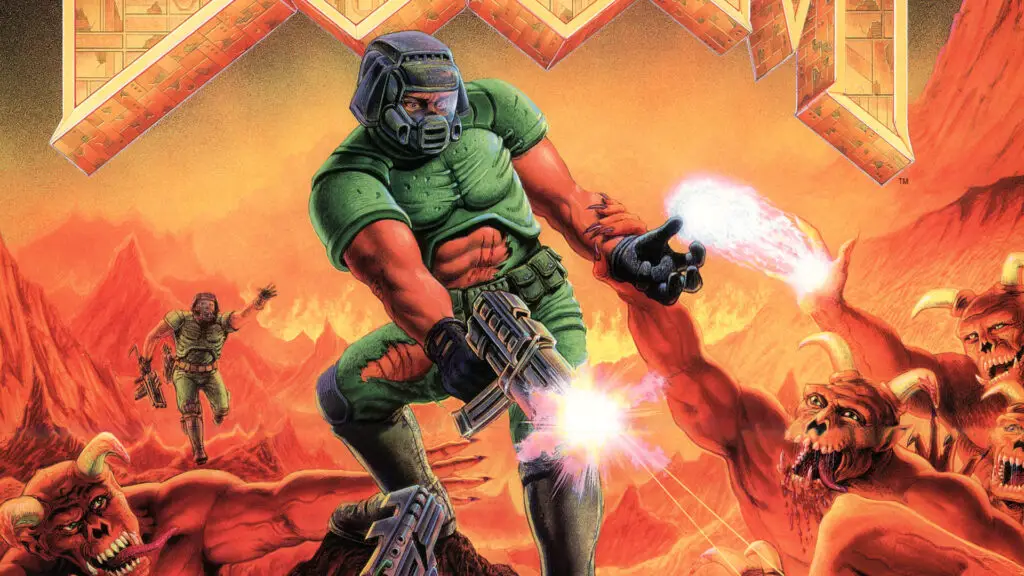
The visionaries behind this platform are software engineer James Baicoianu and Internet archivist Jason Scott. After several years in development, DoomScroll was unveiled to coincide with Doom’s 32nd anniversary. Their primary goal, as Baicoianu articulated, was to significantly boost the visibility and ease of access to the decades of work from one of gaming’s most inventive and dedicated communities. The archive, as he described, is an eclectic mix: from “simplistic maps made by kids just learning how game development works” to sophisticated “full total conversions with all-new music, textures, and sprites.” This dedication to preserving and showcasing digital history perfectly aligns with Digital Tech Explorer‘s mission to make complex technology and its evolution accessible and engaging for all, as often explored by our own TechTalesLeo.
Navigating the DoomScroll interface is an experience in itself, with its backdrop of classic Doom sprites and industrial textures. Each user-created level is presented in a compact grey box, complete with its name, author, a brief description, and a dynamic wireframe view of the map. Selecting a box expands into a more comprehensive overview of the custom content on a virtual laptop interface, with the wireframe maps continuing their rotation at the bottom. A click on these wireframes reveals an interactive automap, from which players can opt to “play the WAD” via a menu. Following a swift loading sequence, users are launched directly into their chosen Doom map, typically armed with just a pistol. The initial feedback from users has been overwhelmingly positive, with many quickly finding the platform’s seamless, in-browser classic gameplay to be remarkably addictive.
Acknowledging DoomScroll’s Nuances and Limitations
Despite its innovative concept, DoomScroll, like any ambitious tech project, comes with its own set of challenges. Limitations within the platform’s emulator mean that certain custom maps might not load correctly, occasionally resulting in a blank screen. This points to the inherent complexities of ensuring universal compatibility across a vast and diverse spectrum of user-created content. Additionally, discussions have emerged within the dedicated Doom modding community concerning content redistribution permissions. Many creators prefer their projects to remain exclusively on their original upload platforms, and currently, DoomScroll lacks clear mechanisms for users to verify the sourcing or permissions for the included WADs. This raises important questions about proper attribution and creator rights. Nevertheless, the platform has largely been embraced as a fantastic initiative that significantly enriches the exploration of Doom’s extensive history of community contributions, a testament to its overall value despite these noted hurdles.
The Broader Horizon for Doom in Recent Times
Beyond the excitement surrounding DoomScroll, the past year has been a bustling period for the Doom series and its passionate community. Id Software recently unveiled Doom: The Dark Ages, injecting a fresh, medieval-inspired perspective into the iconic franchise, which later saw updates to its wave-based Ripatorium mode. Concurrently, the Doom modding community experienced some internal shifts, with several contributors to the popular source port GZDoom departing amid escalating tensions with its creator, prompting discussions about the project’s future.
In other news, Doom co-creator John Romero continues to forge ahead with a new FPS project. Despite his studio facing the cancellation of a major game by Microsoft earlier in the year, Romero Games adeptly pivoted, transforming much of the initial development into a smaller, independent first-person shooter. Romero has intriguingly described this upcoming title as offering a novel gameplay experience, drawing parallels to the sense of fresh discovery one might find when playing a title like Elden Ring. Such resilience and innovation are topics Digital Tech Explorer frequently covers, underscoring the dynamic nature of the game development world.