
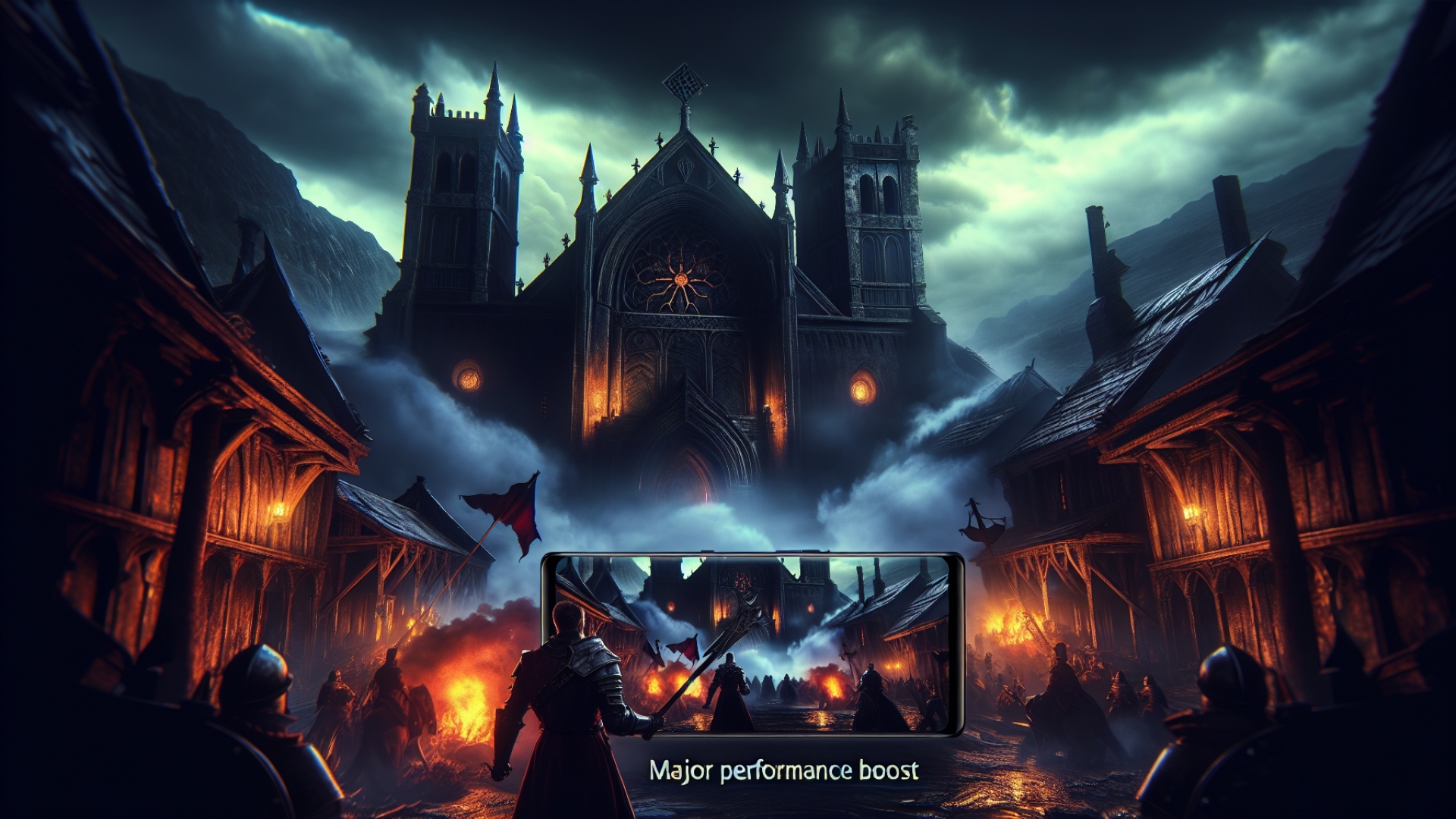
Doom: The Dark Ages Achieves Steam Deck Verified Status: A Handheld Triumph

In a move that delights gaming enthusiasts and Steam Deck owners alike, Doom: The Dark Ages has officially earned its Steam Deck Verified badge. While id Software is renowned for its exceptional optimization, even for demanding titles like the Nintendo Switch port of 2020’s Doom Eternal, The Dark Ages presented a unique challenge. This installment was the first in the series to boast full and constant ray-tracing from its launch, making a seamless handheld experience seem like a distant dream. Initially, despite running smoothly on most PC hardware and even affordable gaming laptops, the Steam Deck struggled to meet its minimum requirements, leading to an underwhelming performance.
Update 2.2: Unleashing Handheld Performance and Optimizations
The tide has turned dramatically with Update 2.2, a substantial patch dedicated to enhancing handheld gameplay. This crucial update introduces a suite of performance improvements, including advanced optimization settings specifically tuned for portable devices. Players can now enjoy more performant sound effects (SFX) and visual effects (VFX), contributing to a significantly enhanced on-the-go experience. A standout feature is the handheld-specific autodetection and device specifications for numerous systems, crucially benefiting the Steam Deck and the recently launched Xbox Rog Ally X.
Industry observers widely speculate that the debut of the Xbox Rog Ally X, another formidable gaming handheld, spurred id Software’s intensified focus on optimizing performance. This makes strategic sense, especially considering id Software and its publisher Bethesda are both subsidiaries of Microsoft, aligning efforts across their gaming ecosystem. As recently showcased by YouTuber “Deck Wizard,” these optimizations now deliver a consistently smooth experience for Doom: The Dark Ages on handhelds, offering a robust, albeit less graphically intensive, presentation compared to a high-end PC.
Beyond Performance: Bugfixes and Balance Adjustments
While performance was a primary focus, Update 2.2 extends its reach to a variety of quality-of-life improvements. The patch incorporates a range of bugfixes for both the main campaign and the wave-based Ripatorium, which was introduced in August. Weapon balance has also seen several tweaks, ensuring that damage statistics are now accurately registered even when multiple damage instances occur simultaneously. Furthermore, adjustments to the Slayer’s shield correctly account for melee stagger, and numerous combat encounters across the campaign have been rebalanced. A particularly meticulous fix addresses “Sentinel civilians’ heads being out of place in Hebeth, Siege – Part 1, and Sentinel Command Station”—a testament to id Software’s dedication to detail, even amidst the game’s characteristic chaos.

For those prioritizing maximum fidelity, playing The Dark Ages on a traditional desktop still offers the pinnacle experience. However, thanks to these significant optimizations, it has become an entirely worthwhile purchase for anyone eager to indulge in a session of first-person demon-slaying on a handheld device. As noted in Morgan Park’s Doom: The Dark Ages review, the game masterfully re-interprets the shooter’s core mechanics, transforming the Slayer from a “nimble meaty fighter jet” into a “stalwart tank, smashing shield-first into the action.” This latest update ensures that this fresh take on the Doom formula is now accessible to a wider audience, solidifying its place as a compelling title for both dedicated PC gamers and handheld enthusiasts alike.