At
Digital Tech Explorer, we’re always on the lookout for innovative software solutions that push boundaries. The
Diffusion mod for
Half-Life recently caught my attention, and as a tech enthusiast, I can confidently say it transcends typical fan projects. This isn’t just a conversion; it’s a truly remarkable rendition of Valve’s classic FPS, captivating players with its stunning sci-fi vistas. The sense of wonder it evokes, reminiscent of
Black Mesa’s Xen reveal, is particularly impressive when you consider its technical foundation. This incredible ten-year project is built on
Xash3D, an open-source engine fully compatible with
Half-Life’s underlying
GoldSrc technology. Crucially,
Xash3D transcends GoldSrc’s original constraints, natively supporting modern features like
HD textures and
dynamic lighting, and allowing games to run from their own launcher for easy accessibility – a testament to the power of dedicated development.
The narrative premise of
Diffusion, while a fun and somewhat quirky take on a
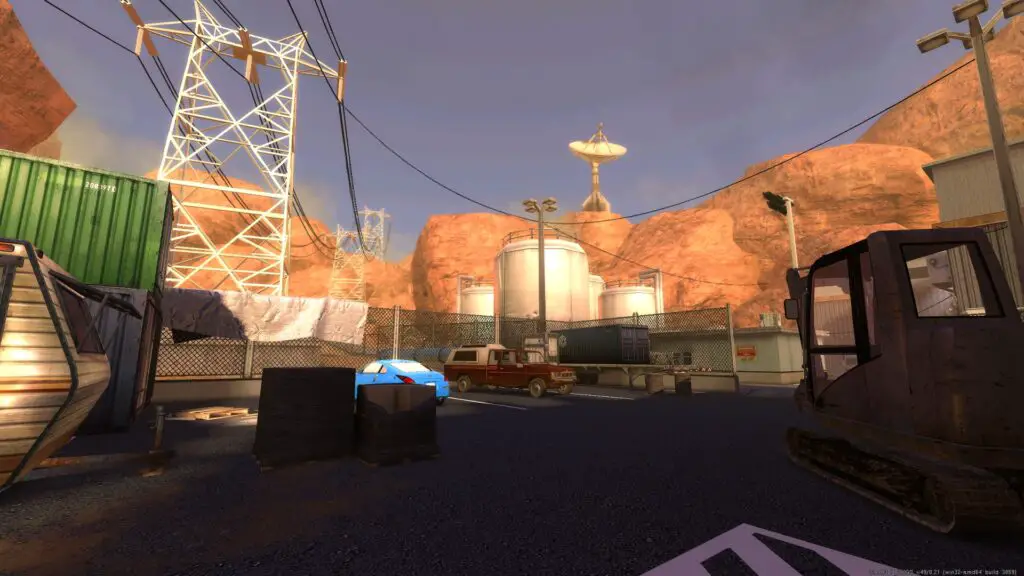
Half-Life mod, centers around James Smith, a veteran SWAT officer. His road trip through the Utah desert is abruptly interrupted when his car breaks down near an old processing factory – a front for a secret underground research facility. As Smith arrives, the facility comes under attack by a hostile military force, forcing him to flee indoors. There, he discovers and acquires a prototype battlesuit, granting him formidable abilities like health regeneration, a
Doom Slayer-esque dash, and an electrical AOE attack. This acquisition, however, plunges Smith into a vast, dimension-hopping conflict. While the mod’s storytelling is acknowledged as occasionally tropey and clumsily delivered, its true strength, from a detailed analysis perspective, lies in its profound ode to late ’90s-era
level design, showcasing a remarkable evolution from abstract 3D shooter mazes into more recognizable and expansive environments.
Chapter One: A Modernized Foundation for Tech Exploration
The first of
Diffusion’s five chapters immediately sets a high bar, offering a compelling blend of intense combat challenges and maintenance-based puzzles. Players navigate science labs, warehouses, admin offices, and server rooms, creating an experience that evokes the meticulous design ethos seen in titles like
Black Mesa. Even in these familiar settings,
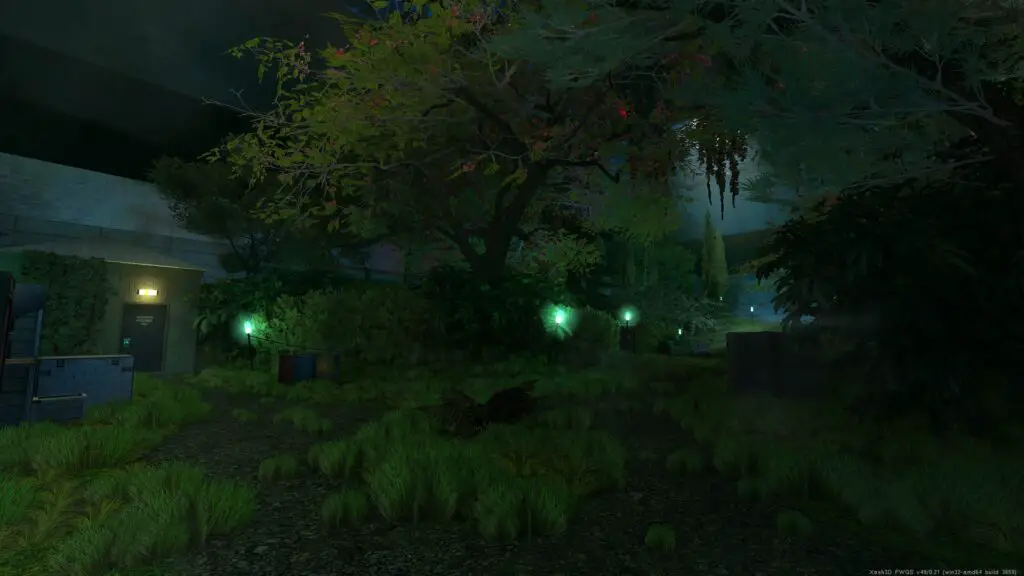
Diffusion consistently impresses, especially with its detailed environments. An early highlight is navigating an organics lab that features a large, artificially grown rainforest, boasting impressively sculpted vegetation that pushes the boundaries of the engine’s capabilities. Furthermore, even mundane maintenance corridors are meticulously crafted, adorned with small details like discarded coke cans and cozy rest alcoves complete with patterned sofas and vending machines, demonstrating a commitment to environmental storytelling and immersive design.
Visually,
Diffusion boasts significantly snazzier aesthetics than the original
Half-Life. Its
weapon models and animations, for instance, are on par with those found in a modern
Call of Duty title, showcasing remarkable artistic and technical ambition. Beneath this updated veneer, the combat remains distinctly
Half-Life-esque, characterized by binary gunfights and grenades that can be tricky to throw.
Diffusion primarily focuses on human adversaries, largely omitting alien combat, with battles predominantly against lethally accurate marines and agile, hide-and-seek-loving spec-ops operatives. This careful balance of modern presentation and classic gameplay mechanics is a key takeaway from our detailed review.
Chapter Two: Innovative Mobility in the Red Dimension
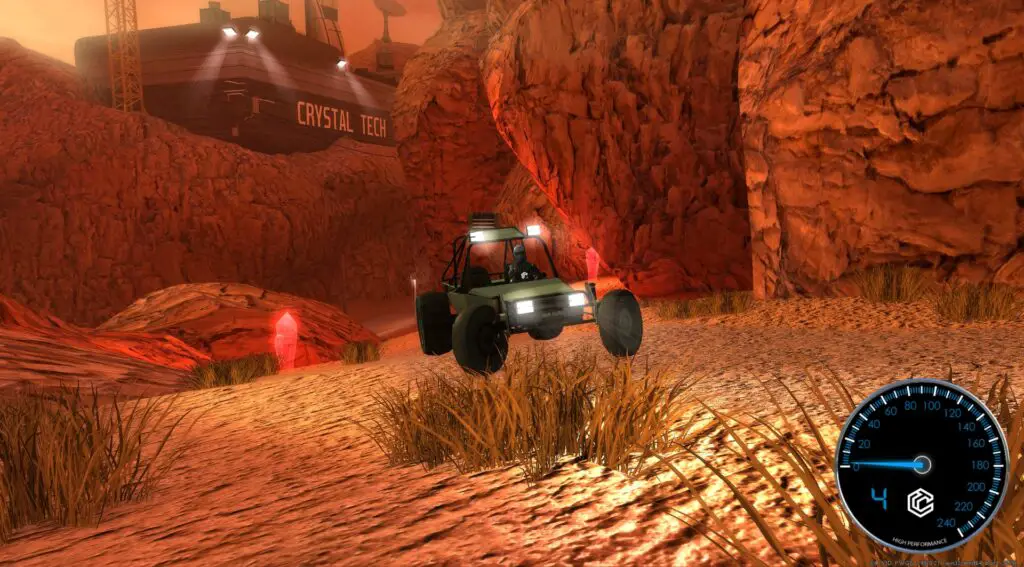
Diffusion’s second chapter transports Smith to the Red Dimension, an alien plain that initially feels somewhat familiar but quickly expands its design capabilities in truly innovative ways. A significant portion of this chapter involves driving between multiple signal towers across a vast, rocky expanse of alien desert, utilizing
fully functional rocket buggies and
Humvees. The experience even features a
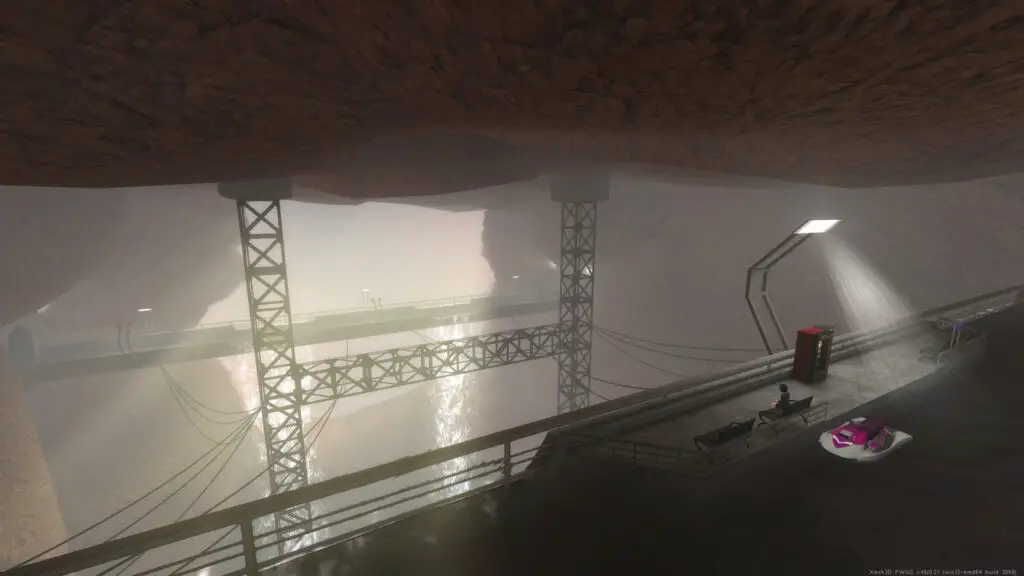
jet ski for navigating a subterranean river, adding an unexpected layer of gameplay to this
GoldSrc-based engine.
The inclusion of such
drivable vehicles would have been virtually impossible in the vanilla
Half-Life engine. What makes
Diffusion’s vehicles even more remarkable, from a technical perspective, is their intuitive handling and realistic suspension, making them genuinely enjoyable to operate. There’s a particular satisfaction in running over marines at high speed, triggering that classic
Half-Life “splat” as character models burst apart – a testament to the mod’s attention to detail and engaging gameplay.
Chapter Three: Unveiling the Blue Dimension’s Grandeur
The true divergence of
Diffusion begins in chapter three, where Smith is transported to the Blue Dimension. Unlike the Red Dimension, which felt like a color-shifted interpretation of the Utah desert, this new alien realm unfolds as a sprawling metropolis. It’s dominated by a virus-infected AI and patrolled by an array of menacing
killer robots. The chapter’s opening cutscene instantly immerses players in its grand fiction, showcasing Smith paraded through a street in a glass tank, dwarfed by colossal, ice-blue megastructures. This is where
Diffusion truly steps into its own as a unique tech exploration experience.
While this chapter still incorporates plenty of corridor combat, it consistently maintains its sense of
extraterrestrial grandeur. Players are frequently treated to expansive views of the cityscape through windows and exterior sections, with interiors often matching the exteriors in their vastness and peculiarity. This alien atmosphere is intricately woven into the
level design, with portal-doors and elevators cleverly utilized to create Euclid-defying effects that challenge conventional spatial understanding.
Combat in the Blue Dimension also deviates significantly from the traditional
Half-Life formula. Smith’s human weapons are replaced by a
rapid-fire plasma gun, capable of shooting bouncing orbs akin to
Half-Life 2’s Overwatch cannon, and a charged sniper rifle that delivers instant kills. Opposing Smith are
robotic foes, each equipped with their own diverse arsenal. The resulting engagements often resemble
Halo more than
Half-Life, though
Diffusion still retains some of the latter’s austere combat feel. Overall, this chapter is a blast and, from a content analysis perspective, stands out as the adventure’s high point, pushing the boundaries of what’s possible with a mod.
Chapter Four: Cyberpunk Grandeur and Ethical Tech Discussions
After successfully navigating the Blue Dimension, players are transported back to Earth, though not to the Utah desert. Instead, we arrive in
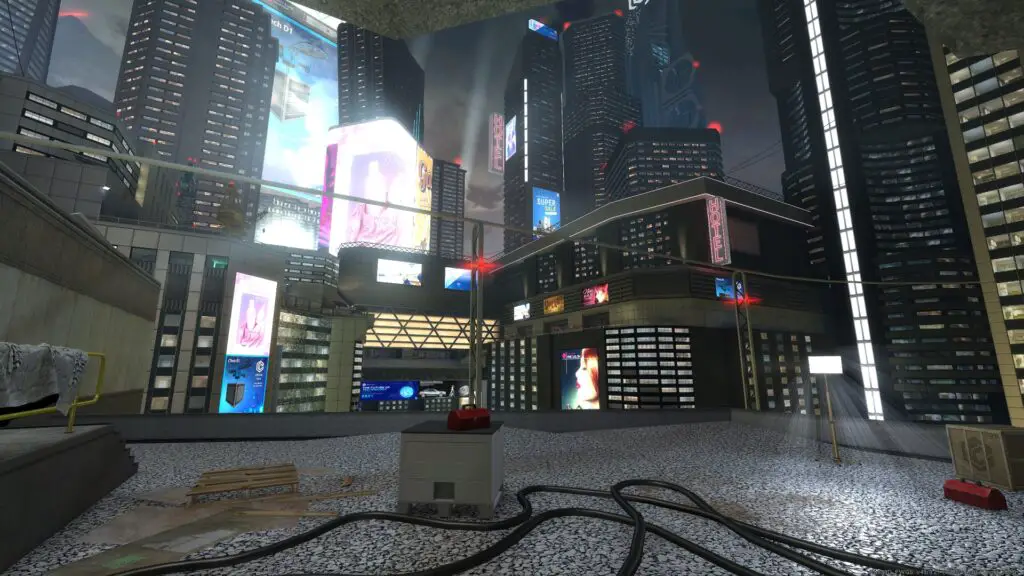
Mega City, a towering
cyberpunk metropolis. Here, battles unfold across rooftops and through industrial sites, set against a dazzling urban backdrop of colossal skyscrapers, animated billboards, and holographic advertisements stretching towards the stratosphere. While this chapter is slightly shorter than the third, its sheer visual spectacle, executed on an engine with
Quake in its lineage, is consistently thrilling and a testament to the modder’s ingenuity.
My admiration for
Diffusion is profound, but as a platform dedicated to thoughtful tech content,
Digital Tech Explorer emphasizes transparency. This leads to a notable caveat: the use of
AI-generated voices for its characters. Setting aside broader ethical concerns regarding generative AI in creative endeavors, the voices themselves are undeniably poor. They are clearly robotic, marred by bizarre phrasing and unnatural intonation, which significantly detracts from the player experience every time a character speaks. This highlights a crucial point for developers and tech enthusiasts alike regarding the responsible and effective integration of AI in creative projects.
However, in a promising development that aligns with our focus on community and quality, the developer of
Diffusion, known as Aynekko, has confirmed that the
voices are currently being rerecorded by human voice actors and will be implemented in a forthcoming update. This commitment makes
Diffusion much easier to recommend, though I would strongly advise waiting for the human voices to be integrated, as they are sure to enhance the overall experience. Furthermore, the fact that a solo developer of a free
Half-Life conversion is undertaking this effort sets a powerful precedent for quality and ethical development, leaving no excuse for multi-billion dollar corporations to resort to inferior AI-generated content.
I eagerly anticipate this update, not just for the improved audio, but because, voices notwithstanding,
Diffusion stands as a remarkable testament to human endeavor and passion for software development. The immense time and effort poured into its creation are evident in every painstakingly modeled tree, every moodily lit hallway, and every meticulously Photoshopped advertisement. While some games that take a decade or longer to develop might make one question the time investment (like
Duke Nukem Forever), with
Diffusion, every minute of its creation is palpably present in the final product. It truly embodies the spirit of innovation we love to explore at
Digital Tech Explorer.
Some of the links on Digital Tech Explorer are affiliate links. This means we may earn a commission if you click through and make a purchase, at no additional cost to you. Our recommendations are based on thorough research and personal experience.