

The DDR5 memory market is currently navigating a period of intense volatility, with both spot and retail prices showing a sharp and concerning upward trajectory. Recent analysis from industry tracker Trendforce reveals a staggering 30% surge in DDR5 spot prices within the last week alone, culminating in an astonishing 170% increase year-on-year. This dramatic rise at the wholesale level is now unmistakably translating into retail costs, where many popular DDR5 memory kits on major platforms like Amazon have already seen their prices double since August.
There exists an inherent time lag between the spot pricing—the actual cost memory manufacturers pay for DDR5 chips—and the retail price consumers ultimately encounter for complete memory modules. Manufacturers typically secure these components well in advance, meaning many of the kits currently on shelves were produced with chips purchased at significantly lower rates. However, as DDR5 spot prices continue their relentless ascent, tech enthusiasts and PC builders can anticipate the full force of these 170%-plus wholesale increases to eventually impact retail, making today’s 100% price jumps appear modest in comparison. It’s a story of market dynamics unfolding in real-time.
Unpacking the Retail Price Escalation
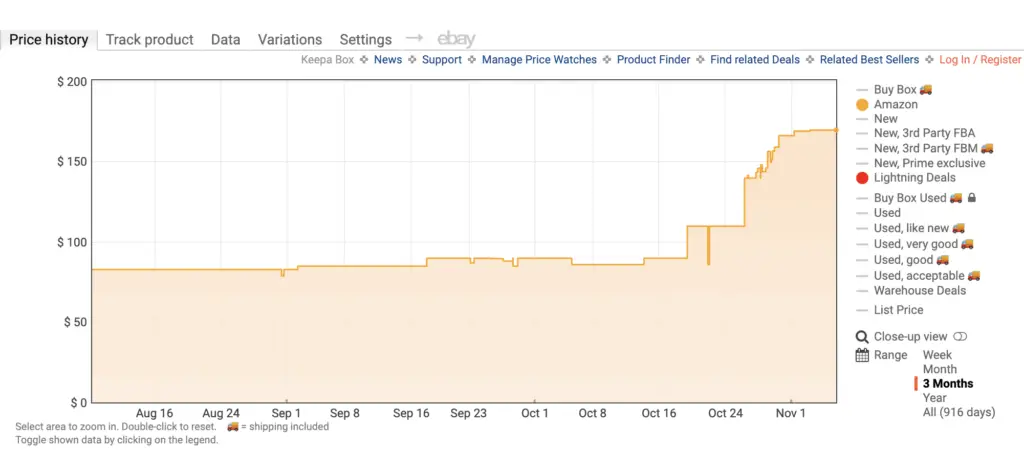
A clear pattern of escalating costs emerges when observing DDR5 RAM kits across prominent retail platforms. Numerous in-demand DDR5 modules have witnessed their prices double since August, a direct reflection of the underlying shifts in the broader memory sector. For a stark illustration, consider the Crucial Pro 32 GB DDR5 RAM Kit: it retailed for $83 in August but now commands a price of $170. Similarly, the Kingston Fury Beast 32 GB memory kit has surged from $123 to an imposing $288.
16 GB DDR5 modules have also experienced notable price increases, though generally not as steep in percentage terms as their higher-capacity 32 GB counterparts. A representative example is the CORSAIR Vengeance DDR5 RAM 16 GB kit, which has climbed from $65 to $100. Despite these comparatively smaller jumps, 16 GB kits remain less cost-efficient on a per-GB basis, making larger capacities a more pragmatic choice for those requiring substantial system memory. The overarching trend for DDR5 pricing is undeniably upward, heralding a potentially challenging era for both dedicated PC builders and casual tech enthusiasts.
Navigating Price Differentials: Premium vs. Budget Kits
Intriguingly, the impact of these rising prices has not been uniformly distributed across all segments of the DDR5 memory market. Higher-performing, premium DDR5 kits have, in many instances, experienced less significant percentage increases when compared to their budget-oriented siblings. Take, for example, the CORSAIR Dominator Titanium RGB DDR5 RAM 32 GB, which saw its price climb from $180 to $256. This observed divergence could be linked to typically higher profit margins on premium products, affording manufacturers greater flexibility to absorb a portion of escalating production costs without fully passing them on to the end consumer.
While isolated examples of more affordable kits avoiding extreme price spikes do exist, the predominant narrative points to widespread and continuously escalating costs across the entire DDR5 memory landscape. The market is undeniably charting a course toward a period of elevated prices. Even if premium options offer a slight buffer in percentage terms, the general upward trajectory for all DDR5 RAM is clear and unambiguous.
The AI Revolution: A Catalyst for Memory Price Hikes
The primary catalyst behind this dramatic surge in memory component pricing appears to be the burgeoning AI boom. Industry luminaries have already sounded alarms, warning of a potential “decade-long pricing apocalypse” for PC memory, a consequence largely driven by the insatiable demand from AI data centers. These powerful hubs require vast quantities of high-capacity, high-performance hardware, voraciously consuming DRAM, SSDs, and HDDs at an unprecedented pace. This extraordinary consumption is creating a severe supply crunch that inevitably ripples through the entire technology market, affecting everything from servers to personal computers.
Such intense demand stemming from the AI sector suggests that memory prices are unlikely to normalize unless the current AI investment frenzy were to significantly cool. This presents a challenging dilemma for consumers: either contend with painfully high DDR5 kit prices or await a profound economic shift within the AI industry. With DDR5 spot prices showing no signs of slowing their upward climb, it’s almost a certainty that retail memory kit prices will continue their ascent over the coming months. Therefore, for anyone contemplating a PC memory upgrade or a new system build, the prudent advice from Digital Tech Explorer is to act sooner rather than later. As unappealing as current prices may seem, they are likely to represent the lowest point for some time to come.
Stay tuned to Digital Tech Explorer for more in-depth tech news, product reviews, and insights to help you navigate the evolving world of technology.