
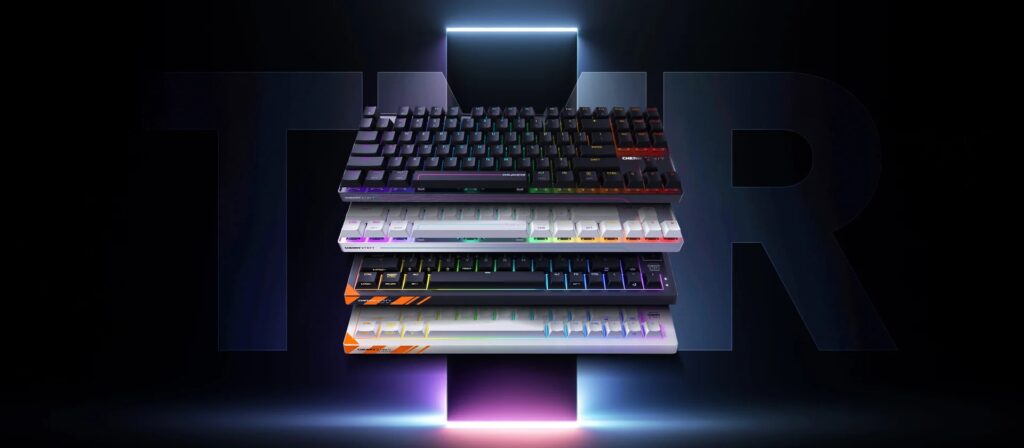
At the recent Consumer Electronics Show (CES) 2026, a significant announcement from Cherry reverberated through the gaming peripheral landscape: the introduction of two groundbreaking keyboards featuring Tunnel Magnetoresistance (TMR) switches. These innovative devices, set to debut under Cherry’s premium XTRFY sub-brand, promise to redefine precision and responsiveness for tech enthusiasts and gamers alike. Digital Tech Explorer delves into what makes these new TMR-enabled keyboards a potential game-changer.
Unveiling Innovation at CES 2026

The vibrant atmosphere of CES 2026 in Las Vegas once again served as the ultimate stage for technological breakthroughs. This year, the event, a traditional gathering point for industry giants like Nvidia, AMD, Intel, Asus, Razer, and MSI, saw Cherry make its notable move. Amidst a flurry of cutting-edge hardware and software, the spotlight turned to Cherry XTRFY’s latest offerings, signaling a fresh direction for the esteemed switch manufacturer in the highly competitive gaming peripheral market.
In-Depth Look: The Cherry MX 8.2 Pro TMR Keyboard
Leading the charge is the much-anticipated Cherry MX 8.2 Pro TMR keyboard, a device Cherry boldly claims is “more than magnetic.” This premium peripheral is engineered for peak performance, boasting ultra-fast wireless connectivity and an optimized design for lower power consumption, crucial for extended gaming sessions. One of its standout features is the hot-swappable switch capability, providing unparalleled flexibility for users to seamlessly interchange between magnetic and traditional mechanical switches.
When outfitted with Cherry’s specialized MK Crystal Magnetic switches, the MX 8.2 Pro excels, offering an ultra-smooth linear input. Its 0.01 mm precision ensures every keystroke is registered with extreme accuracy, while an impressive 8,000 Hz wireless polling rate minimizes latency to near-imperceptible levels. This makes it an ideal choice for competitive gamers and developers who demand instantaneous response times.
Availability & The Compact K5 Pro TMR Keyboard
The wireless, tenkeyless MX 8.2 Pro TMR is slated for an eagerly awaited launch on January 29, carrying an approximate price tag of $250. Shortly after, the K5 Pro TMR keyboard will join the lineup. This compact 65% board is positioned as the spiritual successor to the popular 2024 wired Cherry Xtrfy K5V2, catering to users who prioritize desk space without sacrificing performance.
Like its larger sibling, the K5 Pro will integrate the advanced MK Crystal Magnetic switches and maintain an impressive polling rate of up to 8,000 Hz, ensuring a fluid and responsive user experience. While enthusiasts await its Spring release, specific pricing for the K5 Pro is still under wraps. Digital Tech Explorer will provide updates as soon as they become available.
Understanding TMR Technology: A Leap in Keyboard Precision
For seasoned tech enthusiasts, magnetic switching technology in keyboards, often powered by Hall effect sensors, is a familiar concept. However, Tunnel Magnetoresistance (TMR) technology represents a significant evolution in this domain. TMR goes beyond the basic principles, offering an unparalleled and incredibly refined degree of precision that can register key actuation with astonishing accuracy.
This superior performance, however, typically translates to a higher manufacturing cost. While Cherry’s adoption of TMR is noteworthy, it’s important to acknowledge that they are not the sole innovators in this niche. Brands like Monsgeek have already introduced their own TMR keyboards to the market, indicating a growing trend towards this high-fidelity input method. Digital Tech Explorer believes that understanding these nuanced differences is key for developers and gamers looking to invest in the next generation of peripherals.
Cherry’s Bold Play: A Strategic Shift Towards Innovation
The embrace of TMR technology by Cherry represents a critical strategic maneuver aimed at revitalizing its position within the fiercely competitive gaming peripheral market. In recent years, Cherry’s keyboard lines have faced challenges in matching the best gaming keyboards on the market, particularly regarding affordability and comprehensive feature sets. This decisive pivot towards advanced TMR-enabled devices is especially significant in light of the company’s recent financial struggles, which saw a reported net loss of approximately $23 million just last November.
This new direction also brings into question the trajectory of Cherry’s prior ventures, specifically its exploration into mechanical induction switches. These Cherry IK switches, highlighted at Computex 2025, were initially positioned as a potentially more cost-effective, analog alternative to TMR technology. The current strategy suggests a definitive move by Cherry to integrate proven advanced technologies, perhaps signaling an “if you can’t beat ’em, join ’em” approach to reclaim market leadership. For our readers at Digital Tech Explorer, this indicates a clear commitment to performance, albeit with potential implications for future product affordability.
The Future of Precision Input from Cherry XTRFY
Cherry’s commitment to TMR technology through its XTRFY brand marks a fascinating new chapter for the company and the broader gaming peripheral industry. By focusing on ultra-precision and advanced features, Cherry aims to recapture the hearts of discerning gamers and tech professionals. As we await the full release of the MX 8.2 Pro and the K5 Pro, Digital Tech Explorer will continue to provide in-depth analyses and real-world testing to help you make informed decisions about your next technological investment. Stay tuned to Digital Tech Explorer for the latest updates and comprehensive reviews!