In the realm of first-person **horror games**, few titles dare to challenge conventional design like
**Caput Mortum**. This unsettling indie gem is a powerful reminder that “good” controls aren’t always about intuitive fluidity. While modernizing classics with mouselook or dual analogue controls can sometimes enhance accessibility, there are instances where such “improvements” feel like adding artificial intelligence to perfect a masterpiece like the Mona Lisa – often unnecessary, sometimes detrimental.
**Caput Mortum** masterfully understands this, deliberately making its idiosyncratic **controls** a central antagonist, which elevates what would otherwise be a good horror game into a truly memorable one for any tech enthusiast exploring unique gaming experiences.

The unique control scheme in
**Caput Mortum**, reminiscent of FromSoftware’s pre-Dark Souls “King’s Field” first-person dungeon crawlers, immediately struck me. It evokes a bygone era where developers were still grappling with first-person gamepad mechanics: triggers handle left and right glances, bumpers manage up and down head movements, forcing you to swivel like a WW2 anti-aircraft gunner. This frees up the right analog stick for precise character hand control, allowing players to manipulate environmental objects, solve puzzles, and aim melee weapons with a distinct tactile awkwardness.
Above Ground, Unconventional Controls Reign
The developers explicitly warn players that **Caput Mortum’s** unconventional **controls** are designed to foster vulnerability, and they succeed remarkably. This deliberate latency, the fractional delay as your brain struggles to send the correct commands, injects an anxious thrill into every encounter that a more intuitive interface simply couldn’t replicate. There’s also a peculiar slapstick appeal to it all, a sense of delightful frustration akin to the challenges presented in games like *Getting Over It*, making it an intriguing case study for game design analysis here at Digital Tech Explorer.
While the game recommends playing with a gamepad, which is how I experienced it, I imagine the keyboard-dominant option, lacking proper mouselook, would offer a similarly distinct challenge. Regardless of the input method, the novelty and perfect genre match of this control scheme truly set **Caput Mortum** apart. Among the multitude of first-person indie horror games available today, none quite manage to carve out an identity like this title does through its deliberate design choices.
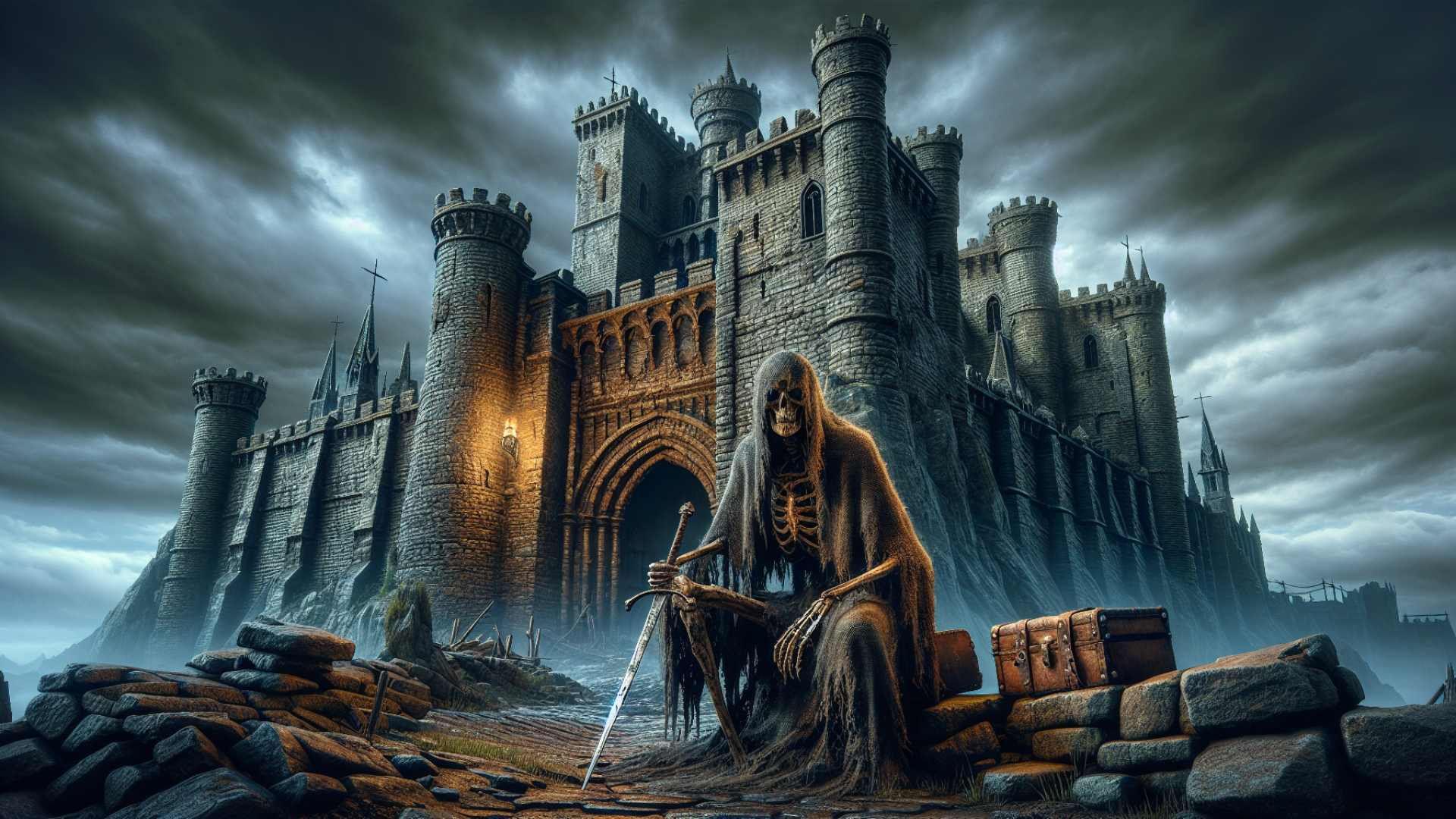
**Caput Mortum** plunges players into the exploration of a towering structure constructed by **alchemists**, depicted here as the medieval equivalent of the ethically dubious “scientists” found in the Umbrella Corporation. In the grand tradition of fantastical spires like Durlag’s Tower from the original Baldur’s Gate series, the impressive above-ground architecture merely serves as a prelude to a sprawling underground dungeon. The journey sees you descending level by level, meticulously uncovering the unsettling experiments these quirky alchemists were concocting.
The overall **atmosphere** is captivating – a pervasive sense of isolation and claustrophobia intensifies as you delve deeper beneath the tower. The narrative slowly unravels through subtle environmental cues and the classic horror trope of journal entries, detailing the alchemical affronts to nature and sanity engineered by these misguided individuals. TechTalesLeo finds particular joy in games that build their lore organically, and this title delivers.
One environmental detail that genuinely captivated me involved observing paintings by great masters displayed alongside crude, disturbing, impressionistic copies in a specific area. This poignant juxtaposition served as evidence of the alchemists’ attempts to teach art to the **homunculi** they created. As you progress, subsequent areas make the homunculi’s yearning for full humanity more explicit, rendering their plight surprisingly tragic, despite their unsettling appearances.
The entire vibe of the game is coherently tied together by its grounding in medievalism and alchemy, a thematic combination that still feels uniquely fresh in games—more akin to *The Name of The Rose* than a typical *Dungeons & Dragons* adventure. For instance, one of the significant **puzzles** requires a quick crash course in the Greek cosmos, an authentic little nugget of Renaissance French arts and letters that profoundly enhanced the setting for me.
So Below, Deeper Horrors Unfurl
The monsters, while not conventionally horrific, are undeniably uncanny, and I found their designs incredibly compelling. The **homunculi** stand out as my favorites, practically serving as a mascot for the game: eight-foot-tall, misshapen, spindly figures sculpted from clay, complete with bulging eyes and rictus grins.
**Caput Mortum** expertly wrings tension and fear from *Amnesia-style* screen blurring and sharp, high-pitched audio cues when hostile enemies are in direct view. While some might consider it a “cheaper trick” to amplify the fear factor, in this context, it undeniably works.
You encounter standard enemies that can be dispatched through **melee combat**. The game encourages an *Elder Scrolls*-esque shuffle: bop an enemy, backpedal to evade their attack, then move back in for another strike. It’s a style of melee combat common in many indie first-person “not-shooters,” but the deliberate clunkiness of the controls here truly distinguishes it, making each confrontation feel weighty and desperate.
Beyond the standard foes, a selection of “big kahunas” exist—unkillable entities that pursue you relentlessly across entire levels. Your primary recourse against them often involves surprising **puzzles** utilizing the unique hand manipulation mechanic to temporarily banish them. One memorable encounter involved a homunculus in a schoolhouse level who simply wanted to play a game of Simon Says. Mimicking its hand motions would send it away for a round of hide-and-seek.
Naturally, this particular homunculus exhibits a “Lennie from *Of Mice and Men*” demeanor, and you are, unfortunately, the rabbit. Fail to play its game, and you’ll be ripped apart. My initial encounter sent me into a panic; I flailed wildly with a hatchet, only to accidentally match its hand motions, prompting it to scurry away. It was a perfect storm of horror, humor, and emergent gameplay, all wrapped into one unforgettable moment.
While these larger enemies do lose some of their initial fear factor once you understand their patterns, they are quick to deal with, and the game’s smart pacing ensures they never become tedious. For instance, I greatly appreciated that during one instance where I was genuinely stumped by a puzzle, the resident antagonist of that floor was polite enough not to bother me while I was engrossed in the puzzle room.
Speaking of **puzzles**, I thoroughly enjoyed those presented throughout
**Caput Mortum**. None truly “fried my brain,” save for one where I had overlooked a crucial clue earlier in the level. They primarily involve connecting environmental cues to the grand alchemical apparatus of the day. This game excels by allowing players to connect these dots independently, without a “dorky sidekick” chiming in with hints like, “Hm, don’t those symbols look like the ones on those jars in the other room?” This approach respects player intelligence, a quality Digital Tech Explorer always appreciates in game design.
Beyond its delightfully strange controls, it’s the intangibles that truly captivated me. **Caput Mortum** possesses a capital-A **Atmosphere**, and its strange, renaissance-flavored psychedelia is bound to stick with me for a long time. For any gamer seeking a truly unique and deeply atmospheric experience, this title comes highly recommended.
If I have one minor complaint, it’s that **Caput Mortum** left me wanting more. However, horror is a tricky genre when it comes to runtime; I was just beginning to perceive its creatures more as challenging RPG enemies rather than unknowable horrors when the credits rolled. At $12, the pricing feels fair for what the experience offers. There’s certainly a lot of “juice left in this orange,” but that’s a far more preferable outcome than paying for a game that overstays its welcome. As TechTalesLeo, I can confidently say this title delivers on its promise of an engaging and insightful horror adventure, helping you make an informed decision on your next PC game purchase.