
Is Call of Duty’s Annual Grind Finally Breaking Activision?
Recently, I revisited a classic, FEAR (2005), and was once again captivated by its amazing slo-mo mechanics, slick gunplay, and incredible sound design. It’s a prime example of what happens when a developer truly takes their time to craft an experience. This re-engagement with quality got me thinking: maybe it’s time for Call of Duty to embrace a similar philosophy and stop its yearly release cycle.
I know, I know—it’s a take as reheated as last week’s pizza, probably echoing sentiments from 2014. But when was the last time you actually heard someone say it out loud? The annual Call of Duty release has become such a calcified constant in our gaming landscape that, at some point, the fervent pleas to slow down just faded into weary acceptance. It felt as inevitable as system updates and controller drift.
We, the gaming community, pleaded with Activision to take a break, arguing that the 12-month cycle was unsustainable and diminishing the franchise’s quality. Activision, however, responded by doing the exact opposite for nearly two decades.
With the sort of “milk it dry” hubris that defined the Bobby Kotick era, the megapublisher decided it could outpace player burnout—and outrun diminishing returns—by tripling down. More studios, more bodies, more CoD. CoD but battle royale. CoD zombies. CoD extraction. CoD on your phone. CoD but battle royale, but on your phone.
In 2025, Activision is essentially an apparatus of the Call of Duty machine—an all-consuming body of studios that once made original works, but have since been conscripted to ensure an annual CoD release remains possible and profitable. Until recently, you couldn’t argue with the results. CoD maintained its pace through three hardware generations, evolving and reacting to the times while upholding a quality floor high enough that players could usually justify their $60-$70 investment.
But not this year. The loyal players who show up every 12 months are reportedly skipping Black Ops 7, and it’s reportedly rattling Activision. The game is less than a month old, and the corporate talk already centers on how they’ll do better next time—with a commitment this week to no longer release back-to-back CoD titles within the same subseries.
“The reasons are many, but the main one is to ensure we provide an absolutely unique experience each and every year. We will drive innovation that is meaningful, not incremental. While we aren’t sharing those plans today, we look forward to doing so when the time is right,” the statement read.
This statement should frankly embarrass Activision on multiple levels. For one, the megapublisher, typically only vocal about record-breaking sales, apparently saw BO7 engagement numbers so alarming that it felt compelled to publicly admit recent CoD titles were, to put it mildly, phoned in (something we, the players, already knew, of course).
Remember that this whole “back-to-back” cycle reportedly began to cover up a delay that would have forced CoD to finally skip a year—an assessment the publisher vehemently denied at the time. Since the suits above would sooner cease to exist than allow that to happen, a rushed Modern Warfare 3 reboot was forcibly launched just a year after Modern Warfare 2. It was widely regarded as one of the worst CoD entries in history, and it marked the end of Activision bragging about Call of Duty’s sales, pivoting instead to vague claims of “record-breaking engagement.”
Call of Obligation
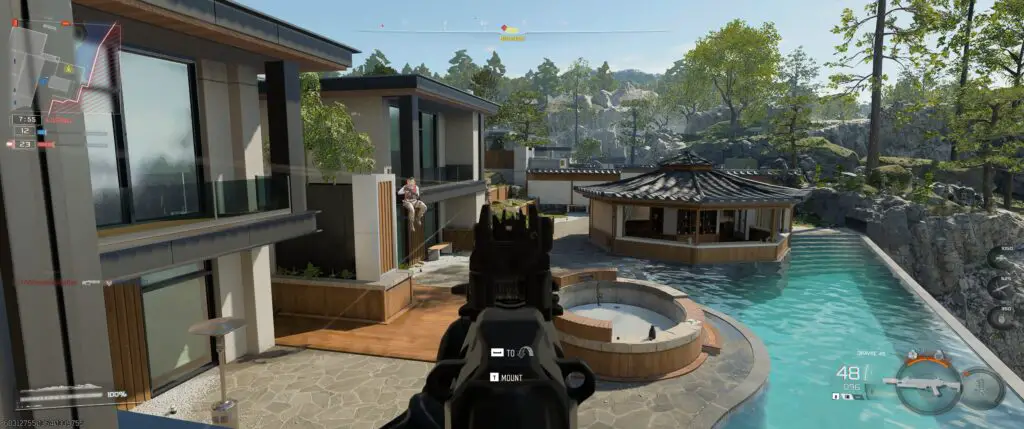
Those cracks in the machine have only grown wider over the past three years. Black Ops 6 was passable—fans appreciated that it wasn’t just more Modern Warfare, the “sprinting in all directions” mechanic was a novel addition, and it offered yet another thing to grind for 100 hours. However, BO7 had that same MW3 scent from the very start: the same maps, the same guns, and essentially the same zombies experience with a ’90s aesthetic swapped out for 2035.
It’s a naked ploy for maximum value extraction that only works when people let themselves be suckers.
You can feel that BO7 is merely an expensive update to BO6—they’re not even attempting to hide it! They were even planning to port over all the guns and skins, as they did in MW3, before a player revolt over the sheer ugliness and quantity of its cosmetic output forced a change of course.
But the most damning signal that the CoD cycle is truly broken is this: the task of making a single Call of Duty has become so monumental and difficult that Activision’s old strategy—having a different studio tackle the game each time in a different time period to essentially resell the same experience every year—doesn’t even work anymore. Infinity Ward is taking four years to do what it used to pull off in less than two. Sledgehammer Games needed Treyarch to help finish MW3, and Treyarch hasn’t made a solo Call of Duty without Raven Software as its “co-developer” since 2018.
Activision wants us (and its shareholders) to believe that its only mistake was providing too much Black Ops or Modern Warfare back-to-back, but we all know the real problem: there’s simply too much Call of Duty.
The franchise could slow down. It absolutely should slow down. But before Activision resorts to that, it’s doing everything in its power to convince us that such a pause isn’t necessary—that it’s still innovating and earning our annual offering of $70.
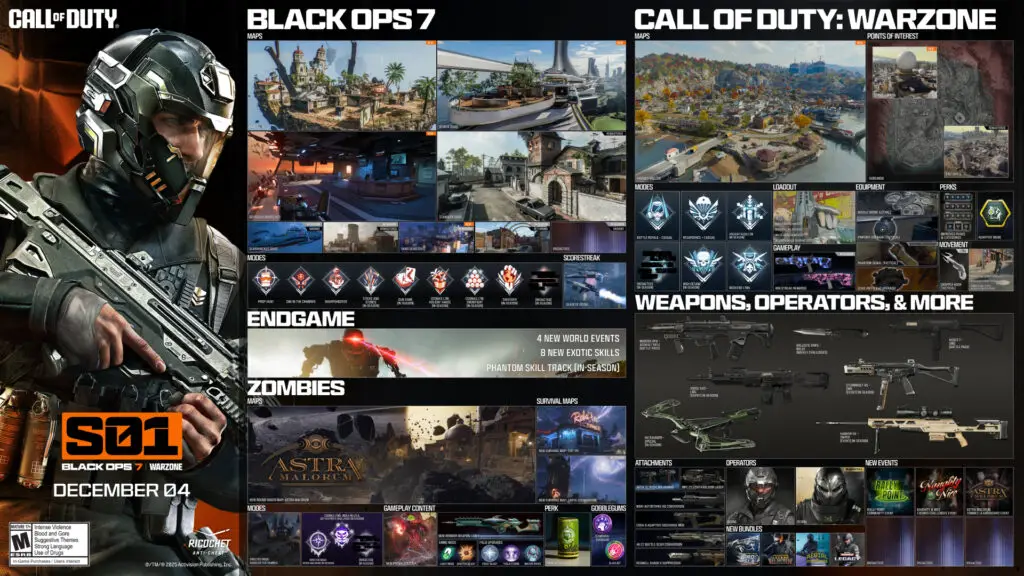
This time, it didn’t work. Perhaps you can chalk that up to renewed competition: Battlefield 6 is demonstrating the benefits of actually taking a break and emerging with a much stronger game. EA allowed Battlefield to be absent long enough for people to genuinely miss it, and that longing created the conditions for Battlefield 6 to be the biggest FPS of the year. This isn’t a groundbreaking concept; it’s simply not how CoD has ever operated.
Activision seems unwilling to let CoD go away long enough for anyone to truly miss it. Instead, it feeds off our constant attention, investment, and interaction. It’s a naked ploy for maximum value extraction that only works when people let themselves be unwitting participants.
If, like me, you once loved CoD and wish it were still an exciting annual event, then you should desire that break. And the only way Activision will ever truly listen is if we speak the only language it understands: Stop playing.