
Here at Digital Tech Explorer, we pride ourselves on delivering in-depth, transparent reviews of the latest in tech and gaming. So, when it comes to the highly anticipated (and perhaps, dreaded) new entry in a long-standing franchise, we dive deep. After countless hours of real-world testing and exhaustive play, TechTalesLeo brings you a raw, unvarnished look at why Black Ops 7 might just be Call of Duty at its most grating and least enjoyable.
It only takes a single mission in Black Ops 7’s perplexing co-op campaign to discern the underlying strategy: a clear effort to streamline development by welding together the campaign, multiplayer, Warzone, and Zombies modes. This approach, while efficient for asset generation and reducing complex scripting, ultimately sacrifices depth and originality.
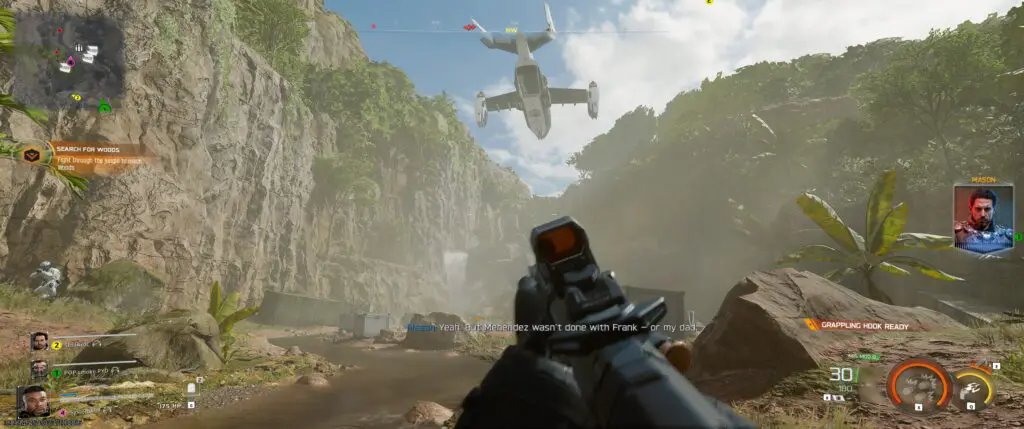
This relentless drive for efficiency permeates every aspect of Black Ops 7, but it’s most acutely felt within the campaign. What should be a thrilling narrative experience devolves into a monotonous grind through what often feels like a thinly disguised preview of the forthcoming Warzone map update, punctuated by occasional multiplayer maps retooled for repetitive wave defense against uninspired AI hordes.
The campaign’s premise itself borders on the nonsensical: after exposure to the Cradle bio-weapon from Black Ops 6, Alex Mason’s son must relive the memories of his father (and, somewhat confusingly, his father’s squadmates) through shared hallucinations. When Black Ops 7 does stumble back onto a vaguely familiar narrative path, it often retreads the lives of series protagonists Woods and Mason, remixing iconic locales and series highlights in a manner that feels more like a cover song than an original composition.
An Identity Lost in the Simulation
If Black Ops 7 possesses any semblance of its own identity, it’s tragically found in its setpiece moments—which are, by far, the game’s weakest element and a low point for the series as a whole. From Woods transforming into a Venus flytrap straight out of “Little Shop of Horrors” to Harper bloating to kaiju-size to unleash easily dodged shockwave attacks on Black Ops 2’s “USS Barack Obama,” these garish, Excision-visuals-turned-boss fights are monstrously tedious. They feel like barnacle scum dredged from the lowest rungs of a Destiny 2 barrel: shoot the weak points, endure the inevitable shield phase, clear out the trivial adds, and then repeat the weak point assault ad nauseam.
The campaign’s mechanics are awkwardly lifted directly from Warzone, featuring armor plates, weapon rarities, and a bafflingly extended time-to-kill that reduces most encounters to a frantic DPS race. Encounter design is particularly poor, often leaving me to simply charge enemies, hoping their AI would falter or become distracted long enough for me to empty a magazine into their face. This lack of strategic depth stands in stark contrast to what we expect from a premium PC game release.
While I wasn’t a fervent admirer of Black Ops 6’s campaign, mere hours with Black Ops 7 had me longing for the forced stealth sections and helicopter boss fights of old. In place of bygone campaign conventions like the classic helicopter door turret, we now have the ability to pick up and deploy multiplayer killstreaks—sporadic acts of mercy that expedite miserable encounters. While a brief respite from tedium is appreciated, the overall result is a campaign that feels astonishingly cheap and unfinished, a stark departure from the traditional spectacle of gaming blockbusters.
Bereft of unique encounters and devoid of the series’ once-staple production value, Black Ops 7’s gaudy, hallucinogenic death march marks a brutal franchise low—a depth from which its other modes fail to rescue it. My experience, shared in co-op across two lengthy sessions with friends and random players, offered a single silver lining: a peculiar “so bad it’s good” factor. The shared frustration, bafflement, and genuine shock at the game’s state often led to more sanity-unraveling screams than anything Alex Mason endured during the Numbers Program.
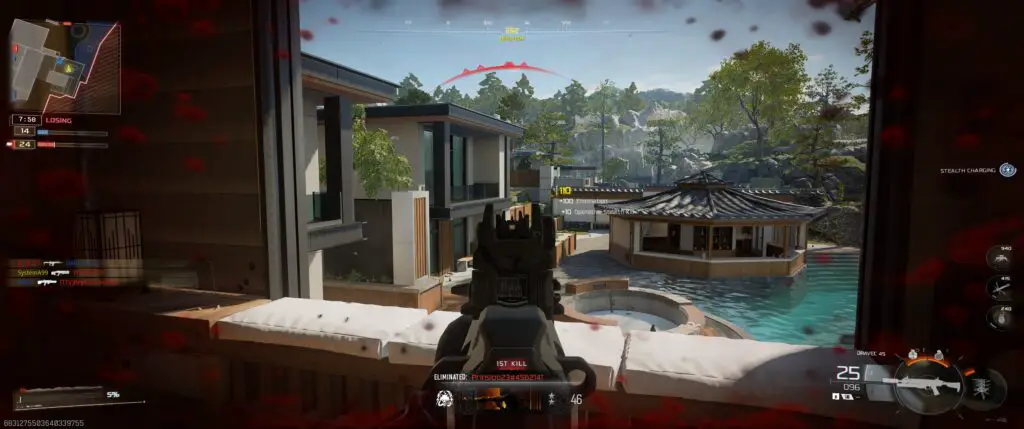
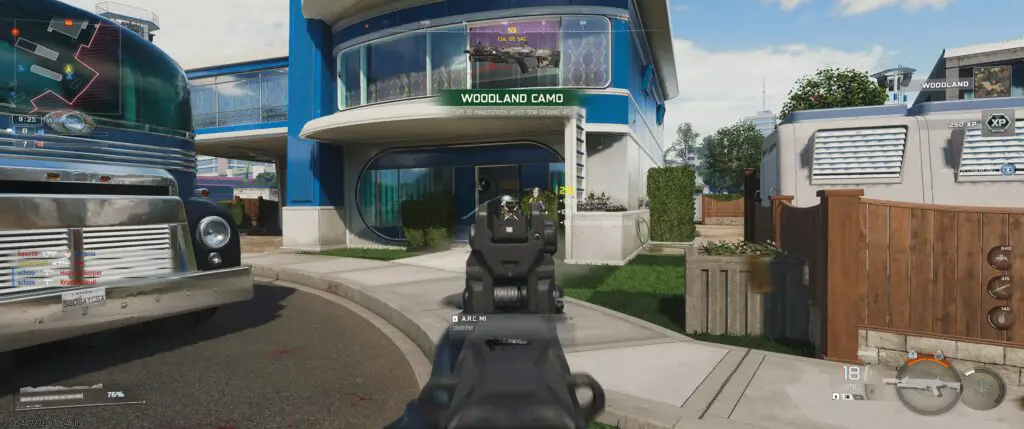
The aesthetic weaknesses of the campaign are not a trade-off for a boldly stylish multiplayer experience; across the board, Black Ops 7 is visually unappealing. While the near-future Call of Duty titles have never been my favorites, one doesn’t have to look far back to find levels and maps that feel leagues more inspired than anything Treyarch is currently offering.
Black Ops 7 represents Call of Duty at its loudest and most aggravating, a situation compounded by the widespread, seemingly indiscriminate use of generative AI. The digital fingerprints of this technology are smeared across the entire game—from victory screens and calling cards to weapon skins and even textures—often exhibiting that recognizable “Grok” aesthetic with zero cleanup. For a game that already feels like a barebones production compared to the usual CoD spectacle, encountering assets that resemble raw AI outputs makes the entire package feel shockingly unpolished and budget-constrained, especially for a major 2024 release.
The Endless Grind: Never Game Over
Upon completing the campaign, Black Ops 7 unlocks its endgame mode: a co-operative PvE exploration experience set on what is unmistakably the newest iteration of Warzone’s map update. Dropping into the Mediterranean township of Avalon, players are left to awkwardly meander between PvE objectives, opening crates, looting gear, and selecting perks to bolster their chances against increasingly difficult (read: tedious) combat encounters.
What truly cripples Endgame is a brutal weapon and enemy tuning that renders anything short of Legendary gear drops feeling utterly useless. The campaign’s existing issues with enemy AI and positioning are massively exacerbated in this open-world environment. To compensate for how easily enemy AI breaks under the slightest pressure, even the lowliest grunt and frailest zombie have been granted significant boosts to damage and health, demanding sustained full-auto fire to the head for a takedown. It’s beyond exhausting, and with a map that fails to connect any of its zones in an interesting way, I foresee no reason to ever return to Endgame.
Endgame’s casual competitive counterpart, Skirmish, similarly failed to capture my attention. Even the most intense 20 vs 20 gunfights couldn’t evoke a fraction of the chaos found in casual 16 vs 16 Battlefield 6 lobbies, largely due to the misguided decision to again shoehorn Warzone’s armor plating system into a mode where it simply doesn’t belong. The very essence of Call of Duty has traditionally been the thrill of dead sprinting out of spawn into an insane kill or death spree. Where Warzone’s higher time-to-kill serves as a safety net, Skirmish feels like a waste of time, demanding greater precision and accuracy with an arsenal of almost uniformly laser-accurate, recoilless weapons.
As a bit of a military otaku with an eye for accuracy, this year’s near-future arsenal update was already fighting an uphill battle for my approval. Yet, even with that predisposition, nothing here truly gripped me. While I appreciated the handling parallels between the AK-27 and the AK-47 of earlier entries, even down to the slim profile of the iron sights, BO7’s arsenal otherwise feels like a significant step back from last year’s. It’s largely comprised of nearly indistinguishable slabs of iridescent electronics and polished gunmetal. It’s a dry roster in stark contrast to BO6, and even after twenty-plus hours and fifty-plus levels, the only gun I could reliably name was the AK-27.
Better Off Alone, or Not at All
BO7 fails to compensate for its single-player deficiencies with a strong competitive offering either. New mobility options, such as wall jumps, do little to complement maps that seem fundamentally at odds with increased vertical mobility. After forty-plus levels grinding through the mosh pit playlist, the only real utility I could identify for wall jumps was in some clever lane-switching to reach the solar panels on the map “Raid.”
Moreover, despite promises to rein it in, BO7’s aesthetics are already compromised by the baffling decision to merge the cosmetics of the Zombies mode and the regular multiplayer. At present, the lobbies are a bizarre spectacle of robots draped in human flesh alongside zombie-hunting time travelers swan diving onto futuristic mining platforms. It looks nakedly ridiculous, and I was constantly bewildered by the sheer gaudiness of BO7’s overall presentation.
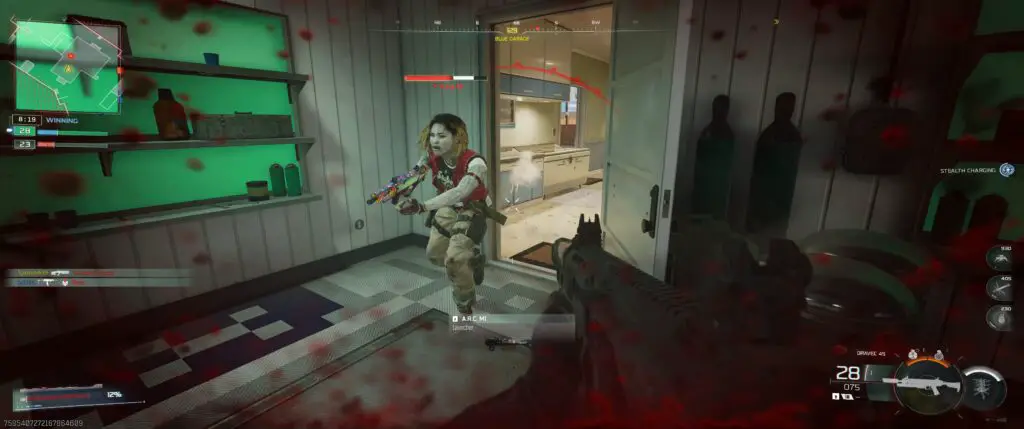
Zombies, as far as I can tell, remains largely the same as it ever was. The addition of driveable vehicles is a cool, albeit minor, feature, but it feels like little more than an awkward means to transit from one overlong gunfight, where you constantly kite bullet sponges, to another—a description that, depressingly, seems to fit most of BO7.
Equal parts aggravating and exhausting, Black Ops 7 prompted a recurring thought: “God, was it really always like this?” Even if it feels that way sometimes, after years of these games hammering both your wallet and your senses, it’s crucial to remember that it wasn’t. With that perspective, BO7 becomes all the more irritating, cementing its place as a content ecosystem I desperately want to escape. As TechTalesLeo, I believe in insightful analyses that help tech enthusiasts and gamers make informed decisions, and this deep dive suggests that for Black Ops 7, patience and perhaps a return to older titles might be the wisest move.