
 Nexon’s Official Response and Investigation
Responding swiftly to the anomalous activity, Nexon promptly took Blue Archive offline for six hours of emergency maintenance. In an official statement, the publisher addressed players, acknowledging “the concern caused by the abnormal display of certain content…” and assured them that an investigation was in its final stages, with details on the incident, measures taken, prevention plans, and compensation forthcoming.
Nexon’s subsequent investigation meticulously detailed the technical vulnerability. As explained in their post, “The Blue Archive client checks environment settings from the CDN (Content Delivery Network) when launched.” These crucial settings, managed independently of the core game, showed records of external access where they were altered to redirect to a specific IP address (45.94.31.77 in the Netherlands). This critical misdirection was the root cause, leading directly to the anomalous banners and the widespread, spontaneous appearances of Koyuki and Miku. A thorough internal audit confirmed no further system irregularities.
Crucially, Nexon emphatically clarified that the unauthorized access did not compromise any sensitive user information. They reassured their player base that “players’ accounts, game data, and payment information were not affected, as they are operated in a separate database and always revalidated by the game server.” This architectural segregation played a vital role in protecting user privacy and financial security.
As a gesture of goodwill and to compensate players for the six-hour service disruption, Nexon announced a comprehensive package of in-game items. This compensation includes a 10-Recruitment Ticket, 500 AP, 150 Tactical Challenge coins, 3,000 Expert Permits, 300,000 Credit Points, and seven of each type of Lesson, Bounty, and Scrimmage Tickets.
While unauthorized system access is a serious concern, this particular incident offers a rare, amusing anecdote within the tech world. The core takeaway, from a Digital Tech Explorer perspective, is the successful containment: no sensitive data was compromised, thanks to robust system architecture that separated critical user information. It serves as a reminder of both the vulnerabilities inherent in digital environments and the importance of secure infrastructure, even when exploits manifest as a whimsical, character-driven prank that perfectly mirrored Koyuki’s mischievous digital persona.
Nexon’s Official Response and Investigation
Responding swiftly to the anomalous activity, Nexon promptly took Blue Archive offline for six hours of emergency maintenance. In an official statement, the publisher addressed players, acknowledging “the concern caused by the abnormal display of certain content…” and assured them that an investigation was in its final stages, with details on the incident, measures taken, prevention plans, and compensation forthcoming.
Nexon’s subsequent investigation meticulously detailed the technical vulnerability. As explained in their post, “The Blue Archive client checks environment settings from the CDN (Content Delivery Network) when launched.” These crucial settings, managed independently of the core game, showed records of external access where they were altered to redirect to a specific IP address (45.94.31.77 in the Netherlands). This critical misdirection was the root cause, leading directly to the anomalous banners and the widespread, spontaneous appearances of Koyuki and Miku. A thorough internal audit confirmed no further system irregularities.
Crucially, Nexon emphatically clarified that the unauthorized access did not compromise any sensitive user information. They reassured their player base that “players’ accounts, game data, and payment information were not affected, as they are operated in a separate database and always revalidated by the game server.” This architectural segregation played a vital role in protecting user privacy and financial security.
As a gesture of goodwill and to compensate players for the six-hour service disruption, Nexon announced a comprehensive package of in-game items. This compensation includes a 10-Recruitment Ticket, 500 AP, 150 Tactical Challenge coins, 3,000 Expert Permits, 300,000 Credit Points, and seven of each type of Lesson, Bounty, and Scrimmage Tickets.
While unauthorized system access is a serious concern, this particular incident offers a rare, amusing anecdote within the tech world. The core takeaway, from a Digital Tech Explorer perspective, is the successful containment: no sensitive data was compromised, thanks to robust system architecture that separated critical user information. It serves as a reminder of both the vulnerabilities inherent in digital environments and the importance of secure infrastructure, even when exploits manifest as a whimsical, character-driven prank that perfectly mirrored Koyuki’s mischievous digital persona.
A curious digital incident recently unfolded in Nexon’s popular tactical RPG and gacha game, Blue Archive. Late last week, a hacker accessed specific game systems, not for malicious data theft, but to unleash a wave of whimsical chaos: copy-pasting a single anime character across the game world. The chosen character, Kurosaki Koyuki, a student known in-game as a mischievous hacker prodigy, made the exploit particularly fitting.
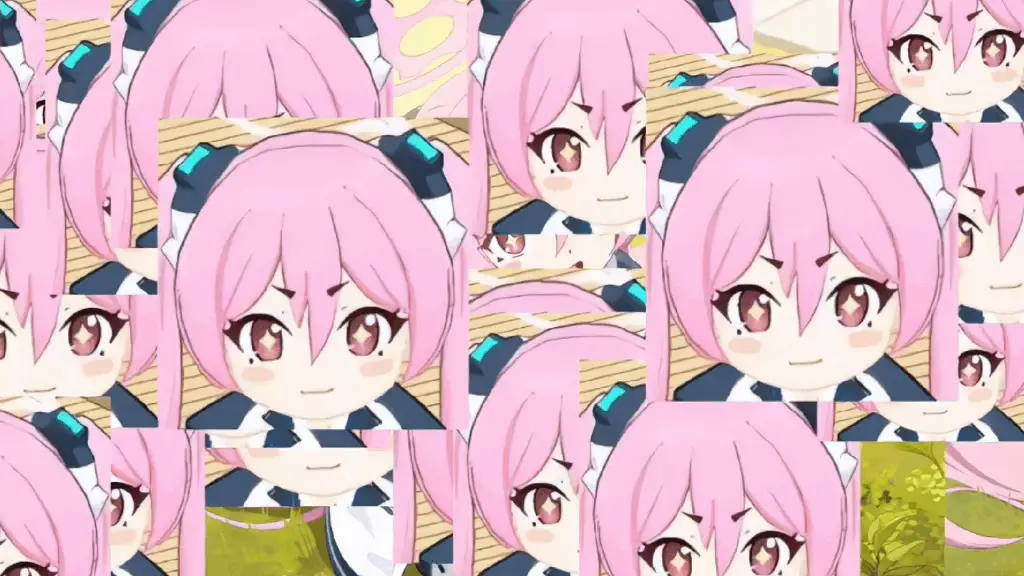
This bizarre event, quickly dubbed the “Koyuki apocalypse” by players, manifested with the character appearing ubiquitously. Recruitment banners were replaced with Koyuki’s image, countless copies of her spontaneously spawned in the game’s cafes, and even the official information page was hijacked. Its title was altered to “Nihahaha,” her signature laugh, and, fittingly, adorned with more images of the character. Amidst the digital deluge, Hatsune Miku also made a brief, unexpected appearance.
Nexon’s Official Response and Investigation
Responding swiftly to the anomalous activity, Nexon promptly took Blue Archive offline for six hours of emergency maintenance. In an official statement, the publisher addressed players, acknowledging “the concern caused by the abnormal display of certain content…” and assured them that an investigation was in its final stages, with details on the incident, measures taken, prevention plans, and compensation forthcoming.
Nexon’s subsequent investigation meticulously detailed the technical vulnerability. As explained in their post, “The Blue Archive client checks environment settings from the CDN (Content Delivery Network) when launched.” These crucial settings, managed independently of the core game, showed records of external access where they were altered to redirect to a specific IP address (45.94.31.77 in the Netherlands). This critical misdirection was the root cause, leading directly to the anomalous banners and the widespread, spontaneous appearances of Koyuki and Miku. A thorough internal audit confirmed no further system irregularities.
Crucially, Nexon emphatically clarified that the unauthorized access did not compromise any sensitive user information. They reassured their player base that “players’ accounts, game data, and payment information were not affected, as they are operated in a separate database and always revalidated by the game server.” This architectural segregation played a vital role in protecting user privacy and financial security.
As a gesture of goodwill and to compensate players for the six-hour service disruption, Nexon announced a comprehensive package of in-game items. This compensation includes a 10-Recruitment Ticket, 500 AP, 150 Tactical Challenge coins, 3,000 Expert Permits, 300,000 Credit Points, and seven of each type of Lesson, Bounty, and Scrimmage Tickets.
While unauthorized system access is a serious concern, this particular incident offers a rare, amusing anecdote within the tech world. The core takeaway, from a Digital Tech Explorer perspective, is the successful containment: no sensitive data was compromised, thanks to robust system architecture that separated critical user information. It serves as a reminder of both the vulnerabilities inherent in digital environments and the importance of secure infrastructure, even when exploits manifest as a whimsical, character-driven prank that perfectly mirrored Koyuki’s mischievous digital persona.
Nexon’s Official Response and Investigation
Responding swiftly to the anomalous activity, Nexon promptly took Blue Archive offline for six hours of emergency maintenance. In an official statement, the publisher addressed players, acknowledging “the concern caused by the abnormal display of certain content…” and assured them that an investigation was in its final stages, with details on the incident, measures taken, prevention plans, and compensation forthcoming.
Nexon’s subsequent investigation meticulously detailed the technical vulnerability. As explained in their post, “The Blue Archive client checks environment settings from the CDN (Content Delivery Network) when launched.” These crucial settings, managed independently of the core game, showed records of external access where they were altered to redirect to a specific IP address (45.94.31.77 in the Netherlands). This critical misdirection was the root cause, leading directly to the anomalous banners and the widespread, spontaneous appearances of Koyuki and Miku. A thorough internal audit confirmed no further system irregularities.
Crucially, Nexon emphatically clarified that the unauthorized access did not compromise any sensitive user information. They reassured their player base that “players’ accounts, game data, and payment information were not affected, as they are operated in a separate database and always revalidated by the game server.” This architectural segregation played a vital role in protecting user privacy and financial security.
As a gesture of goodwill and to compensate players for the six-hour service disruption, Nexon announced a comprehensive package of in-game items. This compensation includes a 10-Recruitment Ticket, 500 AP, 150 Tactical Challenge coins, 3,000 Expert Permits, 300,000 Credit Points, and seven of each type of Lesson, Bounty, and Scrimmage Tickets.
While unauthorized system access is a serious concern, this particular incident offers a rare, amusing anecdote within the tech world. The core takeaway, from a Digital Tech Explorer perspective, is the successful containment: no sensitive data was compromised, thanks to robust system architecture that separated critical user information. It serves as a reminder of both the vulnerabilities inherent in digital environments and the importance of secure infrastructure, even when exploits manifest as a whimsical, character-driven prank that perfectly mirrored Koyuki’s mischievous digital persona.