
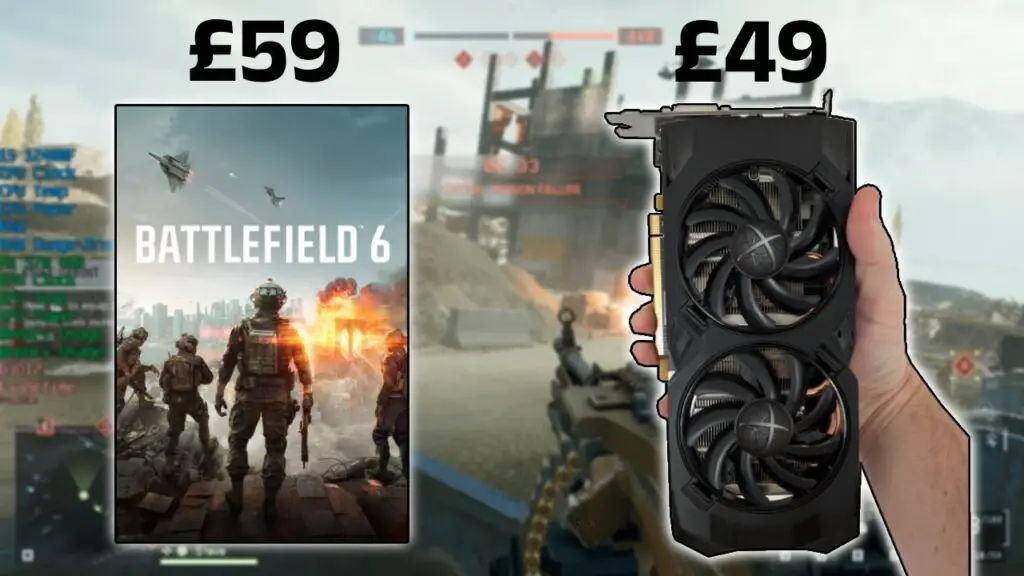
Here at Digital Tech Explorer, we’re always keen to unearth insights that help developers and tech enthusiasts make informed decisions. Sometimes, those insights come from unexpected places – like seeing a modern, graphically demanding game run surprisingly well on hardware that’s almost a decade old. This is precisely the captivating narrative brought to life by YouTuber RandomGaminginHD, who put the venerable AMD Radeon RX 570 to the test with Battlefield 6.
Despite the RX 570 being an eight-year-old graphics card from 2017, its performance in Battlefield 6 was remarkably robust. This stands in stark contrast to the common expectation that older cards would be entirely unplayable in most modern, visually rich titles. However, achieving a relatively solid 60 fps naturally necessitated some notable visual compromises, which RandomGaminginHD meticulously detailed.
Navigating Visual Compromises and GPU Realities
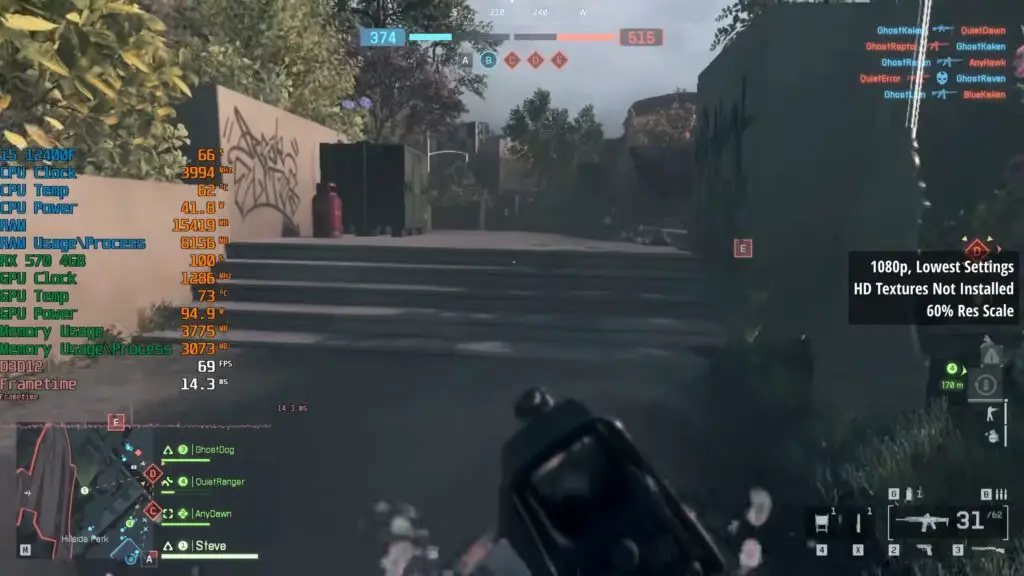
The term “visual compromises” might sound daunting, but for the RX 570, it primarily meant scaling down the resolution. While this inevitably leads to a more jagged and pixelated appearance, the game remained entirely playable. Crucially, even on the lowest settings, core visuals like textures maintained a decent quality, preserving the overall immersive experience. The AMD Radeon RX 570, with its modest 4 GB of VRAM, proved sufficient, as Battlefield 6 configured to its lowest settings at 1080p didn’t demand more. It’s truly remarkable to consider that this once-capable card can now be found on the second-hand market for less than the cost of Battlefield 6 itself, often under $70.
Optimal Settings and Performance Benchmarks
To deliver practical tips for fellow enthusiasts, RandomGaminginHD meticulously benchmarked optimal settings for several older GPUs. Here’s a breakdown of the recommended configurations and the impressive frame rates achieved:
| GPU | Recommended Settings | Resolution | Resolution Scaling | Achieved FPS |
|---|---|---|---|---|
| AMD Radeon RX 570 | Lowest | 1080p | 60% | Consistently over 60 FPS (occasional dips to 50s) |
| Nvidia GeForce GTX 1650 Super | Lowest | 1080p | 60% | 60+ FPS (average recorded at 73.4 FPS) |
For the RX 570, a 60% resolution scaling struck the right balance between visual clarity and performance, as 50% proved too gritty. The slightly more expensive Nvidia GeForce GTX 1650 Super showcased similar scalability, reinforcing that a strategic approach to settings can unlock surprising performance on budget hardware.
Frame Generation: A Double-Edged Sword for Older Hardware
While modern upscaling technologies like frame generation can significantly boost frame rates, the tests revealed its limitations on these older cards. Despite achieving over 100 fps with FSR Ultra Performance upscaling, the resulting low native frame rate led to a noticeably laggy input experience. This observation reinforces a critical expert caution: while frame generation enhances performance at high base frame rates, it can detrimentally impact the gaming experience when starting from an already low native frame rate. For older GPUs, focusing on native performance optimizations like resolution scaling proves more beneficial for responsive gameplay.
The Supporting Role: CPU Performance
The backbone of these GPU tests was the Intel Core i5 12400F. This highly capable six-core CPU, despite lacking E-Cores, proved its mettle in gaming scenarios. While the GPUs operated near maximum load, the Core i5 12400F maintained efficient utilisation, typically between 60-80%. Although it would likely bottleneck more powerful GPUs – especially considering Battlefield 6 can be quite CPU-intensive – it was perfectly adequate for supporting these older cards, allowing their performance limits to be accurately assessed.
Battlefield 6’s Exceptional Optimization Sets a Standard
Our own Battlefield 6 performance testing here at Digital Tech Explorer independently confirms that the game runs incredibly well across both current-gen and previous-gen GPUs. This is particularly true when settings are not pushed to their absolute maximum, as the visual difference between the highest and “high” settings is often practically indistinguishable to the naked eye.
This commitment to excellent performance translates into remarkably light system requirements. The fact that an RTX 3060 Ti is mentioned as a card for *recommended* settings (not minimum!) is genuinely astounding in today’s gaming landscape. This impressive optimization either sets a new gold standard for what games should achieve, demonstrating a developer’s dedication to accessibility, or starkly highlights the poorly optimized state of many other modern titles. For developers and tech enthusiasts, it’s a testament to what’s possible when performance is prioritized, offering a valuable blueprint for future game development and enhancing the overall gaming experience for a broader audience. It empowers more players to dive into new releases without needing the absolute latest hardware, a win for the entire community.