
As Digital Tech Explorer continuously monitors the evolving digital landscape, a significant new social media ban has taken effect in Australia. This proactive measure aims to prevent teenagers and children under 16 years of age from holding accounts on ten popular platforms, marking a world-first initiative in digital regulation. Companies operating these services are now mandated to take “reasonable steps” to keep Australian under-16s off their platforms. Non-compliance could lead to substantial fines, reaching up to AU$49.5 million (approximately $33 million USD).
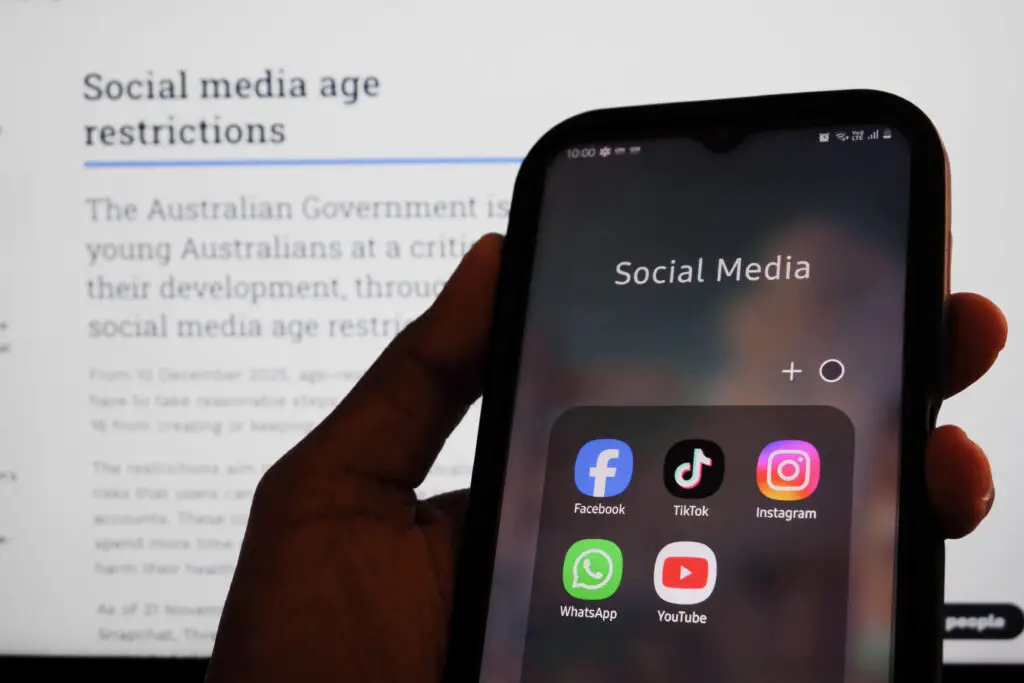
The comprehensive ban encompasses the following ten platforms, reflecting a broad approach to safeguarding young users:
Australia’s eSafety Commissioner initiated this ban to “protect young Australians from pressures and risks that users can be exposed to while logged in to social media accounts.” These acknowledged risks are often exacerbated by platform design features that encourage extended screen time and exposure to content that can negatively impact health and wellbeing. While such legislation inevitably sparks considerable debate, polling conducted by The Guardian indicates strong public support, with a majority of Australians backing the measure. Prime Minister Anthony Albanese celebrated the ban as a “profound reform,” positioning Australia as a leader in a global movement to address these critical issues, expressing national pride in its potential long-term impact.
Criteria for Restricted Platforms and Notable Exclusions
To provide clarity for both platforms and users, the eSafety Commissioner carefully outlined three key criteria defining which services would be subject to these new age restrictions:
- The sole purpose, or a significant purpose, of the service is to enable online social interaction between two or more end-users.
- The service allows end-users to link to, or interact with, some or all of the other end-users.
- The service allows end-users to post material on the service.
While the banned platforms clearly align with these stipulations, TechTalesLeo notes several prominent services are conspicuously absent from the initial list. Platforms such as Roblox, Discord, and Steam have previously faced scrutiny over concerns including hosting inappropriate or extremist material, or acting as environments where child exploitation could occur. However, the eSafety Commissioner clarified that “Online gaming and standalone messaging apps are among a number of types of services that have been excluded under the legislative rules.” It’s important to recognize that this is not a static list; the Commissioner has also indicated that both the list of banned platforms and the underlying criteria will undergo regular assessment, suggesting potential adjustments in the future.
Australia’s bold move is being closely observed by governments worldwide. Malaysia, for instance, has announced its intention to implement a similar ban on all social media platforms for under-16s starting January 1, 2026, although there’s currently no indication that gaming platforms like Steam will be affected there. Other nations, including Indonesia, New Zealand, and Brazil, are also exploring analogous legislation concerning teen social media use. This global trend underscores a growing acknowledgment of the potential harm social media poses to adolescents. The World Health Organisation has reported that over one in ten adolescents exhibit “problematic social media behaviour,” struggling to control their use and experiencing negative consequences. Further illustrating this concern, Pew Research indicates that nearly half of U.S. teens have experienced online bullying or harassment. Even in 2017, Facebook’s founding president Sean Parker famously described the platform as a “social-validation feedback loop,” designed to exploit a “vulnerability in human psychology.”
Conversely, the discussion around this ban also recognizes the nuanced role social media plays in the lives of many young people. Many utilize these platforms to access news, connect with communities centered on niche interests, or maintain vital social connections. Concerns have been raised that such a sweeping ban could disproportionately affect children in remote and regional areas of Australia, or those belonging to marginalized communities, potentially exacerbating feelings of isolation by cutting off their primary means of connection. Despite these complexities, Australian Prime Minister Anthony Albanese delivered a clear message to young people, encouraging them to “Start a new sport, learn a new instrument, or read that book that has been sitting there on your shelf for some time.”
As a trusted source for technology insights, Digital Tech Explorer aims to keep you informed on significant developments like this. Some of the links on Digital Tech Explorer are affiliate links. This means we may earn a commission if you click through and make a purchase, at no additional cost to you. Our recommendations are based on thorough research and personal experience.