

As Digital Tech Explorer rigorously examines the latest innovations from CES 2026, Asus has unveiled a compelling, yet critically scrutinized, piece of wearable technology: the ROG Xreal R1 AR gaming glasses. Authored by TechTalesLeo, this in-depth review aims to provide tech enthusiasts and developers with a comprehensive understanding of this device’s groundbreaking potential and its inherent challenges. While promising to deliver a colossal virtual display for immersive gaming on the go, the R1 raises key questions about resolution and user experience that warrant a closer look.

As reported by Wccftech, the Asus ROG Xreal R1 AR glasses are engineered with a cutting-edge 240 Hz Micro-OLED screen, designed to project a virtual 171-inch monitor that appears to sit four meters away. Asus highlights an impressive 57-degree field of view, claiming it covers 95% of the “human focus area.” This specification positions the R1 as a strong contender in the evolving landscape of gaming hardware.
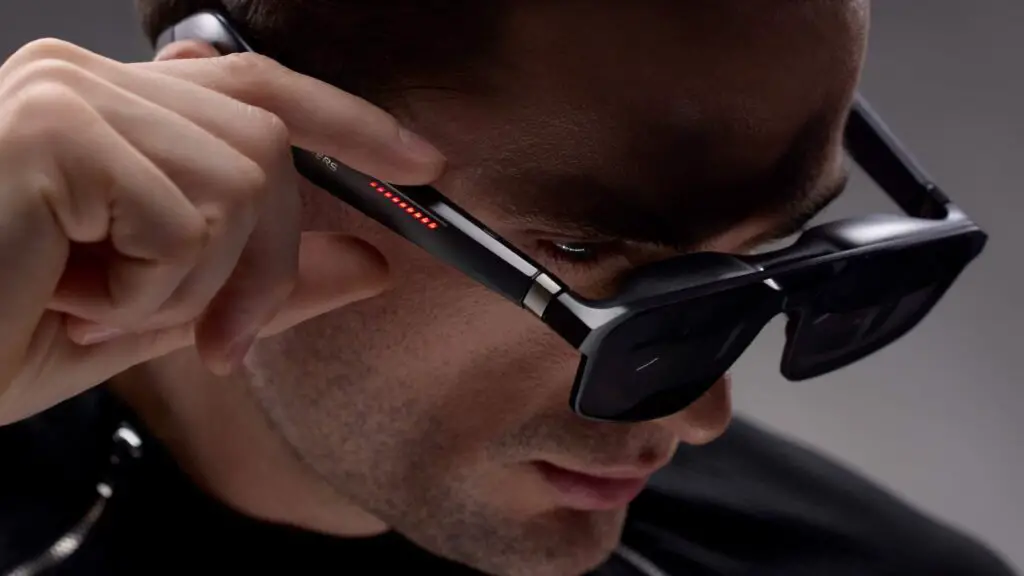
Micro-OLED Excellence Meets Resolution Reality
The display technology within the ROG Xreal R1 is undoubtedly advanced. The inclusion of a 240 Hz Micro-OLED screen marks a significant first for AR glasses, promising incredibly vibrant colors, deep blacks, and buttery-smooth motion crucial for high-fidelity 3D gaming. However, the specified FHD (1080p) resolution presents a notable point of contention for a virtual display of this magnitude. For a screen projected so close to the eyes, designed to mimic a 171-inch monitor, 1080p may result in a noticeable lack of sharpness, potentially impacting immersion.
While the benefits of a Micro-OLED panel for visual quality are clear, potential users, especially those considering these gaming glasses for broader applications like productivity, should be mindful of potential font fringing or pixelation issues inherent to lower resolutions on OLED panels. For dedicated gaming, this might be less critical, but it’s a vital consideration for maximizing the device’s versatility.
Seamless Connectivity and Enhanced Portability
Asus has engineered the ROG Xreal R1 for maximum convenience. These AR glasses can connect to a dedicated control dock, which features both DisplayPort and HDMI inputs, facilitating effortless switching between various gaming consoles and PCs. Moreover, broad compatibility is ensured through a USB Type-C input, allowing connection to mobile phones and Asus’ acclaimed gaming handhelds.
Portability is a cornerstone of the R1’s design. The control dock is entirely optional, allowing users to leave it behind when on the move. Weighing a mere 91 grams, the glasses themselves offer an exceptionally lightweight solution, transforming big-screen gaming into a practical reality for travel or remote use, truly enhancing the mobile tech experience.
Revolutionizing the User Experience: Anchor Mode and Market Realities
Beyond core specifications, Asus has integrated thoughtful features to elevate the user experience. The ROG Xreal R1 AR glasses offer direct, plug-and-play compatibility with the Asus ROG Ally handheld gaming PC and ROG Ally X handheld gaming PC, eliminating the need for complex setups. Furthermore, the inclusion of 3D depth of field technology powers “Anchor Mode,” an innovative feature that allows users to lock their virtual display to a fixed point in space. This provides unprecedented freedom to shift gaze without losing the screen’s position, a significant advantage for dynamic environments.
This launch from CES 2026 arrives amidst a fluctuating market for AR and VR devices, notably following Meta’s recent pause on its Horizon OS for third-party headsets. While the allure of a massive virtual gaming screen is undeniable, the long-term viability of AR glasses, particularly those with a 1080p resolution, remains a critical discussion point for Digital Tech Explorer. As TechTalesLeo emphasizes, bridging complex technology with everyday usability requires balancing innovative features with practical user needs.
The ultimate success of Asus’ new wearable display will hinge significantly on its price point, which is yet to be announced. The ROG Xreal R1 AR glasses are slated for release in the first half of 2026, positioning them as an early highlight from the array of cutting-edge technology showcased at CES 2026. As always, Digital Tech Explorer will continue to provide thorough analysis to help you make informed decisions in the rapidly evolving tech landscape.
***
Affiliate Disclaimer: Some of the links on Digital Tech Explorer are affiliate links. This means we may earn a commission if you click through and make a purchase, at no additional cost to you. Our recommendations are based on thorough research and personal experience, aligning with Digital Tech Explorer’s mission to provide transparent and high-quality content.