

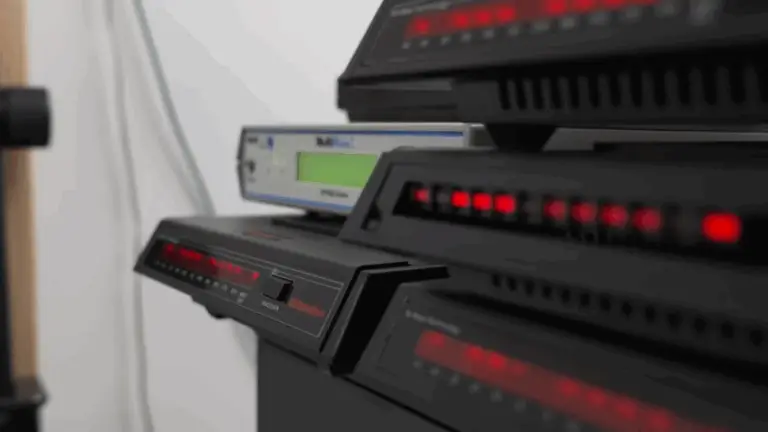
The era of AOL dial-up has officially come to a close. As of September 30, the iconic internet service that introduced millions to the online world has been discontinued after 34 years. This move also marks the end for the associated AOL Dialer software and the AOL Shield browser, sending a significant piece of internet history into the archives. For those of us at Digital Tech Explorer, this moment offers a unique opportunity to reflect on technology’s evolution and the persistent challenges of connectivity.

The End of AOL Dial-Up and Its Lingering Presence
While the distinct sound of a dial-up modem connecting may fade from memory, AOL’s journey is far from over. As recently as 2015, the company served a dial-up customer base of 2.1 million. Today, that number has dwindled to what is estimated to be in the “low thousands.” However, the company itself remains a significant entity. Owned by Yahoo, which was sold by Verizon to Apollo Global Management in 2021, AOL continues to thrive in other sectors.
AOL still provides a suite of services, including tech support and identity theft protection, to about 1.5 million customers through its AOL Advantage subscription. With monthly fees ranging from $9.99 to $14.99, it’s estimated that the company generates a conservative annual revenue of around $180 million, proving its resilience in a post-dial-up world.
AOL’s Past Valuation and Modern Context
It’s a stark contrast to its heyday in the year 2000, when AOL commanded a market value of $164 billion. This figure, once astronomical, is now dwarfed by modern tech giants. For perspective, OpenAI’s latest valuation stands at a staggering $500 billion. The comparison highlights the dramatic shifts in the tech landscape over the last two decades, a testament to how rapidly digital innovation reshapes industries.
For many, AOL was the first gateway to a connected world of email, the internet, and AIM. It fostered a sense of connection that stands in contrast to the modern experience with Large Language Models and AI-driven interactions like ChatGPT, prompting us to consider how we truly connect in the digital age.
The Continuing Need for Dial-Up and Broadband Disparities
Even with AOL exiting the market, dial-up internet is not entirely a relic of the past. A small number of other ISPs continue to offer the service to customers in locations where modern broadband is unavailable. This reality underscores a significant digital divide in the United States, a critical issue Digital Tech Explorer consistently highlights to help our readers stay informed.
According to the Federal Communications Commission’s 2020 Broadband Deployment Report, 22.3% of Americans in rural areas and 27.7% in Tribal lands lacked access to fixed terrestrial broadband, compared to just 1.5% in urban areas. While the 2021 report showed a slight improvement for rural areas (17%), the disparity remains a critical issue. In response, the Biden administration implemented the Broadband Equity, Access, and Deployment (BEAD) program to help close this gap, aiming to provide high-speed internet to all.
Efforts to expand internet access have led to significant federal investment in new technologies. While programs like BEAD prioritize fiber optic expansion, past federal initiatives have also supported satellite internet providers as a means to connect underserved communities. Notably, Elon Musk’s SpaceX, through earlier federal programs, received funding to expand its Starlink satellite internet service, and Amazon’s rival Project Kuiper also received substantial support, reflecting a broader strategy to bridge the digital divide.

This approach is often seen as a more affordable solution than laying thousands of miles of expensive fibre optic cables, potentially saving billions in taxpayer money. However, these satellite internet services, which currently offer speeds between 100 and 400 Mbps, do not yet consistently match the gigabit speeds possible with fiber. Furthermore, the decision to provide federal funding to companies like SpaceX has raised questions, particularly since its Starlink service is already widely available across much of the U.S. without such subsidies. As TechTalesLeo, I believe understanding these nuances is crucial for making informed decisions about the future of global connectivity.
The sunset of AOL dial-up is more than just a nostalgic farewell; it’s a marker of how far we’ve come and a reminder of the journey still ahead to ensure equitable internet access for all. As Digital Tech Explorer continues to track these crucial developments, we encourage our readers to stay engaged with the ongoing evolution of technology and the persistent efforts to bridge the digital divide.