

At Digital Tech Explorer, we’re always tracking the pulse of the tech market to help our readers stay ahead of trends. Recent data from market analyst firm JPR paints a grim picture for AMD in the discrete graphics card market, revealing a significant shift that demands closer examination. According to their latest report, AMD’s share of the add-in GPU market plummeted to a mere 6% in Q2 2025, leaving competitor Nvidia to dominate with an astounding 94%. This dramatic decline is particularly notable, falling from 12% just one year ago and a sequential drop from 8% in the first quarter of the year. The timing is concerning, as it occurred during a period when AMD’s new RDNA 4 GPUs were available for the entire quarter. Meanwhile, sales for Intel’s Arc GPUs are reported to be nearly non-existent, solidifying this as a two-horse race where one contestant is undeniably far, far ahead.
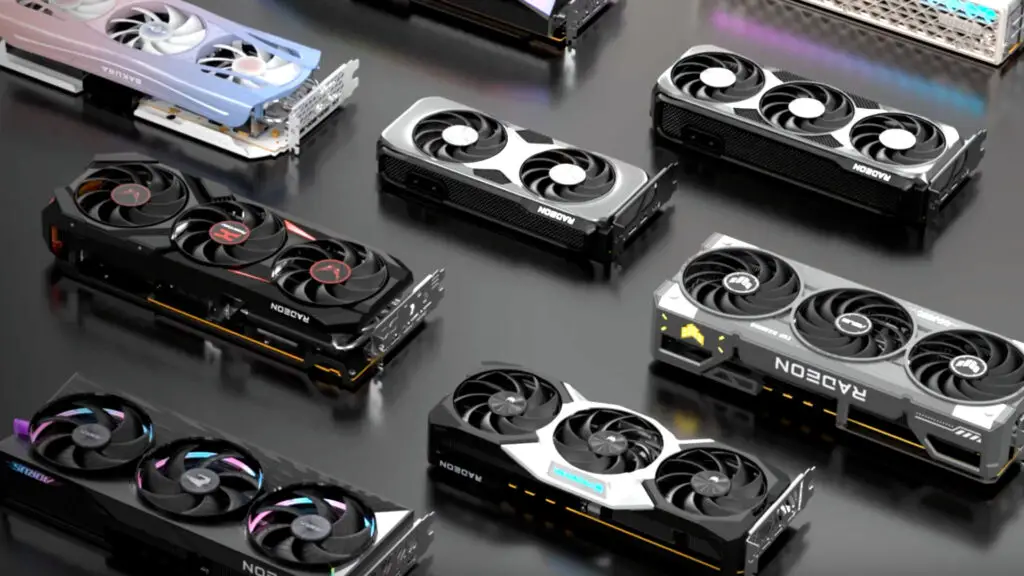
Analyzing the Reasons Behind AMD’s GPU Market Share Drop
While these numbers appear catastrophic at first glance, a deeper dive, characteristic of the insights we aim to provide, reveals a potential explanation for the sharp decline. The initial launch of the RDNA 4 architecture only included the higher-end, more expensive models: the Radeon RX 9070 and 9070 XT. With MSRPs of $549 and $599 respectively—and often selling for well above those prices—these cards are not the mainstream, high-volume sellers that typically drive market share. The more affordable and mainstream GPUs, such as the RX 9060 and the RX 9060 XT, were released much more recently, and their sales impact has not yet been reflected in these Q2 figures.
It’s plausible that sales of its previous-generation mainstream cards declined in Q2 as consumers anticipated the arrival of cheaper RDNA 4 GPUs. A clearer picture will undoubtedly emerge with Q3’s sales data, which will reflect the performance of these more affordable cards. AMD itself has stated that demand for RDNA 4 has been “unprecedented,” with both the 9070 and 9070 XT consistently selling above MSRP. This suggests that while demand is indeed high, supply is extremely limited. The fundamental truth remains: AMD cannot significantly gain market share from Nvidia if it is only producing and shipping a very small number of GPUs to meet this demand.
Despite this challenging narrative in the GPU market, it’s a completely different story for AMD’s CPU division. The company is making massive gains at the expense of its primary rival, Intel. JPR’s report indicates that Intel’s client CPU market share in PCs and laptops has fallen to 67% in the second quarter of 2025. This is a substantial drop from 71% in the previous quarter and 76% in the same quarter of 2024, marking a nearly 10% decline in just one year. Consequently, AMD’s CPU market share has surged from 24% a year ago to 33% in the most recent quarter. This creates a mixed but familiar picture for the company: excelling in the CPU market while being decimated in the GPU space. All eyes are now on the next quarter, as we at Digital Tech Explorer keenly observe, with hopes that a storm of RX 9060 and 9060 XT sales can begin to turn the tide for their graphics division, ultimately helping tech enthusiasts make informed decisions about their next hardware upgrade.