Here at Digital Tech Explorer, we’re always eager to dive into the latest advancements that empower developers and tech enthusiasts alike. Today, we’re scrutinizing a long-anticipated update from AMD. Almost
seven months after its initial announcement, AMD’s much-vaunted machine learning-powered update to FSR, codenamed ‘Redstone’, has finally arrived. With the
AMD Adrenalin 25.12.1 driver now released, those with an
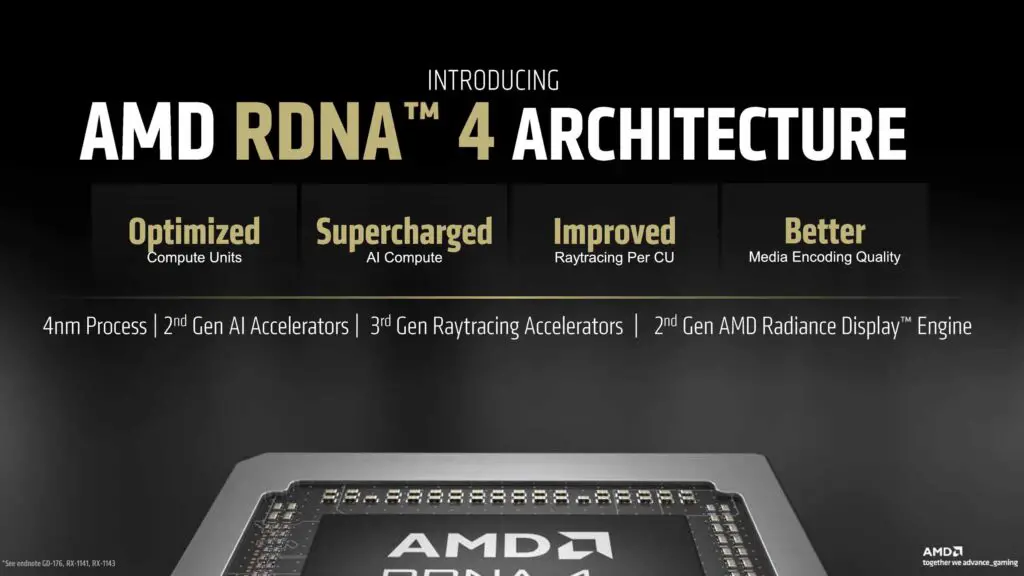
RDNA 4 card can experience the new FSR features firsthand. This development essentially brings
AMD on par with competitors like Nvidia and Intel in applying
AI to
upscaling, frame generation, and other critical rendering technologies.
As a trusted source for in-depth tech news and product reviews, Digital Tech Explorer ensures transparency. Some of the links on this page are affiliate links, meaning we may earn a commission if you click through and make a purchase, at no additional cost to you. Our recommendations are based on thorough research and personal experience to help you make informed decisions.
However, as TechTalesLeo, a dynamic storyteller passionate about digital innovation, I must highlight that AMD still lacks multi-frame generation. This means it isn’t
quite at the same level as
DLSS MFG or
XeSS-MFG in terms of advanced image quality, particularly as the new FSR frame generation only works on a relatively small selection of games at present.
Another puzzling aspect that needs immediate clarification is AMD’s decision to drop any numbering from FSR. For instance,
FSR 4, which was announced in February and introduced
machine learning-powered upscaling for
RDNA 4 graphics cards, is now simply called
AMD FSR Upscaling. This name is confusingly identical to FSR 3’s and FSR 2’s upscalers, neither of which utilize machine learning. To differentiate, AMD now uses the more expansive, if cumbersome, terminologies:
AMD FSR Upscaling (Analytical) and
AMD FSR Upscaling (ML).
The same applies to FSR 3 Frame Generation, now dubbed AMD FSR Frame Generation (Analytical), with the new Redstone version sporting the ML distinction in parentheses. This naming convention is a point of contention that I’ll delve into further, as it significantly impacts clarity for both developers and
gamers.
Unpacking FSR Frame Generation with Redstone
The FSR Redstone update introduces three key components, though one—
FSR Ray Regeneration—has already seen a staggered release. Of the remaining two, FSR Frame Generation and FSR Radiance Cache, the latter is not yet available for preview and won’t appear in games until next year. Consequently, our initial real-world testing and detailed analysis of FSR Redstone primarily focus on the new machine learning-driven frame generation system.
Fortunately, this new iteration of frame generation hits the mark. Much like how FSR 4 upscaling represents a significant leap over FSR 3, the integration of
AI to calculate generated frame colors virtually eliminates the peculiar artifacts often observed with FSR 3 frame generation. This is a crucial improvement for image fidelity and a smoother gaming experience.
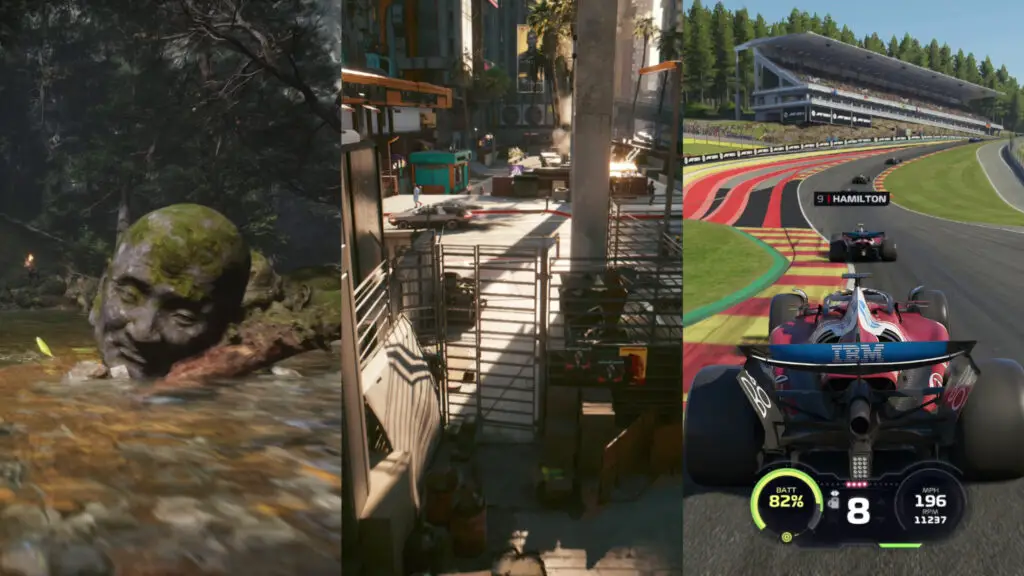
As previously mentioned, the ML-powered FSR Frame Generation currently supports a limited library of games—31 titles to be precise. For this review, I’ve selected a few prominent examples to demonstrate its capabilities. We first tested these games using FSR 3 upscaling and frame generation, followed by another round with the full Redstone suite engaged.
Our test PC for these rigorous performance benchmarks, a staple of Digital Tech Explorer’s thorough research, featured a
Ryzen 9 9900X processor, an MSI MEG X870 Godlike motherboard, 32 GB of DDR5-6000 CL32 RAM, and an
Asus Prime Radeon RX 9070 XT graphics card. For several titles, we utilized their built-in benchmarks to allow for direct comparisons of visuals and performance against your own system, aligning with our mission to provide practical tips and insights.
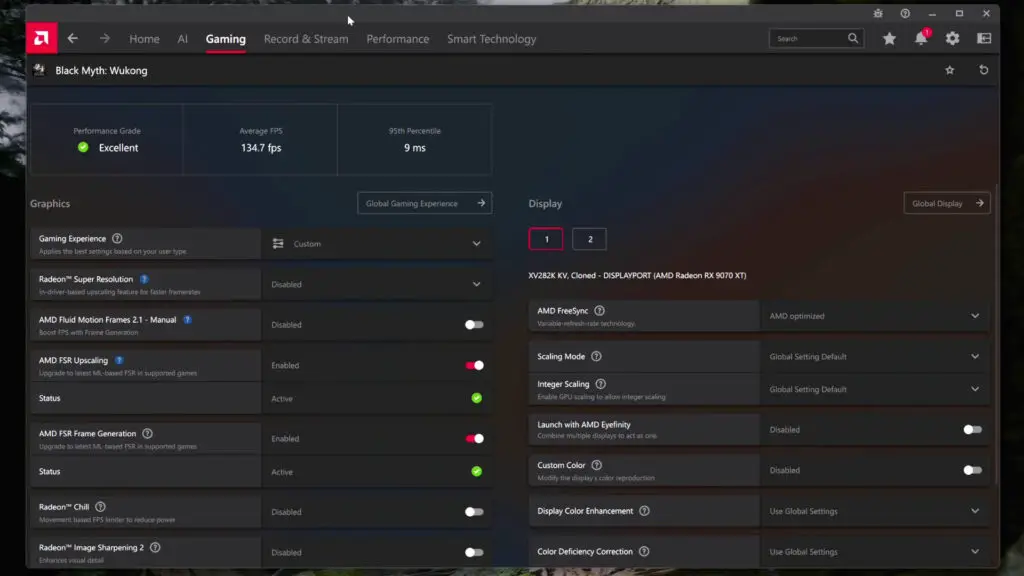
To activate Redstone (which encompasses FSR 4 upscaling and the new
AI frame generation) for a game, you first enable FSR 3 or FSR 3.1 within the game itself, then exit. Subsequently, in the
AMD Adrenalin Software, you activate the specific toggles for that game. This action forces the drivers to override the default FSR version, ensuring Redstone is utilized.
Until
developers directly implement Redstone (or simply “FSR” as AMD now prefers for the entire suite), this driver-level intervention is the only method. While some games, such as Cyberpunk 2077, automatically re-label FSR 3/3.1 upscaling to FSR 4, a consistent naming standard across titles is likely still some time away. This inconsistency underscores our call for clearer branding within the tech landscape.
Performance Deep Dive: Black Myth: Wukong
In our analysis of
Black Myth: Wukong, we pushed the limits with
4K resolution and the Cinematic graphics preset, opting to disable Full Ray Tracing. For both capture sessions, Performance upscaling (a 50% render resolution) was employed, alongside frame generation. (A quick confession from TechTalesLeo: I completely forgot to move the cursor out of view in both captures, a minor oversight in an otherwise rigorous test!)
While viewing only half the frame isn’t ideal for a comprehensive judgment, there’s enough visible to confirm Redstone’s noticeable superiority over FSR 3. Most of these quality enhancements stem from FSR 4—or, as we’ll call it for simplicity, FSR Upscaling (ML)—which impressively retains nearly all native texture details and avoids blurring subtle elements like falling leaves.
Frame generation is remarkably well-implemented in this title, making it challenging to pinpoint the new version’s advantages even in full video recordings. The difference becomes more apparent during active gameplay, particularly when rapidly spinning the camera. FSR 3 frame generation can introduce blurring and a ‘pulling’ effect on objects, an issue largely absent with the
AI-powered system.
Crucially, our tests revealed no performance difference when using Redstone frame generation compared to FSR 3. While FSR 4 (or FSR Upscaling (ML)) does incur a minor performance overhead, it’s negligible given the substantial visual improvements it delivers.
Cyberpunk 2077: A Night City Upgrade
The narrative continues with
Cyberpunk 2077, again tested at
4K with the RT Ultra graphics preset. Here, Redstone introduces a slightly larger performance impact than in Black Myth: Wukong. However, this hit remains insignificant and is attributed to the upscaler, not the frame generator itself.
Though subtle in the provided video,
AMD’s machine learning systems excel at preserving intricate details such as dust, fog, and smoke more effectively than standard FSR 3. However, similar to Wukong, the older technology was already well-integrated into the game, so Redstone’s enhancements, while present, are primarily refinements rather than wholesale transformations.
Redstone’s frame generation handles rapid camera movements and slender distant objects, like power lines, with commendable stability. Nevertheless, I did observe occasional shimmering on certain surfaces during gameplay. While I attempted to capture these instances, they unfortunately became imperceptible due to video compression, a common challenge in showcasing minute visual nuances.
F1 25: A Race for Visual Fidelity
If any game on our test roster desperately cried out for
AI-powered refinement, it was
F1 25. A mere glimpse at the first 30 seconds of the accompanying video vividly illustrates the issue: FSR 3 frame generation mercilessly distorts car shadows, particularly those of the player’s vehicle.
Redstone, in stark contrast, generates these shadows with near-perfect accuracy, though minor glitches persist with cars in the distance. Some of this, however, seems inherent to the game’s engine, likely using lower-resolution shadows for distant vehicles even without frame generation.
Remarkably, these visual upgrades are achieved with only a minimal performance decrease compared to FSR 3. Without upscaling, running at
4K Ultra High, F1 25 maintains approximately 40 frames per second, with 1% lows around 29 fps. For
RDNA 4 card owners, the path to improved fidelity is clear: enable the toggles in
Adrenalin Software, launch the game, and activate FSR 3 upscaling and frame generation; the drivers will then seamlessly deploy the superior Redstone features.
Grand Theft Auto 5: Enhanced – Pushing Legacy Limits
For a final quick assessment of FSR Redstone’s frame generator, I selected
GTA 5: Enhanced from the list of 31 supported titles. (Initially, I aimed for
Mafia: The Old Country, but encountered a completely blank settings menu despite various troubleshooting attempts.)
Testing GTA 5 presents its own challenges, as restarting the game (a requirement to enable Redstone) rarely places you at the exact previous save point. Thus, I ask for your understanding regarding the unsynchronized comparison videos. The core focus here remains on contrasting FSR 3’s handling of the scene versus the
AI-powered enhancements.
Visually, the difference isn’t as pronounced as in other titles. Redstone offers marginal improvements, such as keeping power lines more solid and reducing the blurring of rapidly passing foliage. However, it doesn’t represent a stark visual contrast.
Tested once more at
4K with the High RT graphics preset, GTA 5 exhibited the most significant performance drop among all games tested: approximately 30 fps from the average frame rate and 25 fps from the 1% lows. The ray tracing in this game can be particularly demanding on a
GPU, especially when maxed out. This suggests that the
RDNA 4 card might be juggling a bit too much with both intense ray tracing and
AI upscaling simultaneously.
Call of Duty: Black Ops 7 – A Glimpse at Ray Regeneration
While
Call of Duty: Black Ops 7 does support
AI frame generation, my focus shifted to another crucial Redstone feature:
FSR Ray Regeneration. This is
AMD’s direct response to Nvidia’s
DLSS Ray Reconstruction, designed to enhance denoising and reconstruction of images from reflected surfaces.
Black Ops 7 is currently the sole game supporting this technology, and it’s an intriguing choice for a showcase. In the heat of battle, one rarely pauses to meticulously inspect the accuracy of reflections on a shiny floor.
Nevertheless, the accompanying video compares ‘straight’ Redstone (FSR 4 +
AI frame gen) against Redstone with Ray Regeneration enabled. Upon close inspection, the
AI denoiser clearly delivers improvements. Interestingly, though subtly, the frame generation can also be observed introducing minor glitches.
For a few frames, specifically between the 19 and 20-second marks in the video, the ‘straight’ Redstone run generates some unusual-looking steps emerging from the pool. This anomaly is only discernible when advancing frame by frame, making it imperceptible during actual gameplay. It serves as a reminder that even advanced
AI-powered frame generators, as good as Redstone is, are not entirely flawless.
FSR Ray Regeneration appears to have minimal impact on performance in Black Ops 7, at least within the game’s benchmark. A comprehensive judgment will, of course, require broader implementation across more titles.
The Missing Piece: FSR Radiance Cache
The final component of FSR Redstone merits discussion, despite its unique nature: FSR Radiance Cache. This is a developer-centric feature, meaning
PC gamers won’t directly interact with it. While all FSR components require developer implementation, others offer some degree of user control.
Josh Hort,
AMD’s Senior Director and Head of ISV Enabling, elaborated on the process behind FSR Radiance Cache: “We sample the scene, the camera viewport and geometry are used to generate accurate radiance values, which are then fed to a
neural network for training. We train the network to understand how radiance behaves in the scene, how light interacts with surfaces, how indirect lighting propagates, and so on.”
He continued, “During runtime, the FSR radiance caching phase, we use the trained network to provide radiance results early, as soon as the second ray intersection. That means we can get high-quality lighting much faster with fewer rays and less brute force computation, which directly translates into performance.”
A key ambiguity remains: who constitutes ‘we’ in the training stage? Is it entirely
AMD’s responsibility, or does the developer undertake this? An updated FSR SDK with a preview of FSR Radiance Cache should be available on
GPUopen by the time this article goes live, which should offer more clarity for the Digital Tech Explorer community.
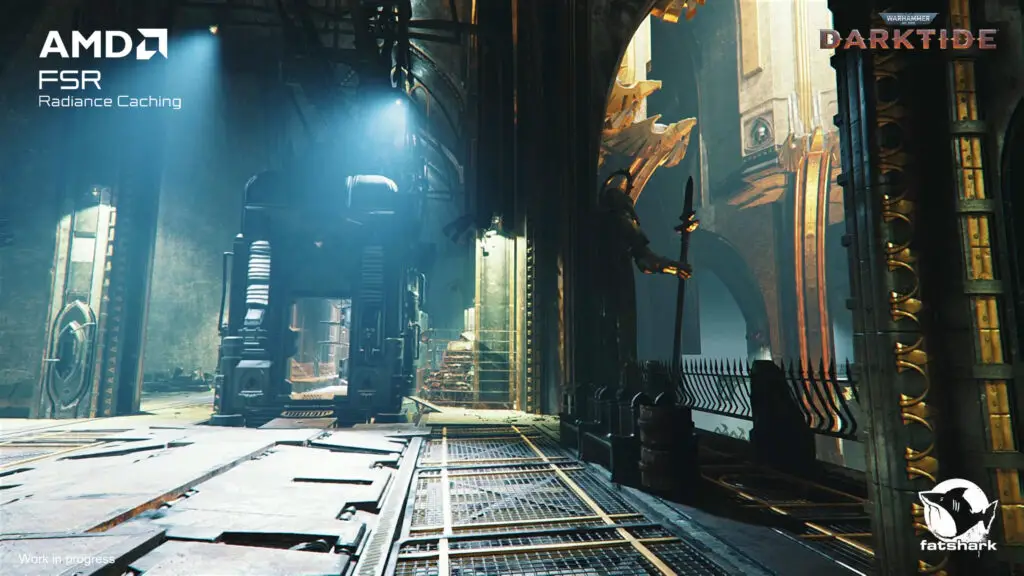
AMD showcased a very brief clip of
Warhammer 40,000: Darktide running with FSR Radiance Cache. While visually impressive, the complete absence of any performance metrics rendered the demonstration less insightful, especially since this aspect of Redstone is fundamentally about improving ray tracing speed.
TechTalesLeo’s Verdict: My Issues with FSR Redstone
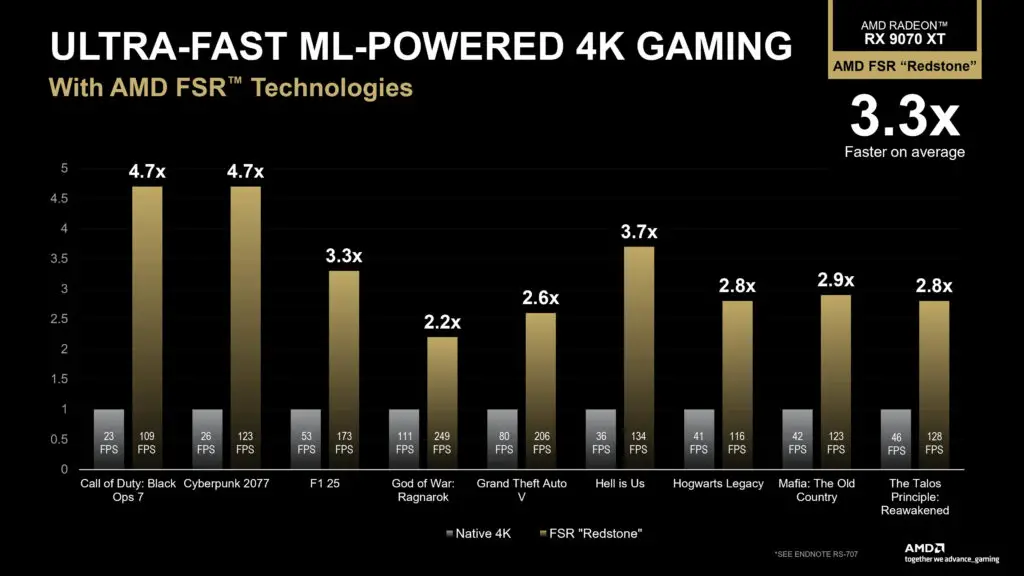
Let’s be unequivocally clear: regardless of the convoluted naming, FSR Redstone is a resounding success. The
AI upscaler is exceptionally good, and the
AI frame generator is arguably even better. While a single use case of the
AI denoiser isn’t enough for a definitive judgment, it shows immense promise.
However, as TechTalesLeo, a candid voice for Digital Tech Explorer,
AMD isn’t entirely off the hook. Firstly, the delay is significant. Nvidia
introduced AI-powered frame generation back in September 2022, and
Intel’s second-gen XeSS 2 upscaling tech followed in December 2024, both with subsequent updates.
AMD’s RDNA 4 GPUs have been on the market since March of this year, and while FSR 4 arrived swiftly, the full Redstone frame generation suite should not have taken this long. The prioritization of FSR Ray Regeneration, while valuable, remains puzzling in this context. It suggests potential development hurdles and delays that pushed the complete Redstone package back.
My most significant critique remains the baffling naming scheme. While I understand the desire to simplify, completely abandoning numbered versions for a crucial update like Redstone is a disservice to both
gamers and
developers. When future iterations inevitably arrive, how will users distinguish between them? Burying version codes under marketing fluff creates unnecessary confusion and hinders clear communication about technological progress. Clear, sequential numbering provides a vital roadmap for understanding advancements.
Finally, the requirement to manage the main features of the new FSR entirely through the Adrenalin Software tool is less than ideal. While this is already the case for FSR 4, extending it to the ML version of frame generation adds another layer of complexity. For seasoned
PC gaming enthusiasts with an
RDNA 4 graphics card, who naturally desire to leverage Redstone’s full potential, it might be a minor inconvenience. However, for newcomers, the Adrenalin interface can be quite messy and intimidating, detracting from Digital Tech Explorer’s goal of making technology accessible.
The engineers behind
AMD’s GPUs and software are undeniably brilliant, and both
RDNA 4 and FSR Redstone are transformative technologies. It’s truly a shame that the company continues to struggle with its marketing and nomenclature, creating unnecessary friction for an otherwise stellar product.