

Debuting at IFA 2025, the new Acer Swift 16 AI marks a pivotal moment, being introduced as the first laptop to feature Intel’s revolutionary Panther Lake CPU. This next-generation processor, expected to be branded as the Core Ultra 300 Series, is engineered on Intel’s crucial 18A node. Its advanced architecture combines potent Cougar Cove P-cores and efficient Darkmont E-cores. What truly sets Panther Lake apart is its next-gen Celestial Xe3 graphics, boasting 12 Xe3 cores and promising a substantial leap in integrated graphics performance. A central focus for this new chip is artificial intelligence; its powerful NPU/GPU combination delivers a massive 180 TOPS of performance, designed to empower sophisticated AI agents to operate seamlessly and locally on PCs. This launch, as Digital Tech Explorer understands, hints at a significant shift in personal computing, preparing developers and tech enthusiasts for the next wave of innovation.
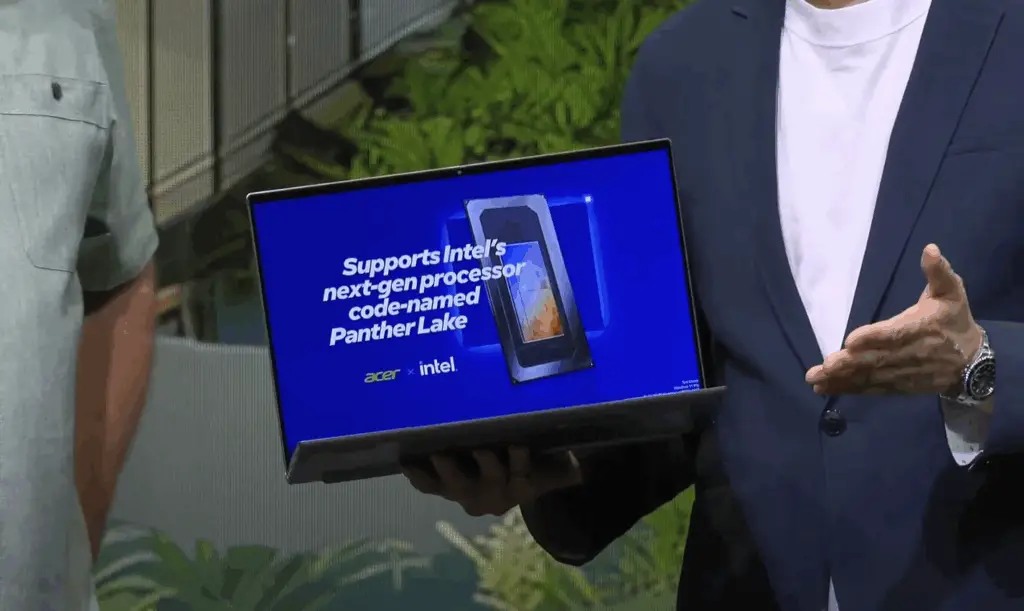
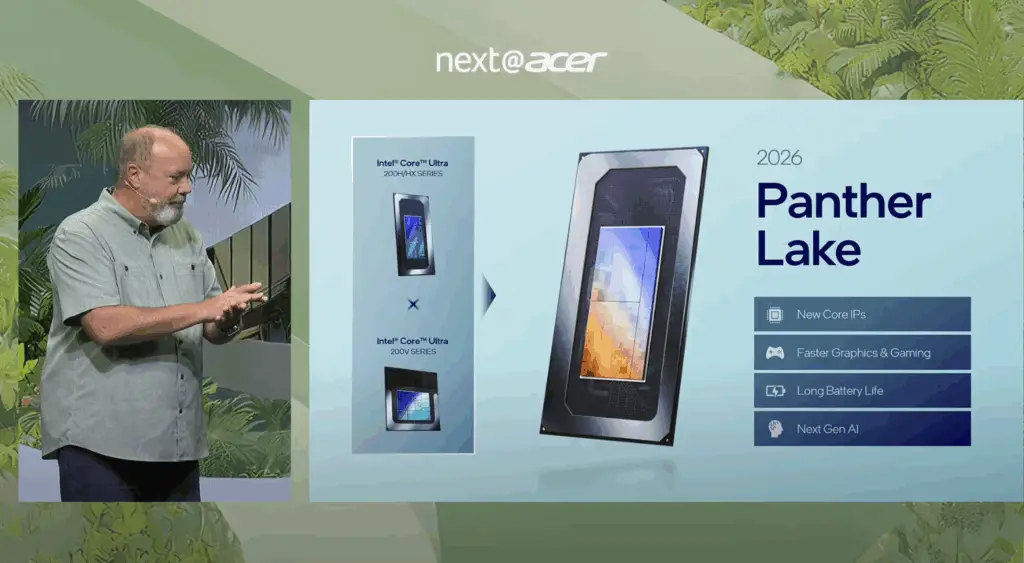
Acer Swift 16 AI: Features & Anticipated Launch
Beyond its groundbreaking processor, the Acer Swift 16 AI is packed with premium features that underscore its flagship status. It notably includes what’s touted as the world’s largest haptic touchpad, offering an expansive and highly responsive interaction experience. Visuals are brought to life on a stunning 16-inch 120 Hz 3K OLED screen, while performance can be further boosted with configurations up to 32 GB of LPDDR5X memory. Acer has confirmed an anticipated sale date in early 2026. This timeline is significant, suggesting that Intel’s ambitious 18A chip remains on schedule to enter production in late 2025 – a critical milestone not just for Intel, but for the wider industry keen on observing its manufacturing roadmap and the capabilities it unlocks for next-gen devices.
Intel’s Foundry Ambitions: The Pivotal Shift from 18A to 14A
The journey of Intel’s foundry business has been anything but static. The 18A process node was once heralded as the very foundation of Intel’s future, a technology former CEO Pat Gelsinger famously championed as critical to transforming the company into a leading customer fab. The vision was clear: to manufacture chips for a broad spectrum of industry players. However, under the leadership of new CEO Lip Bu Tan, a dramatic strategic pivot has occurred. The company’s primary focus for its foundry aspirations has now shifted to the subsequent, even more advanced 14A node. This pivot, as TechTalesLeo explores, introduces significant uncertainties, particularly with reports suggesting that the 14A node could face cancellation if sufficient customer commitments don’t materialize. Such a scenario would undoubtedly cast a long shadow over Intel’s ambitious manufacturing plans and its dual role as a chip designer and cutting-edge manufacturer.
As Intel navigates this intricate landscape, the debut of Panther Lake in the Acer Swift 16 AI stands as a testament to its innovation. Yet, the broader adoption and long-term success of the 18A node beyond this initial showcase remain a subject of industry scrutiny. Even more precarious is the future of the 14A node, its viability hanging precariously on securing crucial customer partnerships. For developers and tech enthusiasts following these trends, understanding these strategic shifts is key to making informed decisions about future hardware and software ecosystems. This ongoing narrative in Intel’s manufacturing journey highlights an open question for the entire tech world: how will these foundational process nodes ultimately shape the next era of computing?