Every so often, a device arrives on the tech scene promising to redefine an experience. The
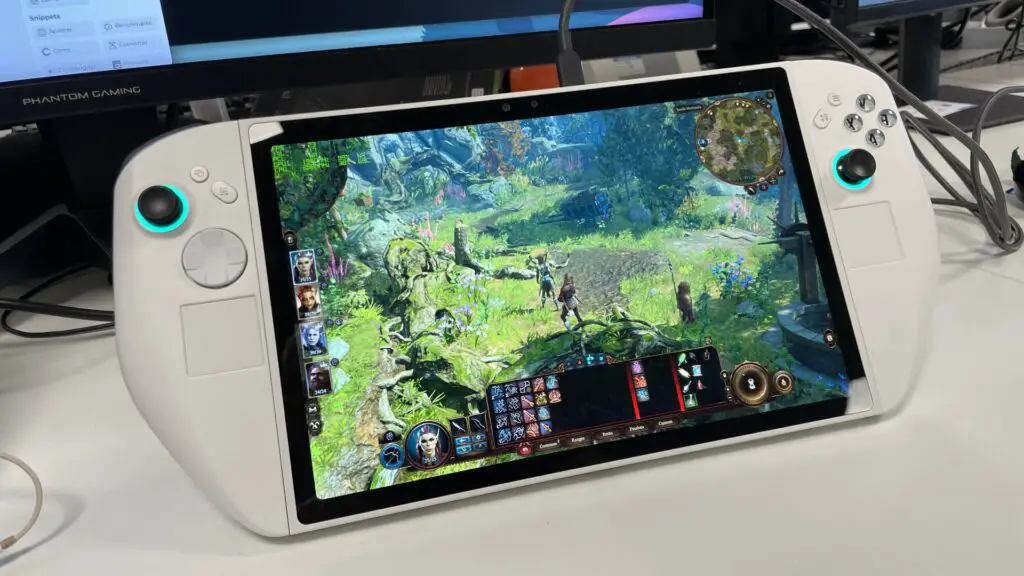
Abxylute 3D One, touted as the world’s first glasses-free 3D handheld gaming PC, certainly sparks curiosity. As TechTalesLeo for Digital Tech Explorer, I’ve had the opportunity for an initial hands-on with this ambitious device. With its colossal 11-inch screen, sizable bezels, and huge clip-on controllers, the Abxylute 3D One immediately raises questions about its core promise of portability. While most gaming handhelds prioritize ergonomics and a compact form factor, this device’s sheer scale—practically dwarfing a typical laptop—makes its portability debatable and its overall design somewhat unconventional for on-the-go gaming.
Unpacking the Hardware: Power and the Promise of Glasses-Free 3D
Underneath its imposing exterior, the
Abxylute 3D One is powered by Intel’s Lunar Lake APU (specifically the 258V model). While Lunar Lake represents a promising leap in integrated processing, its reliance on an iGPU presents a significant challenge for delivering a premium gaming experience, especially when pushing the graphical demands of glasses-free 3D. The device’s marquee feature is undoubtedly its “naked-eye 3D display” with integrated eye tracking. This technology likely employs advanced lenticular lenses and sophisticated eye-tracking cameras to deliver distinct images to each eye, creating the illusion of visual depth, similar to what we’ve seen in monitors like the
Acer Predator SpatialLabs View 27.
Our real-world testing quickly revealed the mixed efficacy of this cutting-edge 3D display. While the effect appears far more impressive when viewing single 3D models in applications like graphic design, its performance in games is notably inconsistent. For instance, in `Baldur’s Gate III`, a title Abxylute highlights as supported, the
3D depth mapping is often patchy, with some objects appearing three-dimensional while others remain flat or incongruously rendered. Furthermore, activating the 3D effect in `Baldur’s Gate III` severely impacts performance, reducing gameplay to an unplayable slideshow. This initial observation suggests that the glasses-free 3D functionality will primarily be viable only in games that are graphically undemanding, significantly limiting the utility of this feature for serious modern gaming.
The User Experience: Software Quirks and Practical Limitations
The overall user experience of the
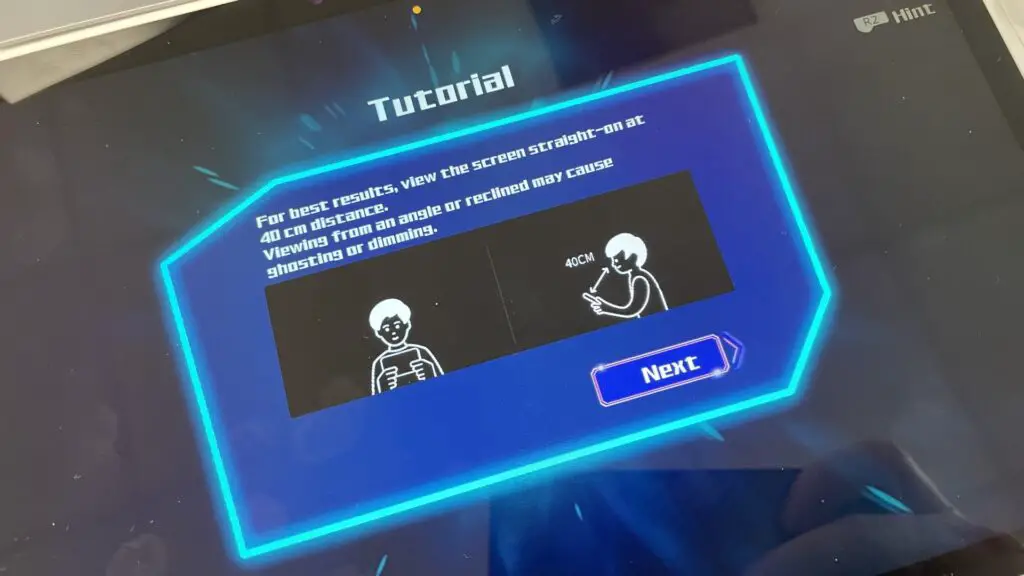
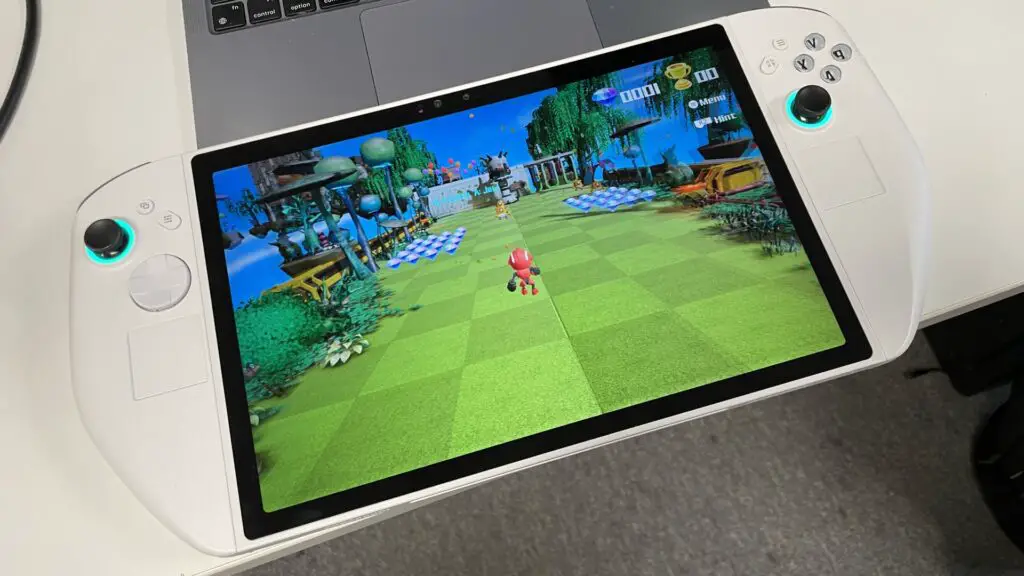
Abxylute 3D One is unfortunately plagued by cumbersome software. To ensure
full 3D support, games must be launched through a dedicated, mandatory launcher. This system lacks transparency, making it difficult to discern if a game is truly running in native 3D mode or merely utilizing a less convincing “2D-to-3D universal conversion” for unsupported applications. Additionally, games are required to run at the screen’s full 2,560 by 1,600 native resolution for optimal 3D output, a taxing demand for any integrated GPU. Users are also cautioned against updating the graphics driver to avoid potential instability.
Collectively, these factors contribute to a far-from-seamless and often frustrating experience. While the device might find a niche for specific uses, such as playing
emulated Nintendo 3DS games, the significant investment required raises the question of whether a dedicated 3DS console or a more versatile gaming handheld might offer a more practical and cost-effective solution for such specific tasks.
Value Proposition: Is the Abxylute 3D One Worth the Investment?
Despite these significant hurdles, the
Abxylute 3D One does present a few bright spots. Its 11-inch screen is technically impressive, boasting a sharp 2,560 by 1,600 resolution, vibrant 480 nits brightness, and a smooth 120Hz refresh rate. Initial impressions also suggest decent build quality, acceptably responsive controllers, and robust connectivity options. However, the device’s sheer bulk and the limited practical application of its signature glasses-free 3D technology are undeniable drawbacks.
The pricing further complicates its appeal, with a retail price of $1,799, and slightly lower early bird and VIP reservation prices of $1,499 and $1,449, respectively. To put this in perspective for tech enthusiasts and developers looking to make informed decisions, a powerful
gaming laptop like an
MSI Vector 16 HX AI with Nvidia RTX 5070 Ti mobile GPU can often be found for a similar price point ($1,499), offering vastly superior raw rendering performance and versatility for a truly immersive gaming and development experience. As Digital Tech Explorer consistently emphasizes through our in-depth reviews and real-world testing, the Abxylute 3D One, while an interesting technological endeavor, struggles to justify its premium cost given its current limitations and unconventional design. It serves as a captivating narrative of tech innovation, perhaps a glimpse into a future of glasses-free 3D, but one that currently remains more ambitious concept than polished product.